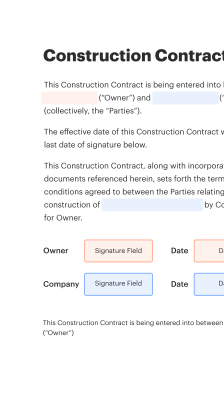
Verifiable Electronic Signature with SignNow

Remove paper and automate digital document management for higher efficiency and unlimited opportunities. Discover a better strategy for running your business with airSlate SignNow.

Award-winning eSignature solution

What a verifiable electronic signature is and why it matters

A verifiable electronic signature is an electronic method that links a signer to a document and provides technical evidence to confirm the signature's origin, integrity, and time. In the United States this typically means using authentication, audit logs, and tamper-evident seals that satisfy ESIGN and UETA requirements. Verifiable signatures can include simple typed names with traceable metadata, advanced cryptographic signatures, or certificate-based credentials, each producing records that make it possible to demonstrate who signed, when, and whether the document changed after signing.

Why use verifiable electronic signatures for business documents

Verifiable electronic signatures reduce paperwork, speed approvals, and provide auditable records that support legal enforceability under U.S. law while improving operational efficiency and recordkeeping.

Why use verifiable electronic signatures for business documents

Common challenges when adopting verifiable electronic signatures

  • Ensuring signer identity without intrusive steps while meeting industry authentication policies and user convenience expectations.
  • Configuring retention and retention schedules to meet multiple state and federal records requirements, including HIPAA and FERPA considerations.
  • Creating workflows that preserve chain-of-custody and tamper-evidence for multi-party agreements with complex signing orders.
  • Aligning integrations across CRMs, document stores, and HR systems so audit trails remain intact and accessible for audits.

Typical user roles and responsibilities

Signing Admin

A Signing Admin configures templates, sets authentication methods, and manages user permissions for signing workflows. This role monitors envelope status, enforces policies, and ensures audit trails meet internal and regulatory requirements across departments.

Compliance Officer

A Compliance Officer reviews retention schedules, documents evidence of signature validity, and oversees data handling procedures to maintain adherence to ESIGN, UETA, HIPAA, and applicable state laws for regulated records.

Organizations and roles that commonly rely on verifiable electronic signatures

  • Legal and contract teams needing signed agreements with clear audit trails and enforceability under ESIGN and UETA.
  • Human resources for onboarding, offer letters, and employment documents with secure identity proofing and retention.
  • Healthcare administrators and providers managing HIPAA-sensitive consents and authorizations with controlled access.

Smaller teams and enterprises both adopt verifiable signatures to reduce turnaround time and lower storage costs while maintaining legal defensibility in the United States.

Key technical features that support verifiable electronic signatures

A robust verifiable signature implementation combines several technical features to ensure identity, integrity, auditability, and integration across enterprise systems.

Template Library

Reusable templates standardize fields and authentication for repetitive transactions, reducing errors and ensuring each document uses the same verifiable signature configuration and metadata capture.

Bulk Send

Bulk Send automates distribution to many recipients using the same template, while maintaining individualized audit trails and signature records for each recipient to preserve verifiability.

Single Sign-On

SSO integrates identity providers for centralized authentication, linking corporate credentials to signature events and strengthening identity assurance without separate login steps.

Advanced Workflows

Conditional routing and sequential signing options allow complex approval chains to be modeled and recorded, preserving the order of signature events in the audit log for later verification.

API and Webhooks

APIs enable programmatic creation of envelopes and retrieval of signed documents while webhooks provide real-time event notifications to keep systems synchronized and audit records up to date.

Document Security Controls

Encryption, access restrictions, and tamper-evident seals prevent unauthorized changes and ensure that the stored signed PDF matches the auditable record of the executed agreement.

be ready to get more

Choose a better solution

Common integrations and template features for verifiable electronic signatures

Integrations and templates speed repeatable signing processes while keeping signature records verifiable and synchronized with business systems.

Google Workspace

Integration with Google Docs and Drive allows sending documents directly from a user’s Drive, automating template insertion and preserving signed PDFs back to the originating folder with audit metadata stored alongside the document for traceability.

CRM Sync

Bi-directional CRM integrations automatically populate templates with contact and account data, send signature requests tracked to opportunities, and record signed documents in CRM activity logs for contract lifecycle management and compliance reporting.

Cloud Storage

Direct connectors to Dropbox, Box, and OneDrive allow signed documents and full audit reports to be archived in corporate storage, ensuring retention policies are applied while maintaining verifiable access history.

Prebuilt Templates

Reusable templates capture required fields and signature placement, enforce authentication rules, and include built-in reminders so teams can issue verifiable signature requests consistently and reduce setup errors.

How verifiable electronic signatures work end to end

A typical signing transaction includes document preparation, signer authentication, signature capture, and audit trail creation to support later verification and legal defensibility.

  • Document upload: Upload PDF or supported file type to the signing system.
  • Signer identification: Authenticate signer using email, SMS, or ID checks.
  • Signature capture: Signer applies a signature, stored with metadata and timestamps.
  • Record retention: System stores signed document with immutable audit trail.
Collect signatures
24x
faster
Reduce costs by
$30
per document
Save up to
40h
per employee / month

Quick setup: creating a verifiable electronic signature workflow

Follow these core steps to prepare a document for a verifiable electronic signature, focusing on identity, fields, and audit settings to ensure the signature is traceable and defensible.

  • 01
    Prepare document: Convert to PDF and lock form fields where possible.
  • 02
    Add signature fields: Place signature, date, and initial blocks for each signer.
  • 03
    Select authentication: Choose email, SMS, or knowledge-based authentication.
  • 04
    Enable audit logs: Turn on tamper-evident logging and timestamping.
be ready to get more

Why choose airSlate SignNow

  • Free 7-day trial. Choose the plan you need and try it risk-free.
  • Honest pricing for full-featured plans. airSlate SignNow offers subscription plans with no overages or hidden fees at renewal.
  • Enterprise-grade security. airSlate SignNow helps you comply with global security standards.
illustrations signature

Typical workflow settings for verifiable electronic signature automation

Configure these settings to create reproducible, auditable signing workflows that meet your organization's verification and retention policies.

Setting Name Configuration
Reminder Frequency 48 hours
Signing Order Sequential
Authentication Method Email & SMS
Document Retention 365 days
API Webhooks Enabled

Supported platforms and device requirements for verifiable electronic signatures

  • Desktop browsers: Chrome, Edge, Firefox, Safari
  • Mobile OS: iOS 13+ and Android 8+
  • Network requirements: TLS-enabled internet

For secure workflows ensure devices have current OS updates, enable secure transport (TLS) for all connections, and use device-level protections such as PINs or biometrics to maintain chain-of-custody and signer identity assurances.

Core security controls for verifiable electronic signatures

Authentication: Email, SMS, KBA options
Encryption: AES-256 at rest
Transport Security: TLS for data in transit
Audit Logs: Tamper-evident records
Access Controls: Role-based permissions
Key Management: Secure, rotating keys

Industry examples for verifiable electronic signatures

Representative case uses show how verifiable electronic signatures fit into specific workflows across industries and the practical benefits they provide.

Healthcare Consent Forms

Hospitals digitize patient consent workflows to reduce paperwork and speed admissions

  • Uses SMS or email authentication and tamper-evident audit logs
  • Improves patient throughput and reduces administrative cost

Resulting in faster treatment start times and clearer compliance records for audits.

HR Onboarding

A medium-sized employer replaces paper onboarding with templated electronic packages

  • Uses identity verification and document templates prepopulated from HRIS
  • Reduces manual entry and accelerates new hire setup

Leading to shorter onboarding cycles and consistent, retained records for compliance.

Best practices for secure, accurate verifiable electronic signatures

Adopt consistent processes and controls to maximize the legal defensibility and security of electronic signatures while minimizing user friction and operational overhead.

Use consistent authentication strategies across document types
Define acceptable authentication methods for each document class, matching risk to the strength of identity proofing. For high-risk agreements use multi-factor or certified identity checks; for routine approvals a verified email plus audit trail may suffice.
Lock document structure before sending
Prevent post-signature changes by flattening or applying tamper-evident seals to final PDFs and locking form fields. That preserves document integrity and ensures audit logs accurately reflect the signed content.
Maintain clear retention and access policies
Document retention schedules should align with legal and regulatory obligations, specifying where signed documents and audit trails are stored, who can access them, and how deletion or archival is handled.
Train staff on signature workflows and exceptions
Provide role-based training covering when to use verifiable electronic signatures, how to select authentication levels, how to handle exceptions, and the process for responding to legal or compliance inquiries about signed records.

FAQs about verifiable electronic signatures

Common technical and legal questions about verifiable electronic signatures, with practical answers focused on U.S. compliance and typical implementation issues.

Quick feature comparison: verifiable electronic signature capabilities

A concise comparison of common verifiable signature capabilities across two widely used providers, emphasizing U.S. legal compliance and technical features.

Feature Criteria for Vendor Comparison signNow (Recommended) DocuSign
U.S. legal enforceability under ESIGN and UETA
Authentication method variety supported Email, SMS Email, SMS, KBA
Tamper-evident audit trail availability Detailed Detailed
Native CRM and cloud integrations
be ready to get more

Get legally-binding signatures now!

Document retention and key retention timeline considerations

Retention schedules should reflect legal obligations, business needs, and the sensitivity of signed records. Below are common retention timeframes to consider when managing verifiable electronic signatures.

Short-term operational records:

30 to 90 days

Standard business contracts:

3 to 7 years

Employment records:

4 to 7 years

Healthcare consents and PHI:

6 years or state-specific periods

Permanent archival and legal holds:

Indefinite until release

Risks and compliance penalties to be aware of

Regulatory fines: Monetary penalties
Invalid contracts: Court challenges
Data breach exposure: Legal liability
Noncompliant retention: Document loss
HIPAA violations: Significant fines
Operational disruption: Process delays

Pricing and plan comparison for verifiable electronic signature providers

Comparing common plan characteristics and costs for organizations evaluating verifiable electronic signature options; signNow is listed first as a recommended option for balanced feature set and cost.

Plan Comparison by Vendor signNow (Recommended) DocuSign Adobe Sign HelloSign PandaDoc
Entry-level monthly cost $8 per user $10 per user $12 per user $15 per user $19 per user
Business-tier monthly cost $20 per user $25 per user $30 per user $25 per user $49 per user
API access and developer support Available, generous calls Available, rate-limited Available, enterprise-grade Available, limited Available, paid add-on
Bulk send capability Bulk Send included Bulk Send available Bulk Send available Bulk Send available Bulk Send with limits
Compliance and certifications ESIGN, UETA, SOC2, HIPAA option ESIGN, UETA, SOC2, ISO 27001 ESIGN, UETA, SOC2, FedRAMP option ESIGN, UETA, SOC2 ESIGN, UETA, SOC2
Enterprise feature set summary Advanced workflows, SSO, admin controls Advanced workflows, Salesforce integration Advanced workflows, Adobe Cloud integration Basic workflows, API Sales enablement features, eSign

Make simpler complicated workflows

Prepare, perform, and manage workflows of any intricacy, electronically from virtually anywhere. Scalable eSignature capabilities enable you to share contracts with the right users the correct way and assign roles for every signee. Perform document workflows faster and simpler than ever before.

Automate document managing

Optimize complicated signing tasks with airSlate SignNow�s highly effective tools to improve your company. Manage your automated signature workflows to make sure they're operating at maximum efficiency with quick notifications and alerts.

Optimize in team collaboration

Join teammates together in a secure, shared environment. Handle paperwork, use form templates and notifications to deliver more efficient cross-organization interaction. Free your workers from having to hang out on repeated activities so that they can give attention to beneficial, business-essential projects.

Integrate into your existing network

Work your tasks with market-leading integration. Collect Salesforce, Microsoft Teams, and SharePoint all in one business stream. Connect your applications to a single system for unlimited possibilities and higher productiveness.

Stay compliant with market-leading data protection

Feel confident with the knowledge that your information remains secure by the most up-to-date in encryption security. airSlate SignNow is GDPR and eIDAS compliant and gives you awareness into your eSigning procedure with court-admissible audit trails. Set up user authorization and roles to control who has access to what.


walmart logo
exonMobil logo
apple logo
comcast logo
facebook logo
FedEx logo
be ready to get more

Get legally-binding signatures now!