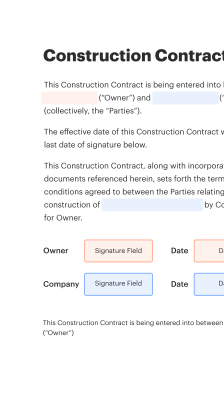
Void E Sign Template for Secure Transactions

Remove paper and automate document managing for higher performance and limitless opportunities. Experience a greater way of running your business with airSlate SignNow.

Award-winning eSignature solution

What a void e sign template is and why it matters

A void e sign template is a prepared electronic document layout that has been marked to render a signature or signing flow void under specified conditions, or to indicate that a previously issued template is no longer valid for execution. Organizations use void templates to prevent reuse of outdated agreements, to manage superseded forms, or to flag documents invalidated by policy changes. Proper handling of void templates preserves audit trails, reduces signing errors, and supports compliance workflows by making the invalidation state explicit to senders and recipients across an eSignature platform.

Why treat void e sign templates as a distinct control

Designating a template as void reduces signature risk by preventing accidental reuse of outdated forms, clarifies document status for internal teams and signers, and simplifies recordkeeping for compliance and audit purposes.

Why treat void e sign templates as a distinct control

Common operational challenges with void templates

  • Accidental sending of voided templates causes signature disputes and delays in transaction processing.
  • Incomplete audit records when templates are not explicitly marked as void complicate regulatory reviews.
  • Teams using local copies instead of the centralized repository may bypass void controls unknowingly.
  • Automated workflows that don’t check template status can continue to generate invalid agreements.

Typical users and responsibilities

Compliance Officer

A Compliance Officer reviews templates for regulatory impact, configures void criteria, and audits template status to ensure records meet ESIGN and UETA documentation standards for electronic transactions.

Document Administrator

A Document Administrator publishes templates, marks templates as void when superseded, and maintains the central template library to prevent distribution of invalid forms across teams and integrations.

Who typically manages and uses void e sign templates

Legal, compliance, operations, and document control teams commonly manage void template policies to protect signature integrity and ensure accurate records.

  • Legal and compliance teams ensure void status aligns with contract lifecycle requirements and regulations.
  • Operations and HR apply void templates to remove outdated onboarding or payroll forms from circulation.
  • Sales and customer success teams reference centralized templates to avoid sending invalid offers or agreements.

Centralized control and clear ownership reduce the chance of void templates being reused and support consistent handling across departments.

Additional platform features that improve void template workflows

Beyond basic controls, several advanced features reduce risk and make template voiding more transparent and manageable at scale.

Bulk Update

Apply void status to many templates at once with consistent metadata and audit entries, saving time when large template portfolios require deprecation.

Conditional Logic

Embed conditional fields that prevent document rendering if a template is void or if certain criteria are not met at send time.

Template Locking

Lock fields and structure on retired templates to ensure content cannot be edited and to preserve historical accuracy for audits.

Scheduled Void

Set an effective date for template voiding so changes propagate at a controlled time aligned with policy or product launches.

Granular Reporting

Generate reports listing voided templates, users involved, and downstream effects for compliance and operational review.

Role Activity Logs

Track which administrators altered template states and the approvals associated with those changes for accountability.

be ready to get more

Choose a better solution

Core capabilities that support void template management

Certain platform features make template voiding reliable, auditable, and easy to enforce across teams and connected systems.

Template Status Flags

Persistent status markers that indicate active, deprecated, or void states and are included in API responses and UI listings to prevent accidental selection.

Role-Based Controls

Permissions that restrict who can mark templates void, who can republish updated templates, and who can override void status with documented approvals.

Audit Trails

Comprehensive event logs that capture who voided a template, the timestamp, the reason, and the propagation actions sent to connected services.

Integration Hooks

Outbound notifications and webhooks that inform external systems like CRM, storage, and contract management platforms about template status changes.

How voiding integrates into the document lifecycle

Voiding a template is a state change captured in the template lifecycle; it should propagate to sending, automation, and storage systems.

  • Creation: Templates are authored and approved for use.
  • Deployment: Templates are published to the central repository.
  • Voiding: Template status updated to void with metadata.
  • Propagation: Integrations and workflows receive the updated status.
Collect signatures
24x
faster
Reduce costs by
$30
per document
Save up to
40h
per employee / month

Quick steps to void a template safely

Follow a short validation and archival sequence to mark a template void and notify relevant teams.

  • 01
    Identify: Locate the active template in the central library.
  • 02
    Verify: Confirm replacement version or legal requirement to void.
  • 03
    Mark Void: Apply the void status and add a reason in metadata.
  • 04
    Notify: Alert stakeholders and update integrations to prevent reuse.

Audit trail steps to include when voiding a template

Capture a structured set of audit events to make voiding actions discoverable and defensible.

01

Record Actor:

User ID and role
02

Timestamp:

UTC timestamp logged
03

Void Reason:

Standardized description
04

Effective Date:

Date applied
05

Propagation Notice:

Webhooks issued
06

Retention Tag:

Retention policy assigned
be ready to get more

Why choose airSlate SignNow

  • Free 7-day trial. Choose the plan you need and try it risk-free.
  • Honest pricing for full-featured plans. airSlate SignNow offers subscription plans with no overages or hidden fees at renewal.
  • Enterprise-grade security. airSlate SignNow helps you comply with global security standards.
illustrations signature

Example workflow settings for automated void propagation

Configure lifecycle and notification settings so void actions propagate correctly to downstream systems and users.

Setting Name Configuration
Template Status Propagation Delay Immediate
Reminder Frequency 48 hours
Webhook Retry Policy 3 attempts
Default Retention Tag Legal-hold
Approval Requirement Two-step approval

Supported platforms and device considerations

Void template controls should be accessible from web, desktop, and mobile admin interfaces to ensure consistent governance across devices.

  • Web Browser: Full admin features
  • Mobile App: Limited admin controls
  • API Access: Programmatic control

Ensure integrations and mobile apps check template status via API or webhooks; maintain strong authentication to prevent unauthorized void actions and preserve audit integrity across all client platforms.

Security and protection controls relevant to void templates

Access Control: Role-based limits
Encryption: At-rest and in-transit
Versioning: Document history retained
Audit Logs: Comprehensive event trail
Revocation Flags: Template status marker
Authentication: Multi-factor options

Industry examples showing void template usage

Practical examples illustrate how void templates reduce errors and maintain compliance across common workflows.

Healthcare consent forms

A hospital marks a prior consent template as void after policy updates

  • single-page consent change noted
  • prevents use of noncompliant consent forms by staff

Resulting in preserved HIPAA-compliant records and fewer consent disputes.

Sales proposal revisions

A sales team voids an obsolete proposal template after pricing changes

  • template metadata records reason for void
  • new proposals use updated terms and controls

Leading to clearer contractual terms and reduced client confusion during negotiations.

Best practices for secure, consistent void template handling

Adopt a small set of controls and governance practices to reduce risk and establish clear operational behavior for void templates.

Maintain a single source of truth for templates
Store and manage templates in a centralized repository with strict access controls to prevent distribution of outdated or voided documents and to simplify version governance across teams and integrations.
Record a clear void reason in template metadata
Require a standardized reason and effective date whenever a template is voided so that auditors and downstream systems can understand context and apply retention or replacement rules.
Propagate void status to integrations and automations
Use webhooks and API calls to notify connected systems immediately after voiding a template so automated workflows do not continue to use invalid forms.
Regularly review templates and retention policies
Schedule periodic audits to identify templates due for voiding, confirm retention timelines, and remove templates that no longer meet policy or regulatory requirements.

FAQs and troubleshooting for void e sign templates

Common questions and solutions help teams resolve issues with voided templates quickly and maintain compliance.

Feature comparison for void template support

Compare how leading eSignature platforms represent template voiding, status propagation, and admin controls relevant to enterprise workflows.

Feature Criteria and Vendor Comparison signNow (Recommended) DocuSign Adobe Sign
Mark template as void in UI
API status update for templates
Webhook propagation
Scheduled voiding support
be ready to get more

Get legally-binding signatures now!

Timelines and retention considerations when voiding templates

Define deadlines for review and retention when marking templates void to satisfy audit and legal requirements.

Regular template review cadence:

Quarterly review recommended.

Retention start date for voided templates:

Retain per legal hold requirements.

Notification window to users:

Notify teams within 48 hours.

Archival period after voiding:

Archive for minimum statutory period.

Trigger for permanent deletion:

Delete after retention expires.

Risks and compliance consequences of mishandling void templates

Invalid signatures: Disallowed agreements
Regulatory exposure: Non-compliance fines
Contract disputes: Legal challenges
Data breaches: Unauthorized access
Operational delays: Workflow interruption
Audit failures: Incomplete records

Pricing and plan-level capabilities relevant to void template management

Plan features and pricing tiers differ; consider admin controls, API access, and enterprise support when selecting a platform for robust template governance.

Plan Level signNow (Featured) DocuSign Adobe Sign HelloSign
Entry-level plan Business plan starting near $8/user/month Personal plans start around $10/month Individual plans around $9.99/month Essentials tier available low-cost
API access included Available on business/enterprise plans Available on business/enterprise plans Available on enterprise plans Available on business plans
Admin controls Role-based admin controls in business tiers Advanced admin in enterprise tiers Enterprise-level admin features Business features include basic admin
Enterprise support Available with enterprise packages Available with enterprise packages Available with enterprise packages Enterprise support available
Template governance features Template locking and status flags available Template management with lifecycle features Template versioning and control features Template management present with integrations

Streamline complicated workflows

Create, execute, and maintain workflows of any intricacy, digitally from virtually anywhere. Scalable eSignature functionality allow you to exchange papers with the right people in the proper order and determine roles for each recipient. Perform document workflows faster and simpler than ever before.

Automate document management

Optimize intricate signing procedures with airSlate SignNow�s effective functions to boost your company. Manage your automatic signature workflows to ensure they're operating at maximum performance with fast notices and alerts.

Optimize in team collaboration

Join teammates together in a safe, shared workspace. Handle paperwork, use form templates and notices to create more effective cross-company communication. Free your staff from having to hang out on repeating activities to enable them to concentrate on valuable, business-vital duties.

Integrate into your current network

Run your projects with market-leading integration. Assemble Salesforce, Microsoft Teams, and SharePoint all in one business flow. Link your applications to a single unit for limitless opportunities and higher productiveness.

Remain compliant with market-leading data protection

Feel confident with the knowledge that your information is protected by the most recent in encryption security. airSlate SignNow is GDPR and eIDAS certified and provides you visibility into your signing process with court-admissible audit trails. Set up user access permissions and roles to manage who has access to what.


walmart logo
exonMobil logo
apple logo
comcast logo
facebook logo
FedEx logo
be ready to get more

Get legally-binding signatures now!