Write Teller Text with SignNow's eSignature Solution

Get rid of paper and automate digital document processing for higher performance and countless opportunities. Sign any papers from your home, fast and feature-rich. Discover the best manner of doing business with airSlate SignNow.

Award-winning eSignature solution

What write teller text Does and Why It Matters

write teller text is a document-preparation feature that lets organizations compose, standardize, and insert teller-facing text into forms and transaction workflows for consistent communication and recordkeeping. It supports templated language, variable fields, and version control so staff can apply approved wording across contracts, disclosures, and receipts. When combined with an eSignature platform, write teller text helps enforce uniform phrasing, reduces manual entry errors, and preserves an auditable record of the exact language presented to signers during signing events.

Why adopt write teller text in your processes

write teller text ensures consistent, compliant messaging at the point of transaction while reducing manual errors and training overhead for frontline staff.

Why adopt write teller text in your processes

Common operational challenges write teller text addresses

  • Inconsistent teller wording leads to regulatory exposure and customer confusion across branches and channels.
  • Manual copy-and-paste introduces transcription errors and increases time to complete routine transactions.
  • Unversioned language makes it hard to demonstrate which text was presented during a past signing event.
  • Ad hoc text edits by staff create auditing gaps and complicate compliance reviews and dispute resolution.

Representative user profiles for write teller text

Branch Teller

A branch teller uses write teller text to populate transaction receipts and disclosure forms with approved wording, reducing manual entry. This user relies on templates for speed and consistency and needs a straightforward interface that enforces required fields and preserves an auditable record of the presented text.

Compliance Manager

A compliance manager reviews and approves write teller text templates, tracks version history, and audits which wording was used in specific transactions. This role requires access controls, detailed audit trails, and the ability to revoke or update text centrally without disrupting daily operations.

Teams and roles that commonly use write teller text

Frontline staff, branch managers, and compliance teams typically interact with write teller text during daily transaction processing.

  • Bank tellers and branch personnel preparing customer-facing documents and receipts.
  • Compliance officers reviewing approved language and maintaining regulatory records.
  • Operations and training staff standardizing scripts and onboarding procedures.

IT and operations teams support deployment and integration of write teller text so templates and access controls align with organizational policies.

Advanced capabilities that complement write teller text

These additional features support scale, security, and integration for organizations that rely on standardized teller language across systems and channels.

Bulk Send

Send the same templated document with write teller text to many recipients at once while preserving individualized variable values for each recipient, reducing repetitive setup tasks for high-volume communications.


API Access

Programmatic control over template selection and variable mapping so back-office systems, CRMs, or teller applications can populate and render approved teller text automatically during workflows.

Single Sign-On

Integrate with SSO providers to manage teller access and permissions centrally, simplifying onboarding and reducing password-related support incidents.

Audit Trail

Comprehensive logging of template selection, variable values, editor identity, and signature events to meet internal and external audit requirements.

Conditional Logic

Render alternate text blocks or fields based on transaction type or customer attributes to ensure the correct disclosures appear for each scenario.

Template Localization

Support for multiple languages and regional variants so teller text can be presented appropriately to diverse customer populations while remaining centrally managed.

be ready to get more

Choose a better solution

Core write teller text features to expect

Key capabilities streamline template management, enforce approved language, and integrate with identity and signing controls for audited, consistent transactions.

Template Library

A centralized repository for approved teller text templates with version control, tagging, and search to ensure staff always use the latest, compliance-reviewed language when preparing transaction documents.

Variable Fields

Support for dynamic placeholders that populate account numbers, amounts, dates, and signer-specific data from CRM or form inputs so templates remain reusable across transactions without manual edits.

Approval Workflows

Role-based review and sign-off paths for text changes, enabling compliance teams to require approval before templates are published and preventing unauthorized edits by frontline staff.

Audit Integration

Automated capture of the exact template text and variable values used in each signed transaction, stored alongside signature events for regulatory and dispute-resolution purposes.
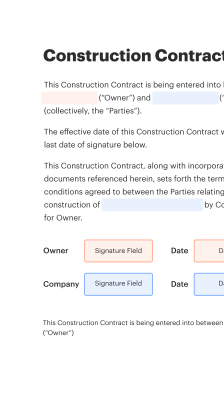
How write teller text integrates into signing workflows

write teller text slots into document workflows so approved language appears automatically at the point of transaction, preserving context for reviewers and signers.

  • Template selection: Choose an approved text block for the document
  • Field mapping: Map variables to form fields or data sources
  • Render for signer: Text displays in the document during signing
  • Record retention: Finalized text stored with audit metadata
Collect signatures
24x
faster
Reduce costs by
$30
per document
Save up to
40h
per employee / month

Quick steps to create write teller text templates

Follow these essential steps to build a controlled template that tellers can use within transaction workflows.

  • 01
    Create template: Open template editor and define base wording
  • 02
    Identify variables: Add variable fields for names, amounts, dates
  • 03
    Apply permissions: Set edit and approval roles appropriately
  • 04
    Publish: Release template for teller access and versioning

Step-by-step: embedding write teller text into a document

Use these granular steps to insert and validate teller text inside a transactional document before sending for signature.

01

Select document:

Open the target form or template
02

Choose text block:

Insert approved teller text module
03

Map variables:

Link fields to data sources
04

Preview:

Verify rendered text and variables
05

Assign signer:

Set recipient roles and order
06

Finalize:

Save and send for signature
be ready to get more

Why choose airSlate SignNow

  • Free 7-day trial. Choose the plan you need and try it risk-free.
  • Honest pricing for full-featured plans. airSlate SignNow offers subscription plans with no overages or hidden fees at renewal.
  • Enterprise-grade security. airSlate SignNow helps you comply with global security standards.
illustrations signature

Recommended workflow settings for write teller text

The following settings illustrate a conservative configuration for deploying write teller text while preserving security and auditability.

Feature Configuration
Template Approval Requirement Enabled
Edit Permissions Compliance only
Versioning Automatic
Audit Log Retention Seven years
Variable Mapping Source CRM or secure form input

Supported platforms and basic requirements

write teller text is compatible with modern browsers and mobile apps used by teller workstations and field devices.

  • Windows: Windows 10 or later
  • macOS: macOS 10.14 or later
  • Mobile: iOS 13+ and Android 8+

Ensure browsers support TLS 1.2 or higher and enable JavaScript; for integrations, provide API credentials and secure network access to permit template rendering and variable population from internal systems.

Security and data controls for write teller text

Encryption at rest: AES-256 encryption applied to stored templates
Encryption in transit: TLS 1.2+ protections for data transfer
Access controls: Role-based permissions for template edits
Authentication: MFA available for sensitive accounts
Audit logging: Detailed change logs for each template
Data segregation: Tenant-level separation for enterprise accounts

Practical examples of write teller text in action

These case examples show how write teller text is applied in banking and administrative workflows to improve consistency and traceability.

Branch Deposit Receipt

A community bank standardized teller receipts using write teller text to include required disclosure language and variable transaction fields for amounts and account details

  • Template enforcement ensures every receipt includes regulator-approved phrasing
  • Reduced teller variability lowered exception handling and customer confusion

Resulting in clearer records and faster reconciliations during audits.

Student Financial Aid Form

A university implemented write teller text for cashier scripts and payment receipts to ensure FERPA-safe discrete disclosures and consistent student communications

  • Central templates prevent manual edits that could reveal protected information
  • Standard language sped up cashier processing and improved training for seasonal staff

Leading to more reliable records and simplified compliance reviews for audit cycles.

Best practices for secure and accurate write teller text

Adopting these practices helps organizations maintain compliance, reduce errors, and simplify audits while keeping teller workflows efficient.

Use concise, regulator-reviewed language
Maintain short, plain-language templates that compliance has approved; remove ambiguous phrasing and avoid conditional statements that could be misinterpreted by staff or customers.
Limit edit permissions to reviewers
Grant template editing only to designated compliance or operations roles, while frontline users receive view and apply permissions to prevent unauthorized changes.
Log every template change
Enforce version history with timestamps, editor identity, and change notes so auditors can reconstruct which text was active for any historical transaction.
Integrate with identity verification
Combine write teller text deployment with signer authentication methods to ensure the presented language matches the verified signer and to strengthen evidentiary value.

FAQs About write teller text

Common questions about setup, permissions, compliance, and troubleshooting for write teller text are answered below to help administrators and users resolve typical issues.

Feature comparison: write teller text in signNow versus alternatives

A concise comparison highlights availability of key capabilities in signNow, DocuSign, and traditional paper processes for teller-facing text control.

Criteria signNow (Recommended) DocuSign Paper (Physical)
Central template library
Variable field mapping
Version history Limited
Editable by compliance only Configurable Configurable Not enforced
be ready to get more

Get legally-binding signatures now!

Lifecycle steps for write teller text governance

Governance requires defined stages from drafting through retirement to ensure ongoing compliance and clarity around who can change teller text.

01

Drafting

Create initial wording and identify stakeholders

02

Review

Compliance reviews and suggests edits

03

Approval

Designated approver signs off on the template

04

Publishing

Template made available to tellers

05

Monitoring

Track usage and exceptions

06

Revision

Update template as rules change

07

Retirement

Remove outdated templates from circulation

08

Archival

Store retired versions for recordkeeping

Document timelines and retention considerations

Establish timelines that reflect regulatory retention requirements and internal review cycles for templates and transaction records.

01

Template review cadence

Annual or faster reviews recommended

02

Transaction retention

Keep signed records per statute

03

Audit readiness window

Maintain complete logs for requested periods

04

Revision notification

Notify users when templates change

Retention schedule examples for write teller text assets

Sample retention periods should be tailored to industry regulations; these examples illustrate common baseline policies.

Operational templates retention:

Retain current and previous versions for five years

Signed transaction records:

Preserve for seven years for financial compliance

Audit logs:

Store detailed logs for six years

User access records:

Keep role and access changes for three years

Legal holds:

Suspend deletion until legal clearance

Regulatory and operational risks without standardized teller text

Compliance violations: Fines and enforcement actions possible
Contract disputes: Increased litigation and remediation costs
Customer confusion: Service delays and complaints
Audit failures: Negative findings in reviews
Data breaches: Exposure from insecure storage
Operational inefficiency: Higher labor and error correction costs

Cost considerations across signNow and leading eSignature vendors

Cost and licensing vary; below are typical plan characteristics and cost-relevant differences to consider when comparing signNow with other providers and manual paper processes.

Plan signNow (Recommended) DocuSign Adobe Sign HelloSign Paper (Manual)
Entry-level pricing Affordable subscription options with tiered pricing Consumer and small business tiers vary by feature Business plans included with Adobe Creative Cloud or standalone Free tier with limited features, paid plans available Ongoing per-page and staff costs
Enterprise support Dedicated enterprise plans and SLAs available Enterprise-grade services and compliance offerings Enterprise integration and support worldwide Business Plus and API options for enterprises Internal administrative overhead
Volume discounts Negotiable for high-volume customers Available with enterprise contracts Available in enterprise agreements Available with higher-tier plans Not applicable
Compliance add-ons Support for HIPAA controls and audit features Broad compliance portfolio and certifications Strong enterprise compliance features Basic compliance options with upgrades Manual compliance processes required
Operational costs Lower per-transaction overhead when automated Higher per-user license costs for some tiers Licensing bundled with other Adobe products may affect cost Competitive for small teams but limited at scale Significant time and storage costs

Simplify complex workflows

Create, execute, and manage workflows of any complexity, electronically from virtually anywhere. Scalable eSignature capabilities allow you to share documents with the right people in the correct order and define roles for each recipient. Execute document workflows faster and easier than ever before.

Automate document management

Optimize complex signing processes with airSlate SignNow’s powerful features to enhance your business. Control your automated eSignature workflows to ensure they're running at peak performance with instant notifications and reminders.

Optimize in team collaboration

Bring teams together in a secure, shared environment. Manage documents, use form templates and notifications to create more efficient cross-organization collaboration. Free your employees from having to spend time on repetitive activities so that they can focus on valuable, business-critical tasks.

Integrate into your existing systems

Run your projects with industry-leading integration. Collect Salesforce, Microsoft Teams, and SharePoint all in one business flow. Connect your software to a single system for endless possibilities and more productiveness.

Stay compliant with best-in-class data protection

Feel confident knowing that your information remains secure by the latest in encryption security. airSlate SignNow is GDPR and eIDAS compliant and offers you transparence into your eSigning experience with court-admissible audit trails. Set up user access permissions and roles to regulate who has access to what.


walmart logo
exonMobil logo
apple logo
comcast logo
facebook logo
FedEx logo
be ready to get more

Get legally-binding signatures now!