Establishing secure connection…Loading editor…Preparing document…

Agent Agreement

This template is fully customizable. Edit the text, fill out the fields, and send it for signature. Give it a try!
Agent Agreement

What an Agent Agreement is and when it's used

An Agent Agreement is a written contract that appoints an individual or entity to act on behalf of another party (the principal) for specified tasks or transactions. Typical uses include authorizing real estate listing agents, service providers, claims representatives, or corporate agents to sign documents, make filings, or take administrative actions. The agreement defines the scope of authority, any limitations, term length, compensation or fees, and requirements for execution, witnesses, or notarization. Clear terms reduce disputes and help ensure the agent's actions bind the principal as intended.

Why a clear Agent Agreement matters

A written Agent Agreement creates predictable authority, limits liability, and documents consent; it supports enforceability under federal and state electronic signature laws such as the ESIGN Act (15 U.S.C. ch. 96) and state UETA frameworks.

Why a clear Agent Agreement matters

Typical parties who prepare or sign an Agent Agreement

Agent Agreements are used across businesses and regulated professions to delegate authority while documenting limits and obligations.

  • Real estate brokers and listing agents who need written authorization to list, market, or close property transactions.
  • Healthcare administrators or third-party billing agents acting under a HIPAA-compliant business associate relationship.
  • Corporate officers appointing registered agents or authorized signers for filings, banking, or vendor contracts.

Core elements every professional Agent Agreement should include

A robust Agent Agreement balances clarity for the principal, defined authorities for the agent, and required execution formalities. Include these sections to reduce ambiguity and support legal enforceability.

Parties

Full legal names and entity types for principal and agent, including business registration numbers where applicable and the agent’s contact information.
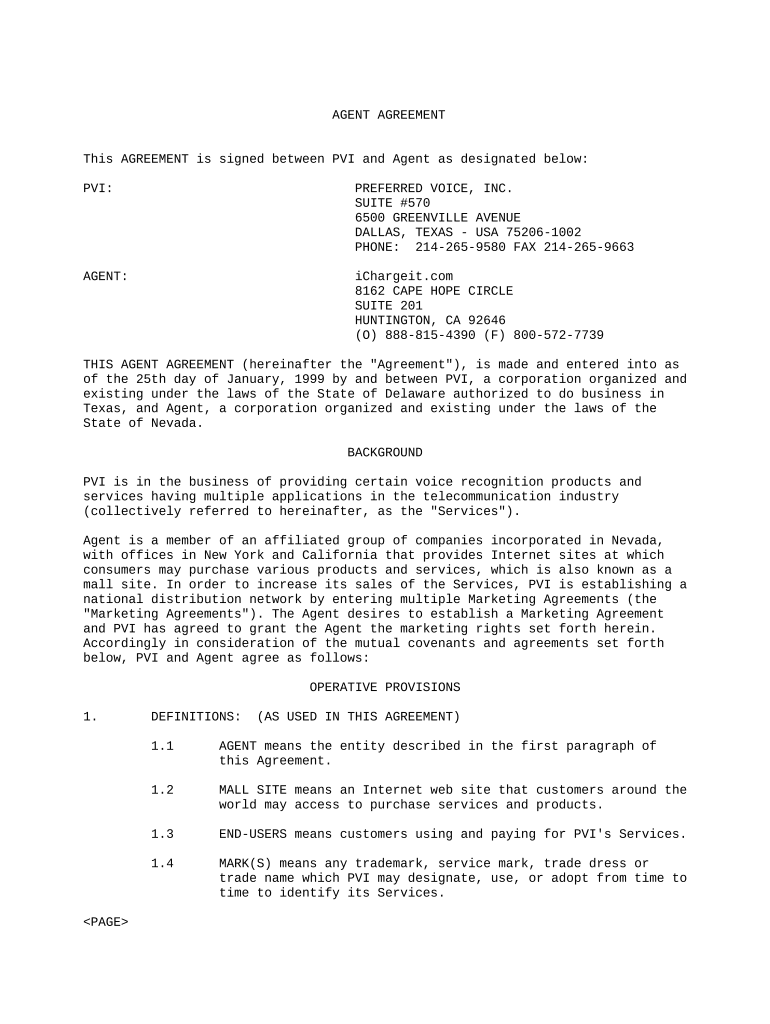
Scope of Authority

Precise description of actions permitted—signing, filing, receiving funds, or managing property—plus explicit exclusions to avoid implied powers.

Term and Termination

Start and end dates, automatic renewal conditions, and termination rights for either party, including notice periods and immediate revocation procedures.

Compensation

If applicable, specify fees, reimbursement policies, invoicing cadence, and any conditions that trigger payment or withholding obligations.

Execution and Authentication

Specify whether signatures require notarization, witnesses, remote online notarization (RON), or enhanced signer authentication, and the jurisdictional requirements.

Governing Law

Designate the state law that interprets the agreement and any venue for disputes; this affects enforceability and applicable procedural rules.

Security and compliance checkpoints to document

Encryption: TLS 1.2/1.3 in transit; AES-256 at rest
Audit Trail: Comprehensive signing logs and timestamps
HIPAA: BAA required for protected health information
21 CFR Part 11: Compliant controls for FDA-regulated records
ESIGN / UETA: Legal framework for e-signature validity
Access Controls: Role-based permissions and MFA options

Step-by-step: complete an Agent Agreement

Follow these core steps to create, review, and execute an enforceable Agent Agreement in a consistent workflow.

  • 01
    Prepare: Draft parties, scope, term, and governing law
  • 02
    Review: Legal review for authorities and compliance
  • 03
    Authenticate: Choose eSign or notarization and required checks
  • 04
    Execute: Sign, date, and distribute final executed copies

Configure an online Agent Agreement workflow

Set up a digital workflow with authentication, role order, and notifications to ensure correct sequencing and auditability.

Field Configuration
Authentication Email link with optional SMS code or KBA
Signing Order Sequential or parallel signer order
Conditional Fields Show fields only when specific options selected
Notifications Email reminders and completion receipts

Digital signing and platform considerations

Choose a platform that supports required authentication, audit trails, and relevant integrations for downstream filings.

  • Integrations: Salesforce, NetSuite, Google Workspace and other common systems
  • File formats: PDF and DOCX input; signed PDF output
  • Authentication: Email, SMS, 2FA, and optional advanced options

Where to file, send, and store executed agreements

Know the destinations for executed documents and set distribution rules to ensure all stakeholders receive signed copies.

  • Primary Delivery: Send executed copy to principal and agent immediately
  • Regulatory Filings: File with state agencies only if required
  • Third Parties: Provide signed copies to banks, insurers, or vendors as needed
  • Records Storage: Store master copy in secure, access-controlled repository

Timing and common deadline checkpoints

Agent Agreements often include time-sensitive triggers; track execution date, notarization windows, and any statutory filing dates that may apply.

Execution Date:

Effective date when authority begins, usually same-day as signatures

Notarization Window:

Complete notarization at signing if required by the jurisdiction

Provision Delivery:

Deliver executed copies immediately to parties and affected third parties

Regulatory Filing:

File any required registration or notification within state deadlines

Record Retention:

Begin retention period from execution date per retention policy

Common risks and legal consequences of a faulty Agent Agreement

Invalid Authority: Agent actions unenforceable
Fiduciary Breach: Liability for misuse of authority
Tax Penalties: Failing to report or withhold (IRC §6721)
Notarization Failure: Document rejected by third parties
Contract Dispute: Counterparty challenges to signatures
Data Exposure: Privacy breaches; HIPAA violations

Sample eSignature vendor comparison for executing Agent Agreements

Comparison focuses on starting price, trial availability, bulk send, audit trail, HIPAA compliance, and envelope limits to help evaluate eSignature platforms for Agent Agreement workflows.

signNow DocuSign Adobe Sign PandaDoc HelloSign
Starting Price $8/user/mo $15/user/mo $14/user/mo $19/user/mo $15/user/mo
Free Trial 7-day free trial Varies by plan Varies by plan Varies by plan Varies by plan
Bulk Send Yes Yes Yes Yes No
Audit Trail Yes Yes Yes Yes Yes
HIPAA Compliant Yes Yes Yes No No
Envelope Cap No cap 100 envelopes/user/year Varies by plan Varies by plan Varies by plan

Real examples illustrating common Agent Agreement uses

These concise examples show how organizations use Agent Agreements to delegate authority while maintaining compliance and recordkeeping.

Martin Properties — Property Transactions

Tim Martin used secure electronic execution to process agent authorizations efficiently.

  • The platform supported mobile signing for field agents.
  • The result streamlined document return and maintained an audit trail for closings without requiring in-person signatures.

Fertility Centers of Illinois — Administrative Agent

John Butler implemented electronic delegation for administrative representatives to sign consent acknowledgements.

  • Integration captured signed records directly into case management.
  • This ensured consistent record retention and simplified audits while preserving patient privacy controls.

Practical tips for accurate, efficient Agent Agreement execution

Adopt consistent drafting and execution standards to minimize disputes and administrative delays.

Use precise scope language
Describe permitted actions concretely rather than using open-ended phrases; include examples and explicit exclusions to avoid implied authority claims.
Document authentication steps
Specify whether signatures require electronic authentication level, notarization, or witnesses; include procedures for RON if used.
Retain an auditable master copy
Store the executed agreement with a tamper-evident audit trail, access controls, and a documented retention schedule tied to regulatory requirements.
Review periodically
Assess and renew authorities at defined intervals to ensure agent powers remain appropriate and aligned with current operations.

Common questions about Agent Agreements and electronic execution

Answers to frequent issues about validity, notarization, revocation, and recordkeeping for Agent Agreements executed electronically.


Need help? Contact support

be ready to get more
Join over 28 million airSlate SignNow users