Establishing secure connection…Loading editor…Preparing document…

Asset Purchase Agreement

This template is fully customizable. Edit the text, fill out the fields, and send it for signature. Give it a try!
Asset Purchase Agreement

What an Asset Purchase Agreement Is and When It’s Used

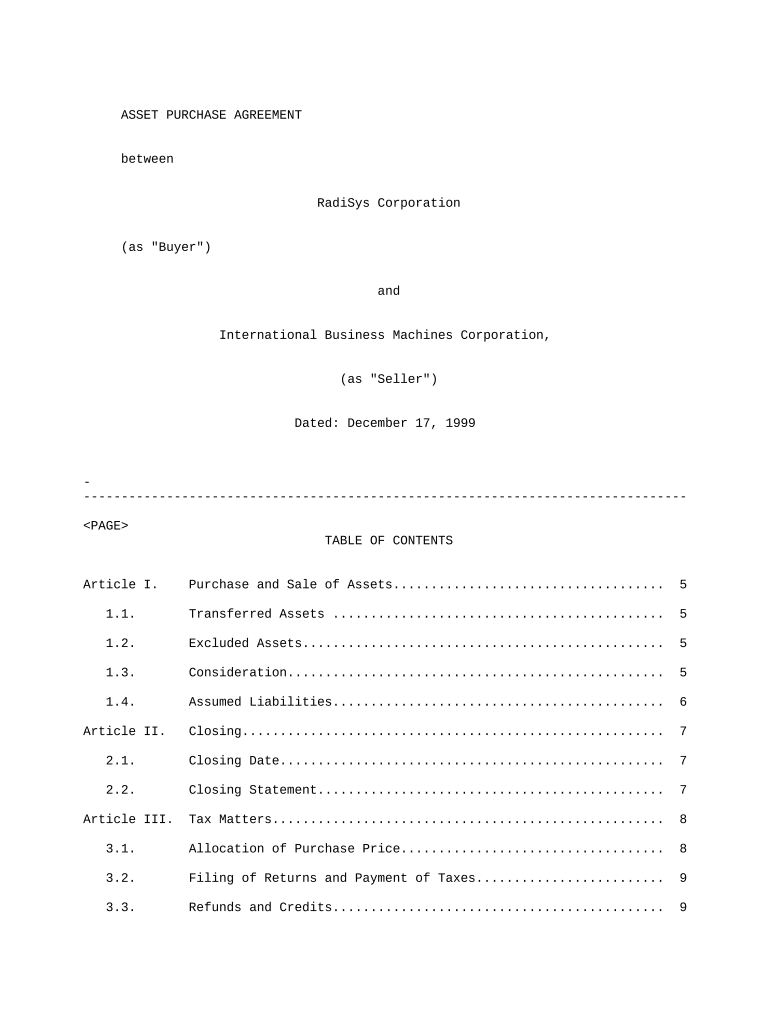
An Asset Purchase Agreement (APA) is a legal contract that documents the transfer of specified assets from a seller to a buyer, rather than a transfer of equity. Typical assets include equipment, inventory, intellectual property, customer lists, and selected contracts. The APA sets the purchase price, describes included and excluded assets, allocates liabilities, establishes representations and warranties, and defines closing conditions and post-closing obligations. Parties often use an APA when acquiring a business unit, buying assets out of bankruptcy, or purchasing tangible and intangible property without assuming the seller’s corporate entity or all of its debts.

Why an APA Matters: Clarity, Risk Allocation, and Tax Treatment

An APA provides precise definitions of transferred assets and liabilities, allocates closing risk, and sets the tax allocation that governs buyer and seller reporting. Clear terms reduce post-closing disputes and enable regulatory or lender review where required.

Why an APA Matters: Clarity, Risk Allocation, and Tax Treatment

Who Typically Drafts and Signs an APA

In practice, counsel prepares a version suitable for due diligence and lender review; signatures are executed only when negotiated terms, allocations, and closing conditions are final.

  • Private company buyers acquiring business units or product lines for strategic growth or consolidation.
  • Private equity or strategic investors buying assets to avoid inheriting corporate liabilities.
  • Sellers divesting assets, closing a business line, or selling through an auction or broker process.

Core Elements Every Professional Asset Purchase Agreement Should Include

A robust APA organizes the transaction into defined sections so buyers and sellers clearly understand what transfers and what remains, who bears which risks, and how post-closing adjustments are calculated.

Purchase Price

Specifies total consideration, payment mechanics, escrow or holdback amounts, and formulas for post-closing adjustments such as working capital true-ups or earnouts.
Assets Schedule

A detailed schedule listing included tangible and intangible assets, excluded items, and any inventory counting or acceptance procedures to avoid ambiguity at closing.

Assumed Liabilities

Defines which liabilities the buyer will assume (if any), including specific contract obligations, tax liabilities, and employee-related obligations.

Representations & Warranties

Seller and buyer statements about authority, ownership, compliance, and tax status; often tied to survival periods and indemnity caps.

Closing Deliverables

Lists required documents at closing: bills of sale, assignment and assumption agreements, consents, releases, title documents, and certificates of authority.

Indemnities & Remedies

Allocation of post-closing losses, indemnity scope, limitations on liability, cure rights, and procedures for claims and dispute resolution.

Essential Data Points to Record in the Agreement

Parties: Full legal entity names
Effective Date: MM/DD/YYYY format
Asset List: Exhibit or schedule reference
Purchase Price: Numeric amount and currency
Governing Law: Chosen state jurisdiction
Signatory Authority: Name and title of signer

Step-by-Step: Completing an Asset Purchase Agreement

Follow these sequential actions to prepare, negotiate, and execute an APA consistently and defensibly.

  • 01
    Prepare Schedules: Compile asset lists, contracts, and lien searches before drafting.
  • 02
    Draft Core Terms: Set price, allocations, assumed liabilities, and closing mechanics.
  • 03
    Conduct Due Diligence: Verify title, licenses, tax status, and regulatory consents.
  • 04
    Execute and Close: Exchange closing deliverables, process payments, and file required records.

Configuring an Online Workflow for APA Execution

Map the digital signing sequence and required authentications to match the negotiated APA closing process and any lender or regulatory needs.

Field Configuration
Signer Order Sequential or parallel signing depending on escrow and closing sequence
Authentication Email link with optional SMS or KBA for higher assurance
Conditional Fields Enable conditional clauses to appear only when specific boxes are checked
Delivery Automatic distribution of executed copies and audit trail to all parties

Where an Executed APA Goes and Who Receives It

An executed APA is distributed to stakeholders, service providers, and record repositories; routing depends on closing mechanics and required filings.

  • Buyer: Receives fully executed copy and tax allocation schedules
  • Seller: Receives copy and instructions for asset handover
  • Lenders: Receives copies per financing or collateral conditions
  • Filing Agents: Receive documents for UCC or recording as applicable

Digital Signatures, Authentication, and Integration Considerations

Choose a workflow that provides an unalterable audit trail, strong signer authentication, and secure storage to support enforceability and post-closing review.

  • Authentication: Email, SMS code, or advanced options
  • Audit Trail: Tamper-evident record of signer actions
  • Integrations: Connects to CRM, NetSuite, or cloud storage

Common Deadlines to Track in an APA Transaction

Track contractual and statutory deadlines carefully; missed deadlines can prevent closing or trigger damages and reporting obligations.

Due Diligence Period:

Defined number of days to complete inspections and approvals

Closing Date:

Date when funds transfer and asset transfer occur

Tax Allocation Filing:

Timely file IRS allocations and Form 8594 if applicable

UCC Filing Window:

File security interest within statutory period after closing

Post-Closing Obligations:

Dates for document delivery, employee notices, and consents

Key Transaction Milestones from LOI to Post-Closing

Milestones mark commitment points and release conditional obligations; monitor each stage for dependencies and timing.

01

Letter of Intent

Sets preliminary terms and exclusivity period for negotiation.

02

Due Diligence

Buyer inspects assets, contracts, and records; material issues may prompt renegotiation.

03

Signing

Parties execute the APA subject to closing conditions.

04

Closing and Post-Closing

Funds transfer, asset assignments, recordings, and post-closing filings occur.

Frequent Mistakes to Avoid When Preparing an APA

  • Failing to itemize assets precisely, which creates ambiguity about what transfers and increases litigation risk.
  • Overlooking consents required by third-party contracts or licensors, causing post-closing defaults or injunctions.
  • Neglecting tax allocation details; vague allocations can produce disputes and adverse IRS treatment.
  • Underestimating contingent liabilities or environmental exposures, which can leave the buyer with unexpected costs.

Risks and Legal Consequences of Errors in an APA

Contract Rescission: Damages and return of consideration
Indemnity Claims: Monetary liability for breaches
Tax Penalties: Reporting failures can trigger IRC §6721 fines
Lien Exposure: Unreleased liens may attach to transferred assets
Regulatory Sanctions: Noncompliance with industry rules
Reputational Harm: Client and lender trust erosion

eSignature Vendor Comparison for Asset Purchase Agreement Execution

Compare baseline pricing and a few key features that affect high-volume APA workflows; signNow is listed first per standard vendor comparison order.

signNow DocuSign Adobe Sign PandaDoc HelloSign
Starting Price $8/user/mo $15/user/mo $14/user/mo $19/user/mo $15/user/mo
Free Trial 7-day free trial Varies Varies Varies Varies
Bulk Send Yes Yes Yes Yes No
Audit Trail Yes Yes Yes Yes Yes
HIPAA Compliant Yes Yes Yes No No
Envelope Cap No cap 100 env/user/yr Varies by plan Varies by plan Varies by plan

Examples: How an APA Works in Different Deals

Two concise scenarios illustrate typical APA structures and the documentation parties attach to support closing.

Small Business Asset Sale

Buyer purchases equipment and customer list to continue operations

  • Purchase price paid in cash with a 6-month escrow for disputed receivables
  • Closing includes bill of sale, assignment schedules, and an escrow release mechanism for indemnity claims.

Divestiture of Product Line

Parent company sells a product line including IP and inventory

  • Allocation divides goodwill, inventory, and tangible assets for tax reporting
  • Parties execute license assignments, supply contract novations, and transitional services agreements for continuity.

Typical Signatories and Their Roles

Seller Owner

The selling party or authorized officer who warrants title to the assets and signs indemnities. Counsel typically reviews and attaches schedules for encumbrances and excluded assets before execution.

Buyer Rep

An authorized buyer executive or designee who acknowledges acceptance of schedules, payment mechanics, and any post-closing obligations such as employment transitions or license transfers.

Practical Tips for Accurate and Efficient APA Completion

Adopt consistent drafting habits and use structured schedules to minimize negotiation cycles and post-closing disputes.

Use Detailed Asset Schedules
Attach itemized lists and serial numbers where applicable; a clear schedule reduces dispute risk and simplifies transfer and registration tasks.
Define Tax Allocations
Agree to a specific allocation table for IRS Form 8594 reporting to prevent later tax adjustments or IRS challenges.
Limit Open-Ended Assumptions
Avoid broadly assuming unknown liabilities; specify explicit assumed liabilities and carve out contingent exposures where appropriate.
Preserve Audit Trails
Use a secure signing platform that captures timestamps, IP addresses, and signer authentication to support enforceability and lender review.

FAQs and Troubleshooting for Asset Purchase Agreements

Answers to common legal and practical questions encountered when preparing, negotiating, and executing an APA.


Need help? Contact support

be ready to get more
Join over 28 million airSlate SignNow users