Establishing secure connection…Loading editor…Preparing document…

Merger Agreement

This template is fully customizable. Edit the text, fill out the fields, and send it for signature. Give it a try!
Merger Agreement

What a Merger Agreement Is and when it applies

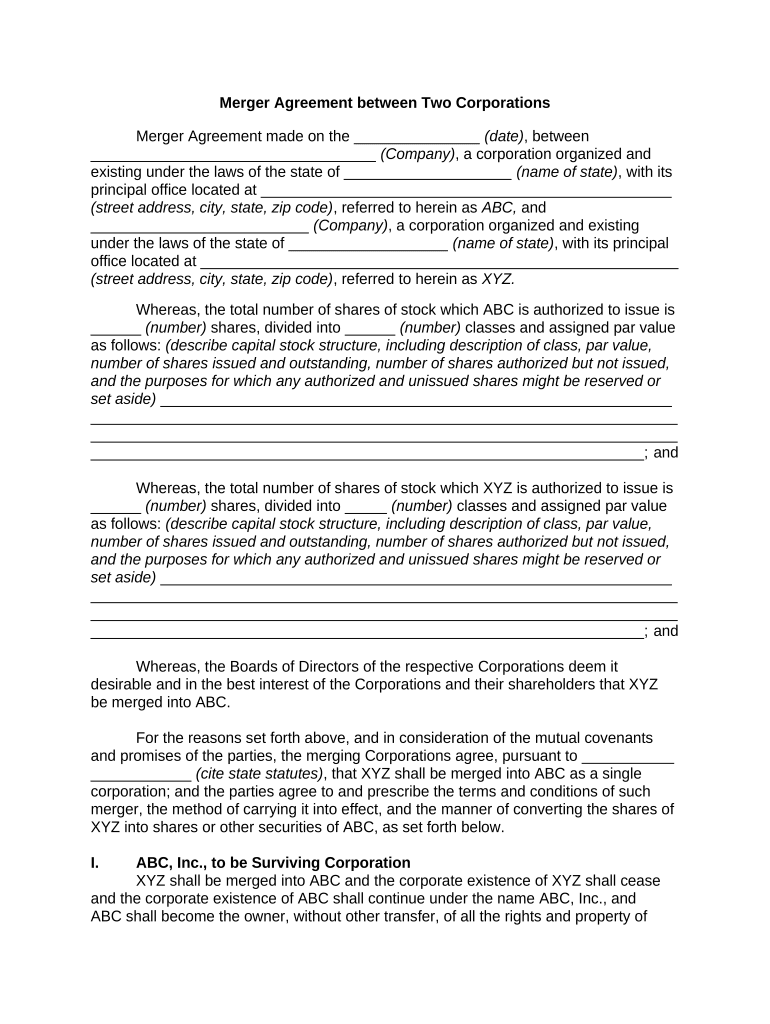
A Merger Agreement is a binding contract that sets the terms and conditions under which two or more business entities combine into a single entity. It defines the parties, the form of consideration (cash, stock, or other assets), the effective date, approval mechanics, representations and warranties, covenants, closing conditions, and indemnification provisions. The agreement also specifies governing law, the process for shareholder or member approvals, and post-closing obligations such as transitional services or employee matters. Merger Agreements can be statutory (filed with a state agency) or private contracts executed by authorized officers and legal representatives.

Why a clear Merger Agreement matters

A well-drafted Merger Agreement allocates risk, clarifies closing conditions, preserves tax attributes, and sets dispute-resolution mechanisms. It protects buyer and seller expectations, helps satisfy regulatory and shareholder requirements, and reduces the likelihood of post-closing litigation by documenting representations, warranties, and remedies.

Why a clear Merger Agreement matters

Who typically prepares and signs a Merger Agreement

Merger Agreements are prepared by legal and corporate teams and executed by authorized officers or representatives with corporate authority.

  • Corporate executives and boards approve and sign on behalf of their entities after proper authority and corporate resolutions.
  • In-house and external counsel draft, negotiate key clauses, and certify corporate approvals and closing deliverables.
  • Lenders, investors, and regulatory counsel may sign or consent where financing or statutory approvals are required.

Core sections to include in a professional Merger Agreement

A comprehensive Merger Agreement organizes commercial, legal, and closing mechanics into clear sections so parties can evaluate obligations and conditions before and after closing.

Parties

Identify each legal entity with full legal name, state of organization, type of entity, and principal place of business to avoid ambiguity in enforcement and filings.
Consideration

Describe precisely the form and timing of payment — cash, stock, promissory notes, or escrowed amounts — and mechanics for valuation adjustments or earnouts.

Closing Conditions

List specific seller and buyer conditions, consents, regulatory approvals, and third-party waivers that must be satisfied or waived to permit closing.

Representations

Provide detailed seller and buyer representations and warranties about authority, financial statements, tax status, assets, contracts, and compliance with law.

Covenants

Include interim covenants (conduct of business between signing and closing), transition services, employee matters, and noncompete or confidentiality obligations.

Indemnification

Define indemnity scope, baskets, caps, survival periods, and procedures for claims and remedies, including dispute resolution and limitations on consequential damages.

Essential information fields to collect

Entity Names: Full legal names
Jurisdiction: State of incorporation
EIN / TIN: Tax identification
Consideration Type: Cash or stock
Effective Date: MM/DD/YYYY
Authorized Signatory: Name and title

Step-by-step: preparing and executing a Merger Agreement

Follow a phased process from negotiation through closing and post-closing to reduce risk and ensure corporate and regulatory compliance.

  • 01
    Negotiate Terms: Agree key commercial points and legal structure before drafting.
  • 02
    Draft Agreement: Prepare full draft with reps, covenants, and closing conditions.
  • 03
    Obtain Approvals: Secure board, shareholder, and regulatory approvals as required.
  • 04
    Close and File: Execute final documents, exchange consideration, and file statutory documents.

Configuring an online signing and review workflow

Set up a clear digital workflow to route the agreement for signatures, approvals, and final archiving while maintaining an audit trail.

Field Configuration
Signer Order Sequential routing or parallel signing per party role
Authentication Email link, SMS code, or KBA as required
Conditional Fields Show or hide exhibits based on answers
Audit Trail Capture timestamps, IP, and actions for each signer

Where to file, route, and store the executed agreement

After execution, distribute signed originals to stakeholders, file statutory documents with the state filing office, and retain records per legal requirements.

  • State Filings: File articles of merger with the relevant Secretary of State.
  • Corporate Records: Store signed agreement in company minute book and shareholder records.
  • Lender Notices: Provide copies to lenders and amend security documents as required.
  • Regulatory Filings: Submit antitrust or industry-specific filings when required.

Digital signing, authentication, and integrations

Merger Agreements often require robust signer authentication, strong audit trails, and integrations with corporate systems for recordkeeping.

  • Authentication: Email, SMS, or multi-factor options
  • Integrations: CRM or ERP export via Salesforce, NetSuite
  • Document Formats: PDF, DOCX, and audit-report export

Key timing and filing deadlines to track

Identify and calendar critical dates: signing deadlines, shareholder meeting dates, statutory filing windows, and regulatory filing deadlines to avoid invalidation or penalties.

Shareholder Approval Deadline:

Date by which required shareholder votes must be obtained.

Board Resolution Timing:

Board approvals should occur before execution to confirm authority.

Statutory Filing Window:

File articles of merger per state deadlines to effect statutory merger.

Regulatory Filing Dates:

Schedule antitrust or industry filings within statutory review periods.

Closing Date:

The date when consideration is exchanged and merger becomes effective.

Common preparation errors to avoid

  • Using imprecise consideration language that creates ambiguity about price adjustments and post-closing payments.
  • Failing to obtain required board resolutions, shareholder consents, or third-party waivers before executing the agreement.
  • Overlooking tax consequences such as asset vs. stock sale characterization and neglecting to secure necessary tax opinions.
  • Skipping a definitive closing checklist that documents deliverables, certificates, required filings, and escrow release mechanics.

Risks and legal consequences of errors

Breach Liability: Damages exposure
Tax Exposure: IRS adjustments possible
Regulatory Delay: Enjoined or delayed closing
Shareholder Claims: Derivative or fiduciary suits
Contract Voidance: Invalid or unenforceable terms
Escrow Forfeiture: Loss of reserved funds

Typical eSignature vendor pricing and capability comparison

Platform pricing and capabilities vary; signNow is listed first for parity. Compare starting price, trial availability, bulk-send options, audit trail presence, HIPAA support, and envelope caps.

signNow DocuSign Adobe Sign PandaDoc HelloSign
Starting Price $8/user/mo $15/user/mo $14/user/mo $19/user/mo $15/user/mo
Free Trial 7-day free trial No free trial No free trial Yes, limited trial Yes, limited trial
Bulk Send Yes Yes Yes Yes No
Audit Trail Yes Yes Yes Yes Yes
HIPAA Compliant Yes Yes Yes No No

Frequently asked questions about signing and enforcing Merger Agreements

Answers address execution, enforceability, notarization, electronic signatures, and record retention to help avoid common pitfalls when completing a Merger Agreement.


Need help? Contact support

be ready to get more
Join over 28 million airSlate SignNow users