Establishing secure connection…Loading editor…Preparing document…

Alabama Decree of Annulment

This template is fully customizable. Edit the text, fill out the fields, and send it for signature. Give it a try!
Alabama Decree of Annulment

What an Alabama Decree of Annulment Means

An Alabama Decree of Annulment is a court judgment that declares a marriage legally void or voidable, treated as having been invalid from its inception. The decree is issued by a circuit or family court judge in Alabama after a petitioner files for annulment and the court determines statutory grounds have been met. Unlike a divorce, an annulment states that a valid marriage never existed; the decree can affect marital status, property distribution, child custody and support determinations, and the parties’ ability to remarry under state law.

Why a Decree of Annulment Matters for Legal Status

A decree of annulment clarifies legal status and can remove marital impediments, correct public records, and resolve related financial or parental obligations under Alabama law.

Why a Decree of Annulment Matters for Legal Status

Who Typically Prepares and Uses This Decree

The Decree of Annulment is used by individuals seeking to have a marriage declared void and by professionals who help complete the paperwork.

  • Petitioners and respondents: Parties to the marriage who file or respond in court proceedings.
  • Family law attorneys: Draft pleadings, present evidence, and attend hearings on a client’s behalf.
  • Court clerks and judges: Receive filings, schedule hearings, and issue the final decree.

Clerks provide certified copies after the judge signs; parties often use certified copies to update records such as vital records or name-change filings.

Step-by-step: How to Complete and Obtain the Decree

Follow these core steps when preparing and filing an annulment petition in Alabama.

  • 01
    Confirm Eligibility: Identify statutory grounds for annulment before filing.
  • 02
    Prepare Petition: Draft complaint with facts, exhibits, and relief requested.
  • 03
    File with Court: Submit petition to the appropriate Alabama circuit family court.
  • 04
    Attend Hearing: Present evidence; judge issues decree if grounds proven.

How the Filing and Issuance Process Flows

A typical filing process moves from preparation to court action and final certified copies.

  • Prepare Documents: Assemble petition, affidavits, and supporting exhibits.
  • File & Serve: File with court clerk and serve the respondent per local rules.
  • Hearing: Judge reviews evidence and hears testimony if contested.
  • Decree Issued: Court signs decree; clerk provides certified copies.

Online Workflow Settings for Preparing an Annulment Packet

Configure your document workflow to match court and procedural needs before submission.

Field Configuration
Document Format PDF preferred for court filing and certified copies
Signer Authentication Use ID verification for petitioner signatures
Notarization Enable RON where accepted or plan for in-person notarization
Routing Set routing to attorney, petitioner, then court clerk

Digital Submission and Platform Needs

When using electronic tools, ensure compatibility with court e-filing and secure signer authentication.

  • File Formats: PDF, DOCX, and scanned TIFF accepted by many courts
  • Integrations: Works with case management and cloud storage systems
  • Authentication: Email, SMS, or ID verification options

Courts differ on e-filing and remote notarization acceptance; verify local rules and enable appropriate authentication and audit logs before submitting electronic documents.

Typical Timing and What to Expect After Filing

Timing varies by county; below are common procedural milestones and typical expectations in family courts.

Filing Window:

No universal statutory filing deadline; file promptly to protect rights

Service Period:

Service timelines follow Alabama rules; schedule service immediately after filing

Hearing Schedule:

Courts commonly schedule contested hearings within weeks to months

Decree Issuance:

Judge signs decree after findings; clerk issues certified copy

Appeal Window:

Time to appeal is governed by state appellate rules — act quickly if needed

Risks and Consequences of Incorrect or Incomplete Filings

Dismissal Risk: Incomplete petitions can be dismissed by the court
Service Defect: Improper service may void later orders
Perjury Exposure: False statements risk criminal penalties
Property Disputes: Unresolved asset issues may lead to later litigation
Parenting Conflicts: Custody or support may be affected if not addressed
Record Errors: Incorrect entries can complicate vital-record updates

Common Preparation Mistakes to Avoid

  • Asserting vague grounds without factual support delays hearings and may lead to dismissal or required amendment.
  • Failing to serve or improperly serving the respondent often results in postponed hearings or vacated orders.
  • Using inconsistent names or dates between documents can complicate verification and certification of records.
  • Assuming all courts accept remote notarization or e-filings can lead to returned submissions or additional in-person steps.

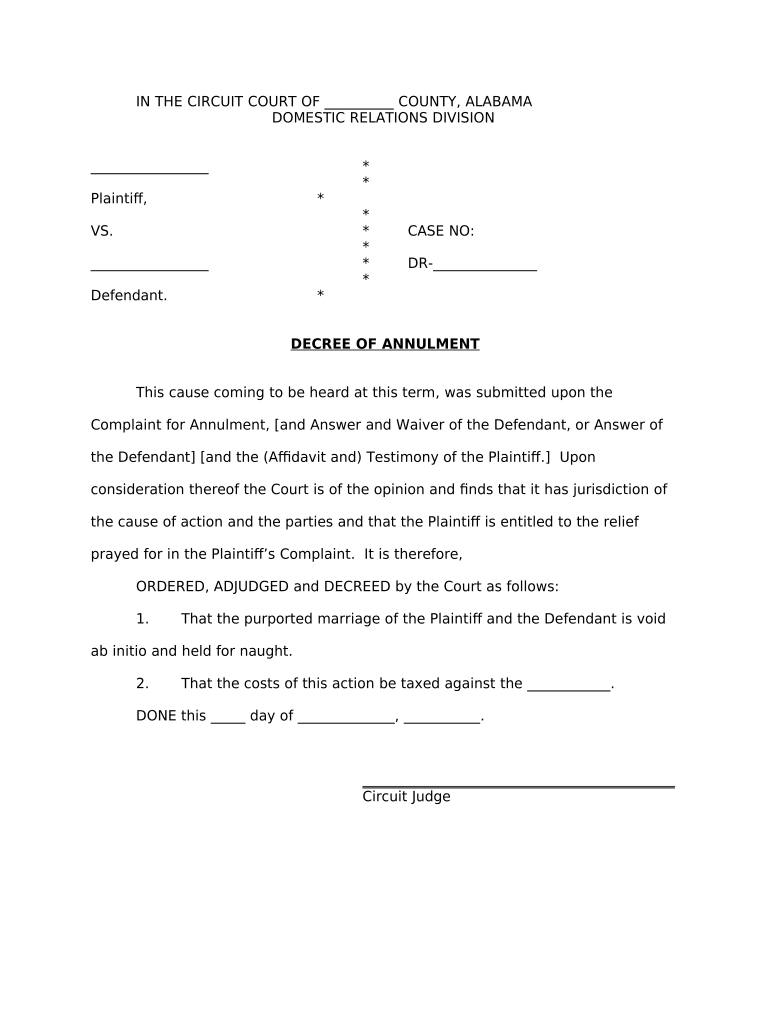
Core Elements Found in a Professional Decree of Annulment

A clear decree contains specific structural elements that make the judgment enforceable and administrable.

Court Caption

Identifies the court, county, and case number to establish jurisdiction and docket tracking for enforcement and appeals.
Findings of Fact

Sets out the factual basis the judge relied on to conclude the marriage is void or voidable under statutory grounds.

Conclusions of Law

Explains how the facts meet statutory elements and the legal effect of annulling the marriage.

Judgment Language

Explicitly declares the marriage void or voidable and states the legal consequences and restrictions.

Related Orders

Addresses property, debt allocation, custody, support, and any temporary or permanent remedies.

Certification

Judge signature, clerk date, and certified seal or stamp that validate court-issued copies for third parties.

Essential Data Elements to Record and Preserve

Case Number: Assigned docket identifier for tracking
Judge Signature: Authoritative sign-off on the decree
Clerk Certification: Stamped proof of certified copy issuance
Service Proof: Affidavit of service or return receipt
Filing Date: Date petition entered on docket
Marriage Date: Original marriage date for record correction

eSignature Provider Comparison for Document Signing and Workflows

Common capability and price comparisons for eSignature platforms used to prepare or execute legal paperwork. Confirm plan details on vendor sites before purchase.

signNow DocuSign Adobe Sign PandaDoc HelloSign
Starting Price $8/user/mo $15/user/mo $14/user/mo $19/user/mo $15/user/mo
Free Trial 7-day free trial Trial available Trial available Trial available Trial available
Bulk Send Yes Yes Yes Yes No
Audit Trail Yes Yes Yes Yes Yes
HIPAA Compliant Yes Yes Yes No No

Frequently Asked Questions About an Alabama Decree of Annulment

Answers to common procedural and evidentiary questions encountered when preparing or filing an annulment petition.


Need help? Contact support

be ready to get more
Join over 28 million airSlate SignNow users