Establishing secure connection…Loading editor…Preparing document…

Arkansas TOD Form

This template is fully customizable. Edit the text, fill out the fields, and send it for signature. Give it a try!
Arkansas TOD Form

What the Arkansas TOD Form Is

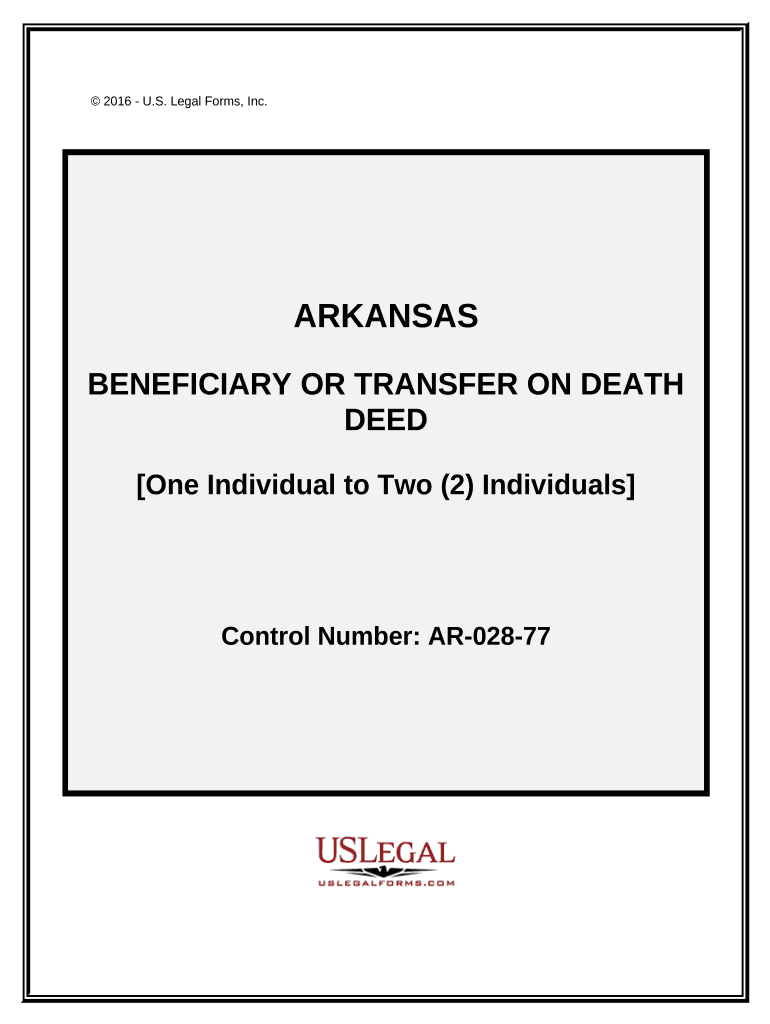
The Arkansas TOD Form is a transfer-on-death deed used to name one or more beneficiaries to receive real property at the grantor’s death without passing through probate. It is executed by the property owner while alive and typically requires notarization and recording in the county where the property is located. The instrument preserves the owner’s legal title during life while creating a nonprobate transfer mechanism that becomes effective only upon the owner’s death, subject to state recording rules and any overriding creditor claims.

Why a TOD Deed Can Matter for Arkansas Property Owners

A properly executed Arkansas TOD Form can simplify post-death transfer, avoid probate for the named property, and reduce administrative time and cost for heirs, while allowing the owner to retain full ownership and control during life.

Why a TOD Deed Can Matter for Arkansas Property Owners

Who Typically Uses an Arkansas TOD Form

Use is best when the goal is to transfer specific real property at death without changing during-life ownership or creating a trust.

  • Individual owner with one beneficiary — Simple single-parcel transfers avoiding probate.
  • Estate planners and attorneys — Tool for low-cost, targeted transfer planning.
  • Investors or landlords — Use when conveying a single title without altering tenant arrangements.

Essential Elements of a Professional Arkansas TOD Form

A complete Arkansas TOD Form combines precise grantor and beneficiary identification, a clear legal description of the property, an effective date clause, notarization, recording instructions, and revocation terms.

Grantor Name

Full legal name of the property owner as shown on title records; avoid initials or nicknames that create mismatches.
Beneficiary Details

Full legal names, relationships, and contact information for each beneficiary; include survivorship order if multiple beneficiaries exist.

Legal Description

Complete recorded legal description (metes and bounds or lot/block) exactly as in county records; do not substitute a street address alone.

Notarization

Acknowledgement by a notary public per Arkansas law; the notary block must be completed before recording.

Recording Instruction

Clear direction to record in the county clerk/recorder’s office where the property is located to perfect the designation.

Revocation Clause

Language that allows the grantor to revoke or amend the TOD deed during life, with instructions for how revocation becomes effective.

Step-by-Step: Completing and Recording an Arkansas TOD Form

Follow these four practical steps to prepare, sign, and record a valid TOD deed in Arkansas.

  • 01
    Prepare Document: Assemble legal description and full names for all parties.
  • 02
    Sign with Notary: Execute the deed before a notary public per state acknowledgement rules.
  • 03
    Record the Deed: Submit the notarized deed to the county recorder for indexing.
  • 04
    Share Copies: Provide recorded copy to beneficiaries and retain the original safely.

Timing and Recording Expectations for Arkansas TOD Deeds

Key timing points cover when a TOD deed takes effect, recording practices, and recommended scheduling to avoid disputes.

Execution Date:

Record the execution date as MM/DD/YYYY on the document.

Recording Timing:

Record promptly; delays can create third-party claim risks.

Effect at Death:

Transfer to beneficiary occurs at the grantor’s death when conditions are met.

Post-Death Recording:

Beneficiary may need to present death certificate when recording successor deed.

Owner Changes:

If owner sells or encumbers property, TOD beneficiary rights may be affected.

Common Risks When a TOD Form Is Incorrect

Invalid Recording: Deed may be rejected by county recorder
Probate Exposure: Property could still be subject to probate
Title Defects: Mismatched names can create title issues
Creditor Claims: Outstanding liens may defeat beneficiary transfer
Tax Consequences: Unintended tax events or reporting obligations
Family Disputes: Ambiguous beneficiary language invites litigation

Notarization and Witness Workflow for a TOD Deed

Follow these steps at signing to meet authentication and recording requirements for a TOD deed.

01

Prepare Final Draft

Confirm legal description and beneficiary details before signing.

02

Sign Before Notary

Grantor signs in the notary’s presence; do not pre-sign.

03

Add Witnesses If Required

Include witnesses in states that mandate them, such as Florida.

04

Complete Notary Block

Notary completes acknowledgement and signs the certificate.

05

Obtain Certified Copy

Get a certified copy if the county furnishes one upon recording.

06

Record with County

Submit original notarized deed to the county recorder for indexing.

07

Pay Fees

Include recording fee and any transfer taxes at submission.

08

Retain Originals

Keep recorded original and distribute copies to beneficiaries.

Where to File and What Happens After Recording

Recording the TOD deed is the critical step to provide constructive notice and link the annotation to county title records.

  • County Recorder: File the original notarized deed in the property’s recording county.
  • Title Indexing: Recorder indexes the instrument under the property and grantor names.
  • Beneficiary Notice: Beneficiaries should keep a copy and check title once transfer occurs.
  • Probate Interaction: Recording helps avoid probate for that parcel but may not affect other assets.

Customizing an Online TOD Workflow for Recording-Ready Output

When preparing a digital TOD form, configure fields and validations to produce a recording-ready PDF and reduce scanner or transcription errors.

Field Configuration
Grantor Name Field Auto-validate against title record format
Legal Description Field Require multiline exact entry with character limits
Notary Block Include an uneditable acknowledgement template
PDF Output Flattened, high-resolution PDF for county submission

Digital Signing and eSubmission Considerations

Choose tools that produce notarization-ready PDFs, support multi-party signing, and integrate with county filing processes.

  • Document Formats: PDF and DOCX supported for preparation
  • Integrations: Connectors: NetSuite, Google Workspace, Salesforce
  • Authentication: Email or SMS signer verification available

How a TOD Deed Differs from Other Transfer Methods

Compare common instruments to clarify when a TOD deed is the appropriate vehicle for nonprobate real estate transfer.

Instrument Probate Avoided Record Required
TOD Deed
Will
Revocable Trust
Joint Tenancy

eSignature Vendor Pricing and Capability Comparison

Select an eSignature provider that supports notarization-ready PDFs, secure audit trails, and HIPAA/industry compliance where needed.

signNow DocuSign Adobe Sign PandaDoc HelloSign
Starting Price $8/user/mo $15/user/mo $14/user/mo $19/user/mo $15/user/mo
Free Trial 7-day free trial Varies by plan Varies by plan Varies by plan Varies by plan
Bulk Send Yes Yes Yes Yes Yes
Audit Trail Yes Yes Yes Yes Yes
HIPAA Compliant Yes Yes Yes No No

Security and Compliance Snapshot for Electronic TOD Workflows

Encryption: TLS 1.2/1.3 in transit; AES-256 at rest
Certifications: SOC 2 Type II available on request
HIPAA: HIPAA compliant with BAA
ESIGN / UETA: Compliant with ESIGN and UETA standards
21 CFR Part 11: Supports 21 CFR Part 11 requirements
ISO: ISO 27001 certified

Practical Tips for Accurate and Efficient TOD Deed Completion

Adopt a checklist approach and validate key fields before signing and recording to prevent common defects and rework.

Verify Names and Title
Confirm the grantor’s legal name matches the county title record exactly; ask the recorder for the recorded format if unsure and avoid initials or nicknames.
Use Exact Legal Description
Paste the legal description from the existing deed or county record; inaccuracies here are a frequent cause of rejection and title search complications.
Notary and Witness Timing
Do not sign until you are in the notary’s presence and, where required, with witnesses present; pre-signed documents frequently fail recording acceptance.
Keep Recorded Copies
Obtain a certified or recorded copy from the county and provide it to beneficiaries; retaining the original avoids later chain-of-title questions.

Real-World Examples: How Property Owners Use TOD Deeds

These examples show typical usage and outcomes when TOD deeds are prepared and recorded correctly.

Martin Properties

A small landlord used a TOD deed to name a successor for a rental parcel

  • Reduced probate exposure for one asset
  • The recorded deed simplified transfer at owner’s death and preserved ongoing tenancy arrangements while owner remained in control during life.

Optica Ventures LLC

An investor-owner used a TOD deed for a vacation lot

  • Avoided probate for that parcel
  • Recording the deed and notifying beneficiaries made title transition straightforward while other estate assets remained subject to separate estate planning.

Frequently Asked Questions about the Arkansas TOD Form

Answers to common practical issues when preparing, signing, and recording a Transfer-on-Death deed in Arkansas.


Need help? Contact support

be ready to get more
Join over 28 million airSlate SignNow users