Establishing secure connection…Loading editor…Preparing document…

Asset Agreement

This template is fully customizable. Edit the text, fill out the fields, and send it for signature. Give it a try!
Asset Agreement

What an Asset Agreement Is and when it's used

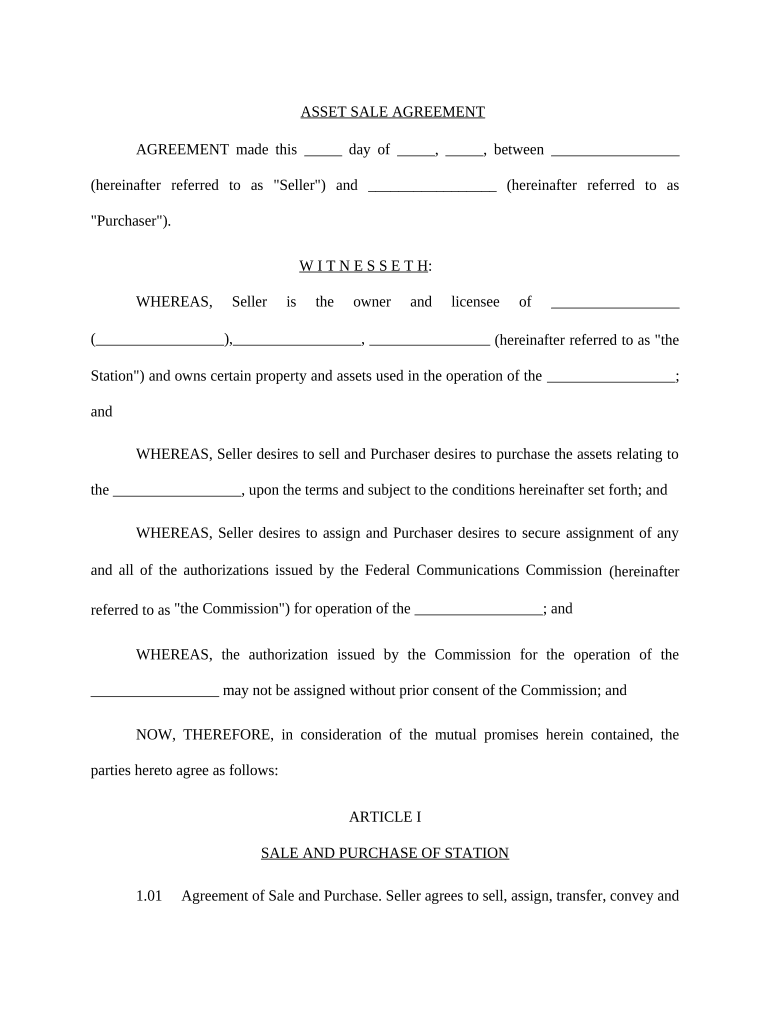
An Asset Agreement is a written contract that transfers, licenses, or assigns ownership or rights in tangible or intangible assets between parties. Typical assets include physical property, equipment, intellectual property, accounts receivable, or business inventory. The agreement defines the asset description, consideration, warranties, representations, payment terms, and any conditions precedent. For many transactions the document also states assignment mechanics, recording or filing obligations, and post-closing obligations such as indemnities and escrow holdbacks. Properly drafted Asset Agreements reduce ambiguity about which rights transfer and when performance obligations begin.

Why an Asset Agreement matters for risk and clarity

A clear Asset Agreement establishes the scope of transferred rights, the payment and security terms, and any conditions that must be satisfied before title passes. It protects both transferor and transferee by recording representations, limiting liabilities, and setting dispute resolution terms under chosen governing law.

Why an Asset Agreement matters for risk and clarity

Who typically prepares, reviews, and signs Asset Agreements

Use appropriate internal reviewers — legal for terms, tax for reporting, and operations for asset detail — before execution.

  • Corporate legal or contracts teams handling IP assignments, licensing deals, or M&A asset transfers.
  • Finance or accounting teams when assets secure loans, are sold, or trigger tax reporting obligations.
  • Operations or facilities managers for equipment sales, leases, or asset disposal arrangements.

Core elements every professional Asset Agreement should include

A usable Asset Agreement groups its clauses so parties can clearly see what is transferred, when, and under what conditions.

Asset Description

A specific, unambiguous description of each asset (serial numbers, IP registration numbers, contract identifiers) to prevent later disputes.
Consideration

The precise payment amount or other compensation, payment schedule, escrow terms, and remedies for missed payments.

Representations

Seller warranties about title, liens, and authority to transfer; buyer's reliance limitations and inspection acknowledgements.

Transfer Mechanics

How title or rights pass (assignment, bill of sale, deed), effective date, and required filings or recordings.

Indemnity & Liability

Allocation of risk for third-party claims, survival periods, caps on damages, and insurance obligations if applicable.

Governing Law

Choice of law, dispute resolution method (court or arbitration), and jurisdiction for enforcement.

Essential information fields to include

Parties: Legal entity names
Asset IDs: Serial, registration, or contract numbers
Consideration: Dollar amount or exchange
Effective Date: MM/DD/YYYY
Signatory Names: Full printed names
Governing State: Selected jurisdiction

Step-by-step: completing an Asset Agreement

Follow these sequential tasks to prepare, review, and finalize an Asset Agreement with minimal rework.

  • 01
    Gather Details: Collect asset identifiers, titles, and supporting documents.
  • 02
    Draft Terms: Define consideration, transfer method, and representations.
  • 03
    Review Internally: Route to legal, tax, and operations for approvals.
  • 04
    Execute & Record: Sign, notarize if required, and submit for recording or filing.

How to configure an online Asset Agreement workflow

Set these workflow options when using an eSignature platform or contract-management tool to reduce manual tasks.

Field Configuration
Signer Authentication Email with optional SMS code or KBA where higher assurance needed
Conditional Clauses Show clauses only if selected conditions apply to reduce signer confusion
Auto-Reminders Send periodic reminders until document fully executed
Storage Location Specify secure cloud folder with audit trail retention

Where to send or file an executed Asset Agreement

After execution follow routing steps to make the transfer effective and preserve evidence of the transaction.

  • Buyer/Seller Copies: Provide fully executed PDF copies to each party for records.
  • Recording Office: If real property is involved, record at county recorder or land registry.
  • Tax Reporting: Provide required statements to tax teams for 1099 or sale reporting.
  • Secure Archive: Store signed document in secure records system with access controls.

Technical options for sharing and signing an Asset Agreement

Choose an approach that balances signer convenience and evidentiary strength, and retain the audit trail for enforcement.

  • Formats: PDF, DOCX supported for upload and final archive
  • Integrations: Connectors to Google Workspace, Microsoft 365, NetSuite, Salesforce
  • Authentication: Email link, SMS code, or advanced verifier depending on need

Key dates and timing to track for an Asset Agreement

Track signing, recording, tax, and retention dates to ensure transfers are effective and compliant.

Effective Date:

When rights pass; often coincides with payment or delivery

Signing Deadline:

Date by which parties must execute to preserve negotiated terms

Recording Deadline:

Record deeds or transfer instruments per county rules to protect title

Tax Reporting Window:

Provide data for year-end reporting and 1099s where applicable

Notice Periods:

Observe cure or notice windows stated in the agreement

Common mistakes that delay or weaken Asset Agreements

  • Using vague asset descriptions that fail to identify serial numbers or registration identifiers and create ambiguity during transfer.
  • Failing to check for existing liens or encumbrances before transfer, which can leave buyer exposed to third-party claims.
  • Neglecting required notarization or witness formalities for recorded instruments, causing rejection by the recorder's office.
  • Missing tax-reporting steps or backup withholding triggers when payment or consideration requires IRS reporting.

Consequences of incorrect or incomplete Asset Agreements

Transfer Invalidity: Risk of title dispute or reversal
Tax Penalties: Late or incorrect reporting exposures
Recording Rejection: County may refuse to record instrument
Liability Exposure: Unallocated indemnity obligations
Contract Disputes: Increased litigation risk and costs
Regulatory Noncompliance: Sector-specific fines or sanctions

Comparing eSignature vendors for completing Asset Agreements

Platform pricing and capabilities vary by plan and use case; signNow is listed first for comparison. Verify vendor terms and features before purchase.

signNow DocuSign Adobe Sign PandaDoc HelloSign
Starting Price $8/user/mo $15/user/mo $14/user/mo $19/user/mo $15/user/mo
Free Trial 7-day free trial Varies by vendor Varies by vendor Varies by vendor Varies by vendor
Bulk Send Yes Yes Yes Yes No
Audit Trail Yes Yes Yes Yes Yes
HIPAA Compliant Yes Yes Yes No No
Envelope Cap No cap 100 envelopes/user/year Varies by plan Varies by plan Varies by plan

Frequently asked questions about Asset Agreements and eSigning

Answers cover enforceability, notarization, online execution, and common post-signing issues encountered with Asset Agreements.


Need help? Contact support

be ready to get more
Join over 28 million airSlate SignNow users