Establishing secure connection… Loading editor… Preparing document…
Navigation

Fill and Sign the Attorney Specialist Memoranda Form
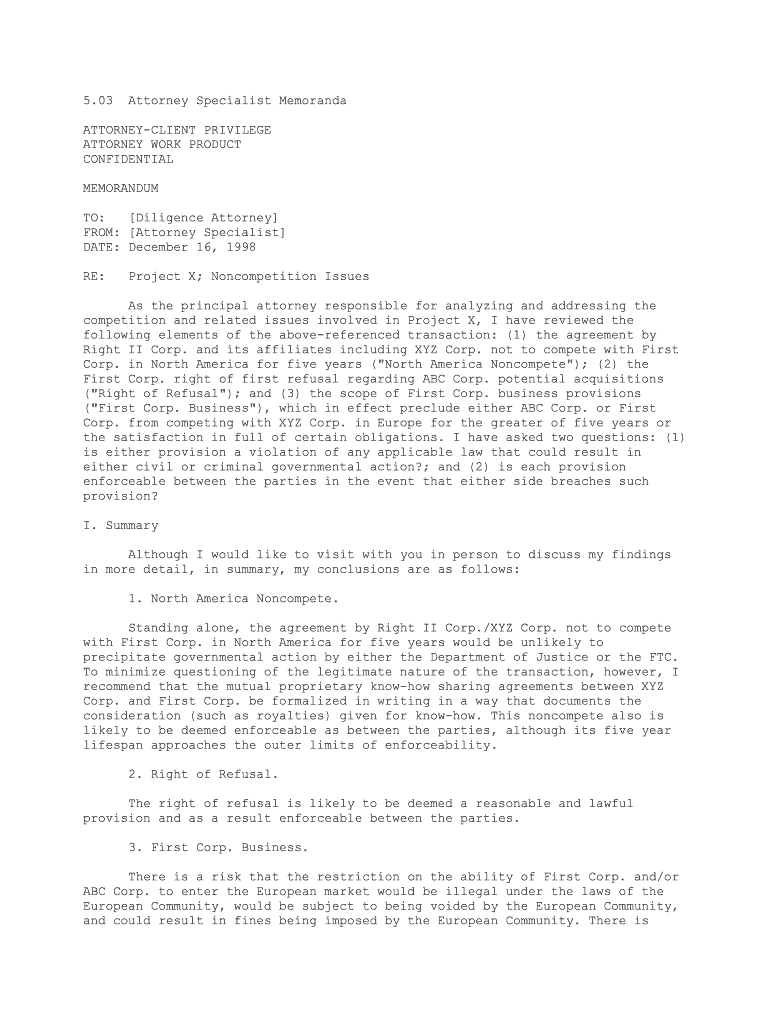
Fill and Sign the Attorney Specialist Memoranda Form

How it works

Open the document and fill out all its fields.
Apply your legally-binding eSignature.
Save and invite other recipients to sign it.

Rate template

4.6
35 votes
5.03 Attorney Specialist MemorandaATTORNEY-CLIENT PRIVILEGE ATTORNEY WORK PRODUCT CONFIDENTIAL MEMORANDUM TO: [Diligence Attorney]FROM: [Attorney Specialist] DATE: December 16, 1998 RE: Project X; Noncompetition Issues As the principal attorney responsible for analyzing and addressing the competition and related issues involved in Project X, I have reviewed the following elements of the above-referenced transaction: (1) the agreement by Right II Corp. and its affiliates including XYZ Corp. not to compete with First Corp. in North America for five years ("North America Noncompete"); (2) the First Corp. right of first refusal regarding ABC Corp. potential acquisitions ("Right of Refusal"); and (3) the scope of First Corp. business provisions ("First Corp. Business"), which in effect preclude either ABC Corp. or First Corp. from competing with XYZ Corp. in Europe for the greater of five years or the satisfaction in full of certain obligations. I have asked two questions: (1) is either provision a violation of any applicable law that could result in either civil or criminal governmental action?; and (2) is each provision enforceable between the parties in the event that either side breaches such provision? I. Summary Although I would like to visit with you in person to discuss my findings in more detail, in summary, my conclusions are as follows: 1. North America Noncompete. Standing alone, the agreement by Right II Corp./XYZ Corp. not to compete with First Corp. in North America for five years would be unlikely to precipitate governmental action by either the Department of Justice or the FTC. To minimize questioning of the legitimate nature of the transaction, however, I recommend that the mutual proprietary know-how sharing agreements between XYZ Corp. and First Corp. be formalized in writing in a way that documents the consideration (such as royalties) given for know-how. This noncompete also is likely to be deemed enforceable as between the parties, although its five year lifespan approaches the outer limits of enforceability. 2. Right of Refusal. The right of refusal is likely to be deemed a reasonable and lawful provision and as a result enforceable between the parties. 3. First Corp. Business. There is a risk that the restriction on the ability of First Corp. and/or ABC Corp. to enter the European market would be illegal under the laws of the European Community, would be subject to being voided by the European Community, and could result in fines being imposed by the European Community. There is likewise a risk that the transaction would not be enforceable between the parties in the European Community (a result which is of more concern to XYZ Corp. than to ABC Corp. or First Corp.). There is a lesser risk that an illegal European noncompete could prompt a United States government enforcement agency to challenge the XYZ Corp. noncompete in North America as being a tainted quid pro quo for an illegal noncompete in Europe. The breadth of the overall transaction and the legitimate business interests of the parties, however, provide colorable justification for the noncompete aspects of the transaction, although they do not eliminate the risks. I understand that Law Co., special European counsel, has likewise advised its client that these provisions are not risk free.In reaching the conclusions outlined above, I have relied upon a description of the transaction given to me through memoranda prepared by Michael Davis, conversations with David and you, a conversation with Eric Charles of Law Co., and a conversation with Hercules Georgio of our Brussels office. The basis for these conclusions is set forth below. Please advise me immediately if any of the bases are incorrect or have changed since I began my analysis. II. Basis for Conclusions As I understand it, the transaction is essentially a change in the management of First Corp. ("First Corp."), a limited partnership, through which ABC Sub (a wholly owned subsidiary of ABC Corp.) will become the sole general partner of First Corp. ABC Sub will have a series of options that, if exercised over five years, will result in ABC Sub owning virtually all of First Corp. First Corp. as currently constituted, is a partnership consisting of the operating assets formerly owned by First Corp., a division of ABC Corp., and Right II Corp. ("Right II Corp."), an indirect 100% subsidiary of XYZ Corp., S.A. Neither the First Corp. division nor First Corp. has engaged, or currently engages, in material business in Europe, although First Corp. does make a small (approximately $250,000-$500,000) amount of sales of speciality products into Europe, primarily to a subsidiary of XYZ Corp. The following are other salient deal points as I understand them: 1. For a period of five years, Right II Corp. will remain a partner in First Corp. 2. For as long as ten years, ABC Sub may be a debtor of Right II Corp. 3. First Corp. has shared proprietary know-how with respect to product manufacturing technology with XYZ Corp. for use in Europe. 4. To a lesser extent, XYZ Corp. has shared proprietary know-how with respect to product manufacturing technology with First Corp. for use in North America. 5. As of the date of this memorandum, these proprietary know-how sharing arrangements have not been memorialized in a formal contract, although written references to them do exist. 6. To change the scope of business in which First Corp. is permitted to engage requires a vote of the partners, including the approval of Right II Corp. 7. The First Corp. Business provisions will allow First Corp. to continue making the small amount of sales of speciality products into Europe, whether or not the primary purchaser remains a subsidiary of XYZ Corp. The shared know-how does not relate to these speciality products, and XYZ Corp. does not manufacture these products. First Corp. Business ProvisionsThe effect of the First Corp. Business provisions is to eliminate First Corp. as a potential competitor for XYZ Corp. in Europe. A key legal issue is whether it is reasonable for XYZ Corp. to insist that, if it is to remain a partner in First Corp. but relinquish control of its operations, the partnership should not be permitted to compete with it. There is some question about whether the business benefits of the transaction warrant such a broad exclusion of a potential competitor from Europe, although it is difficult to calculate at this time the precise extent of the risk. To meet these concerns, it should be made clear in the joint venture documents that the primary purpose of the joint venture has been, and remains, to exploit markets other than the European market. Those documents likewise should recite and memorialize exactly what XYZ Corp. has provided to the joint venture. If, despite these arguments, the European Community authorities determine that the noncompetes are unjustified, then sanctions could be levied. I have asked Hercules Georgio of our Brussels office to attempt to quantify these levies in a separate memorandum which I expect to receive on Friday. In addition, the fact that First Corp. could be excluded from the European market for as long as ten years raises additional problems because Hercules Georgio is unaware of any noncompetes longer than five years that have been upheld by the European Community. Thus, the agreement could be challenged by the European Community and be unenforceable between the parties. However, this unenforceability could represent more of a risk to XYZ Corp. than ABC Corp. In any event, with respect to duration, according to Mr. Georgio the result is unenforceability, not affirmative sanctions. There is also an inherent element of risk that the European Community, Justice Department, or the FTC might conclude that the transaction as a whole constitutes a division of markets, which is illegal and potentially criminal in the United States. The lack of documentation regarding the know-how sharing agreements would be used by a governmental agency to show that Project X, in toto, was a division of markets. Further complicating the matter is that if there is a noncompete that is found to be illegal in the European Commnity, it could lend credence to an argument that the noncompete in North America should also be illegal because it is the consideration for an illegal noncompete. In addition, the fact that First Corp. will be making some sales into Europe creates a further appearance of "carving up" markets. North America Noncompete and the Transaction as a Whole On the basis of the facts provided and my research to date, I believe that this transaction involves a bona fide partnership with a defensible and reasonable know-how sharing arrangement. Further, I believe that the noncompetes are reasonable restraints on use by a "licensee" of the know-how against the original owner. Any formalization of the know-how arrangements should be done with an awareness of the case law addressing reciprocal licensing and should specify the consideration (such as royalties) involved in the know-how transfers. I will be happy to participate in the drafting of such provisions. Outlined below are arguments that could be made to show that the transaction, as a whole, is merely the restructuring of an existing joint venture and that the noncompete aspects bear a reasonable relation to the legitimate business aspects of the transaction.In particular, we would argue that the North America Noncompete permits the parties to channel their North American operations through the joint venture, which is reasonable. The noncompete protects First Corp.'s exclusive interest in XYZ Corp.'s know-how. It is limited to the time it takes ABC Sub to buy out Right II Corp., which is also reasonable. By the same token, the First Corp. Business provisions protect XYZ Corp.'s rights in the First Corp. know-how. Those provisions also protect XYZ Corp.'s desire not to be competing with its debtor, which conceivably would affect the ability of ABC Sub and First Corp. to pay off their debts to Right II Corp. If the formation and operation of the original First Corp. partnership is lawful based on what the parties brought to the partnership (see discussion above), then the new structure should not be unlawful. To a large measure, the new deal simply preserves the status quo with respect to the markets that First Corp. would enter, because it is unlikely that First Corp., under the management of Right II Corp., would have competed with one of its ventures, XYZ Corp., in Europe. The fact that First Corp. makes de minimis sales into Europe is negated by the facts that those sales are of very specialized products that XYZ Corp. does not sell; the products are sold primarily to a subsidiary of XYZ Corp. through arrangements that predate the formation of the First Corp. partnership; the products are not covered by the proprietary shared know-how; and that XYZ Corp. is not precluded from selling those products if it so chooses. In sum, there are several legitimate justifications that provide a colorable basis for going forward with the provisions despite the risks, but which do not eliminate the risks. Hart-Scott-Rodino Status Regarding the Hart-Scott-Rodino Anti-Trust Improvements Act of 1976, I understand that the decision has been made that a filing is not necessary at this time, but that certain aspects of the transaction may result in a reportable event upon the exercise of the last put/call option. I will confirm with our client's General Counsel that the appropriate computer ticklers are in place to alert both their staff and ours of the need to make that filing upon the occurrence of a triggering event. MEMORANDUM TO: [Diligence Attorney] FROM: [Attorney Specialist] DATE: December 28, 1998 RE: Environmental Agency Notification of Change in Equity Ownership of First Corp. ("Notification") As the environmental law attorney specialist involved in this transaction, I have analyzed the extent of notification and filing required for compliance with applicable environmental laws given the change in equity ownership of First Corp. On December 27, 1998, I discussed with R. Timothy, Corporate Environmental Coordinator for First Corp., the timing of Notification of the applicable environmental agencies. Mr. Timothy informed me that H. Henry had requested, in a discussion with Mr. Timothy, that the Notification not be sent until after the change in equity ownership had taken place. Mr. Timothy concurred with Mr. Henry's opinion that, based upon the policy considerations of informing First Corp.'s customers and suppliers of any applicable changes prior to any public dissemination of such information, the Notification should not be sent until the equity ownership change had occurred, or at least until the contemplated transaction was at a stage of commitment that the equity ownership change would indeed occur. Mr. Timothy relayed information to me that Mr. Henry did not consider the transaction currently at a stage where customers and suppliers could be notified. Mr. Timothy agreed to keep me informed with regard to this issue and specifically stated that he and Mr. Henry were scheduled to meet on January 16, 1998 to address the issue further at that time.Based upon my understanding of the transaction, and the nature of the various facility permits/authorizations of which I am aware, the proposed action suggested by Mr. Henry and Mr. Timothy is not problematic from an environmental law perspective. As previously discussed with M. Davis, whether the contemplated transaction will constitute a change in ownership from an environmental perspective is a very gray area, not at all well-defined. It is my understanding that First Corp. has no RCRA TSD permits at any of the affected facilities. If there were any RCRA TSD permits involved, there would most likely be a need to notify the relevant agencies prior to the consummation of the transaction (90 days prior notice required) since a similar change of ownership in a corporate stock transfer is considered by EPA to constitute a change in ownership that requires the issuance of a new permit. Thus, in the RCRA TSD permit context, failure to submit the required notice to the appropriate agency, 90 days prior to the change in ownership, could result in operation of a TSD facility without the required permit, thereby subjecting the owner or operator to substantial penalties, including criminal penalties. As a more conservative approach, it would be advisable to notify the appropriate agencies prior to the change in equity ownership, preferably at least 90 days prior to such change. Various state regulations provide that a permit cannot be transferred to a new facility owner without the prior consent of the appropriate agency, if at all. (Please refer to the attached appendix, with the accompanying general outline.) In general, specific permit provisions also may require prior agency consent or preclude permit transference. (No specific permits were examined in this instance.) However, since the date to submit a 90-day prior notice has passed, a matter of a few days, or even a couple of weeks, should not materially affect any agency notifications. ENVIRONMENTAL PERMIT APPENDIX The following discussion/outline briefly summarizes the consents/notices required in connection with the change of ownership of First Corp. The information contained in this appendix is based on the following: (i) a brief review of the regulatory requirements pertaining to permits in the various relevant jurisdictions; (ii) a review of the existing files of M. Margaret and B. Burk relating to the Project X transaction; (iii) brief telephone conversations with various regulatory agency personnel; and (iv) my understanding of the contemplated transaction as described in your internal memorandum dated October 1, 1998. In the analysis of the issue, extensive research was not undertaken, recently passed statutes or ordinances and recently promulgated rules or regulations were not considered, and the assumption was made that all current facility operations are the same as contemplated at the time of the Project X transaction, including the assumption that all facilities have the required permits and are operating in compliance with those permits. Certain state transfer restriction statutes could also be triggered by the change in ownership contemplated by the Project X transaction. However, except for any newly enacted provisions, since the most onerous of such statutes have been enacted in the states of New Jersey, Connecticut and New York, and since the Project X Schedules do not reflect any ABC Corp. facilities in those states, such statutes will likely be of peripheral interest with respect to the interpretive definition of change in ownership.The threshold questions are whether the contemplated transaction triggers various environmental consent/notice requirements and at what stage of the transaction such requirements would be triggered, i.e., upon signing an agreement to close, upon closing when ABC Corp.'s existing limited partnership interest in First Corp. is converted to a general partnership interest, thereby giving ABC Corp. managerial control of First Corp., or upon the acquisition by ABC Corp. of greater than 50% equity interest in First Corp. at or near the end of calendar year 1993. As discussed in previous telephone conversations between D. Dean and myself, there appears to be no clear answer to either of these threshold questions. The environmental regulations do not set out what constitutes a change in ownership with respect to the contemplated transaction. There also do not appear to be any written guidance documents or internal agency memoranda on the federal level. In August 1984, however, the EPA did provide an oral answer to a change in ownership question in relation to the transfer of a controlling interest in stock. In that answer, as documented in the RCRA/Superfund Hotline Monthly Status report, dated August 1984 (the "August 1984 Report"), EPA stated that, in the RCRA context, a change of ownership would be effected by "any change that would affect the operational control and financial status." A similar change in the control of partnership interests would appear to be analogous. A change in the equity ownership of First Corp., however, appears to be more closely analogous than does a change in the managerial control. The compliance concerns in permitting requirements for other environmental laws are sufficiently similar to extrapolate the foregoing to all other environmental laws for the purpose of this memorandum. Because the laws in this area is not at all clear, and since we have not done extensive research on the issue, a definitive opinion cannot be rendered at present. Please advise me if you would like us to do additional work in this regard at this preliminary stage. As a conservative approach, the change in equity ownership of First Corp. to be effected by year's end, at the very least, should be viewed as a change in ownership sufficient to trigger the applicable notice/consent requirements of various environmental laws. As such, the required notices and consents would be the same ones required by the Project X transaction. However, a letter to the appropriate governmental authority, stating the basic nature of the contemplated transaction, along with appropriately individualized language, may suffice to provide the necessary notice to obtain any needed consents. Subsequent correspondence with the appropriate agency could result in any needed revisions or modifications to actual permits. Application fees might be required. Because certain notice/consent provisions require delivery of notice 90 days prior to a contemplated change in ownership, such a notice letter should be sent out as soon as practicable to provide as much notice as possible prior to the equity ownership change. Consents/notices are needed with respect to specific permits according to the following general permit categories, given to the general agency category as organized by state: State Permit Agency Consent/ Category Category Notice CA Air Emissions Air Quality Management District Notice CA *Hazardous Material Handler County Health Services Agency Consent GA Air Emissions Dept. of Natural Resources Notice IN NPDES State Bd. of Health Notice IN Boiler & Pressure Vessel Dept. of Fire Prevention and Building Safety Notice MS Air Emissions Dept. of Natural Resources Consent NC NPDES City Utility Dept. ConsentNC Air Emissions County Dept. of Environmental Protection Notice NC *Hazardous Materials City Building Stds. Dept. ConsentOH *Hazardous Chemicals City Fire Dept. Notice PA Air Emissions PA Dept. of Environmental Resources Notice PA *Solid Waste Disposal PA Dept. of Environmental Resources ConsentRI NPDES City Water Pollution Control Bd. Notice if 90 days prior to transfer (otherwise, Consent) TN Air Emissions TN Air Pollution Control. Bd. Consent TN *UST Registration TN UST Division Notification Section ContentTX Air Emissions TX Air Control Bd. Consent *For purposes of this memorandum, it was assumed that this is not a RCRA TSD facility. Rather, it was assumed that the activity was of a type regulated pursuant to EPCRA.

Useful advice on setting up your ‘Attorney Specialist Memoranda’ online

Are you fed up with the inconvenience of managing paperwork? Look no further than airSlate SignNow, the premier eSignature solution for individuals and companies. Wave farewell to the tedious routine of printing and scanning documents. With airSlate SignNow, you can conveniently finalize and endorse paperwork online. Utilize the powerful features embedded within this user-friendly and cost-effective platform to transform your file management strategy. Whether you need to approve documents or collect signatures, airSlate SignNow simplifies it all with just a few clicks.

Adhere to this comprehensive guide:

  1. Access your account or sign up for a complimentary trial of our service.
  2. Click +Create to upload a document from your device, cloud storage, or our template library.
  3. Load your ‘Attorney Specialist Memoranda’ in the editor.
  4. Click Me (Fill Out Now) to complete the form on your end.
  5. Insert and designate fillable fields for others (if necessary).
  6. Proceed with the Send Invite options to request eSignatures from additional parties.
  7. Preserve, print your copy, or convert it into a reusable template.

No need to worry if you require collaboration with others on your Attorney Specialist Memoranda or need to send it for notarization—our platform supplies everything necessary to achieve these tasks. Register with airSlate SignNow today and enhance your document management to a higher level!

Here is a list of the most common customer questions. If you can’t find an answer to your question, please don’t hesitate to reach out to us.

Need help? Contact Support

The best way to complete and sign your attorney specialist memoranda form
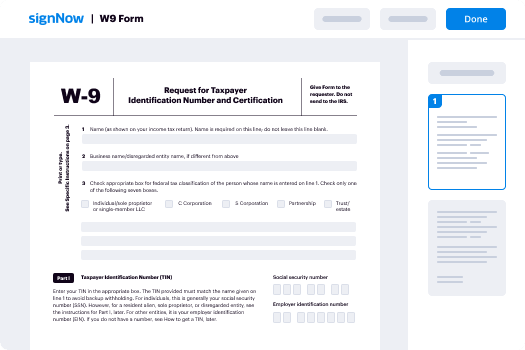
Save time on document management with airSlate SignNow and get your attorney specialist memoranda form eSigned quickly from anywhere with our fully compliant eSignature tool.
How to Sign a PDF Online How to Sign a PDF Online

How to fill out and sign documents online

In the past, working with paperwork required pretty much time and effort. But with airSlate SignNow, document management is quick and simple. Our robust and easy-to-use eSignature solution enables you to effortlessly complete and eSign your attorney specialist memoranda form online from any internet-connected device.

Follow the step-by-step guide to eSign your attorney specialist memoranda form template online:

  • 1.Register for a free trial with airSlate SignNow or log in to your account with password credentials or SSO authentication.
  • 2.Click Upload or Create and add a form for eSigning from your device, the cloud, or our form collection.
  • 3.Click on the file name to open it in the editor and use the left-side menu to complete all the empty fields accordingly.
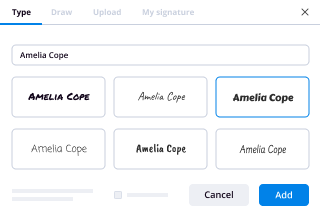
  • 4.Drop the My Signature field where you need to eSign your form. Type your name, draw, or upload an image of your regular signature.
  • 5.Click Save and Close to finish editing your completed document.

After your attorney specialist memoranda form template is ready, download it to your device, export it to the cloud, or invite other individuals to eSign it. With airSlate SignNow, the eSigning process only takes several clicks. Use our robust eSignature tool wherever you are to handle your paperwork successfully!
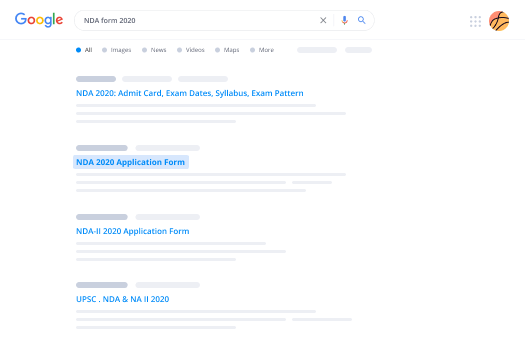
How to Sign a PDF Using Google Chrome How to Sign a PDF Using Google Chrome

How to fill out and sign paperwork in Google Chrome

Completing and signing paperwork is simple with the airSlate SignNow extension for Google Chrome. Installing it to your browser is a quick and beneficial way to manage your paperwork online. Sign your attorney specialist memoranda form template with a legally-binding eSignature in just a couple of clicks without switching between programs and tabs.

Follow the step-by-step guide to eSign your attorney specialist memoranda form template in Google Chrome:

  • 1.Go to the Chrome Web Store, find the airSlate SignNow extension for Chrome, and install it to your browser.
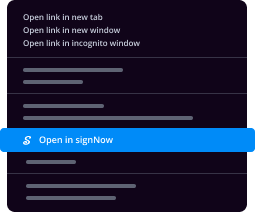
  • 2.Right-click on the link to a document you need to sign and select Open in airSlate SignNow.
  • 3.Log in to your account using your credentials or Google/Facebook sign-in option. If you don’t have one, sign up for a free trial.
  • 4.Utilize the Edit & Sign toolbar on the left to complete your sample, then drag and drop the My Signature field.
  • 5.Add a picture of your handwritten signature, draw it, or simply type in your full name to eSign.
  • 6.Verify all data is correct and click Save and Close to finish editing your paperwork.

Now, you can save your attorney specialist memoranda form template to your device or cloud storage, email the copy to other people, or invite them to electronically sign your document with an email request or a protected Signing Link. The airSlate SignNow extension for Google Chrome enhances your document workflows with minimum time and effort. Try airSlate SignNow today!
How to Sign a PDF in Gmail How to Sign a PDF in Gmail How to Sign a PDF in Gmail

How to complete and sign documents in Gmail

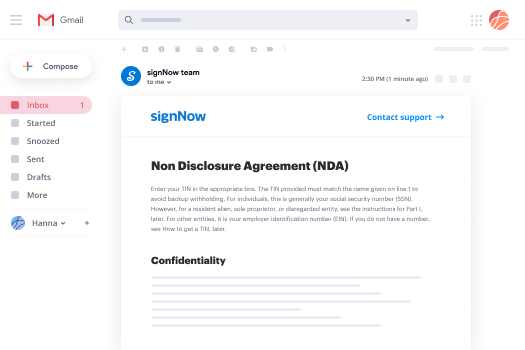
When you get an email with the attorney specialist memoranda form for approval, there’s no need to print and scan a file or download and re-upload it to another program. There’s a better solution if you use Gmail. Try the airSlate SignNow add-on to promptly eSign any paperwork right from your inbox.

Follow the step-by-step guidelines to eSign your attorney specialist memoranda form in Gmail:

  • 1.Navigate to the Google Workplace Marketplace and find a airSlate SignNow add-on for Gmail.
  • 2.Install the program with a related button and grant the tool access to your Google account.
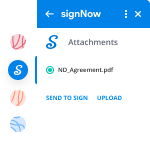
  • 3.Open an email with an attached file that needs approval and utilize the S sign on the right sidebar to launch the add-on.
  • 4.Log in to your airSlate SignNow account. Select Send to Sign to forward the file to other people for approval or click Upload to open it in the editor.
  • 5.Place the My Signature field where you need to eSign: type, draw, or import your signature.

This eSigning process saves efforts and only requires a couple of clicks. Utilize the airSlate SignNow add-on for Gmail to update your attorney specialist memoranda form with fillable fields, sign paperwork legally, and invite other people to eSign them al without leaving your inbox. Enhance your signature workflows now!
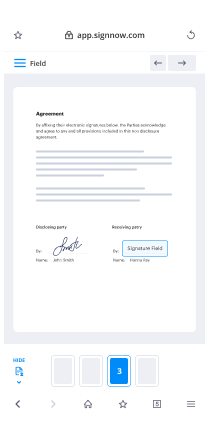
How to Sign a PDF on a Mobile Device How to Sign a PDF on a Mobile Device How to Sign a PDF on a Mobile Device

How to complete and sign paperwork in a mobile browser

Need to rapidly fill out and sign your attorney specialist memoranda form on a smartphone while working on the go? airSlate SignNow can help without needing to set up additional software applications. Open our airSlate SignNow tool from any browser on your mobile device and create legally-binding electronic signatures on the go, 24/7.

Follow the step-by-step guidelines to eSign your attorney specialist memoranda form in a browser:

  • 1.Open any browser on your device and go to the www.signnow.com
  • 2.Sign up for an account with a free trial or log in with your password credentials or SSO authentication.
  • 3.Click Upload or Create and pick a file that needs to be completed from a cloud, your device, or our form catalogue with ready-made templates.
  • 4.Open the form and complete the blank fields with tools from Edit & Sign menu on the left.
  • 5.Place the My Signature field to the sample, then type in your name, draw, or add your signature.

In a few simple clicks, your attorney specialist memoranda form is completed from wherever you are. Once you're finished editing, you can save the document on your device, create a reusable template for it, email it to other individuals, or invite them electronically sign it. Make your documents on the go prompt and productive with airSlate SignNow!
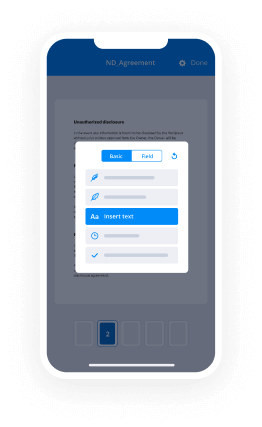
How to Sign a PDF on iPhone How to Sign a PDF on iPhone

How to fill out and sign paperwork on iOS

In today’s business world, tasks must be accomplished rapidly even when you’re away from your computer. With the airSlate SignNow app, you can organize your paperwork and approve your attorney specialist memoranda form with a legally-binding eSignature right on your iPhone or iPad. Install it on your device to conclude agreements and manage forms from just about anywhere 24/7.

Follow the step-by-step guidelines to eSign your attorney specialist memoranda form on iOS devices:

  • 1.Open the App Store, find the airSlate SignNow app by airSlate, and set it up on your device.
  • 2.Open the application, tap Create to upload a form, and select Myself.
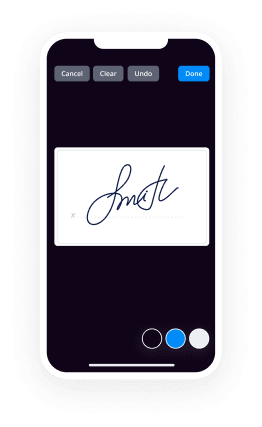
  • 3.Opt for Signature at the bottom toolbar and simply draw your signature with a finger or stylus to eSign the form.
  • 4.Tap Done -> Save right after signing the sample.
  • 5.Tap Save or use the Make Template option to re-use this paperwork later on.

This process is so straightforward your attorney specialist memoranda form is completed and signed within a few taps. The airSlate SignNow application works in the cloud so all the forms on your mobile device remain in your account and are available whenever you need them. Use airSlate SignNow for iOS to enhance your document management and eSignature workflows!
How to Sign a PDF on Android How to Sign a PDF on Android

How to fill out and sign forms on Android

With airSlate SignNow, it’s easy to sign your attorney specialist memoranda form on the go. Install its mobile application for Android OS on your device and start enhancing eSignature workflows right on your smartphone or tablet.

Follow the step-by-step guide to eSign your attorney specialist memoranda form on Android:

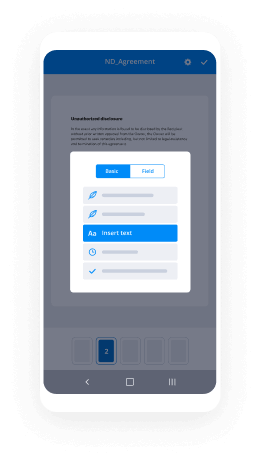
  • 1.Navigate to Google Play, search for the airSlate SignNow app from airSlate, and install it on your device.
  • 2.Log in to your account or register it with a free trial, then upload a file with a ➕ option on the bottom of you screen.
  • 3.Tap on the uploaded document and choose Open in Editor from the dropdown menu.
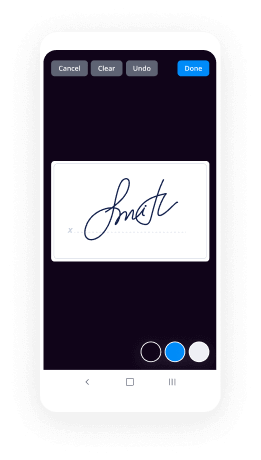
  • 4.Tap on Tools tab -> Signature, then draw or type your name to electronically sign the template. Fill out blank fields with other tools on the bottom if necessary.
  • 5.Use the ✔ key, then tap on the Save option to end up with editing.

With an intuitive interface and full compliance with main eSignature standards, the airSlate SignNow app is the perfect tool for signing your attorney specialist memoranda form. It even works offline and updates all document adjustments when your internet connection is restored and the tool is synced. Fill out and eSign documents, send them for approval, and generate multi-usable templates whenever you need and from anywhere with airSlate SignNow.

Sign up and try Attorney specialist memoranda form
  • Close deals faster
  • Improve productivity
  • Delight customers
  • Increase revenue
  • Save time & money
  • Reduce payment cycles