Establishing secure connection…Loading editor…Preparing document…

Bylaws of Main Street Presbyterian Church

This template is fully customizable. Edit the text, fill out the fields, and send it for signature. Give it a try!
Bylaws of Main Street Presbyterian Church

What the Bylaws of Main Street Presbyterian Church Are and Why They Matter

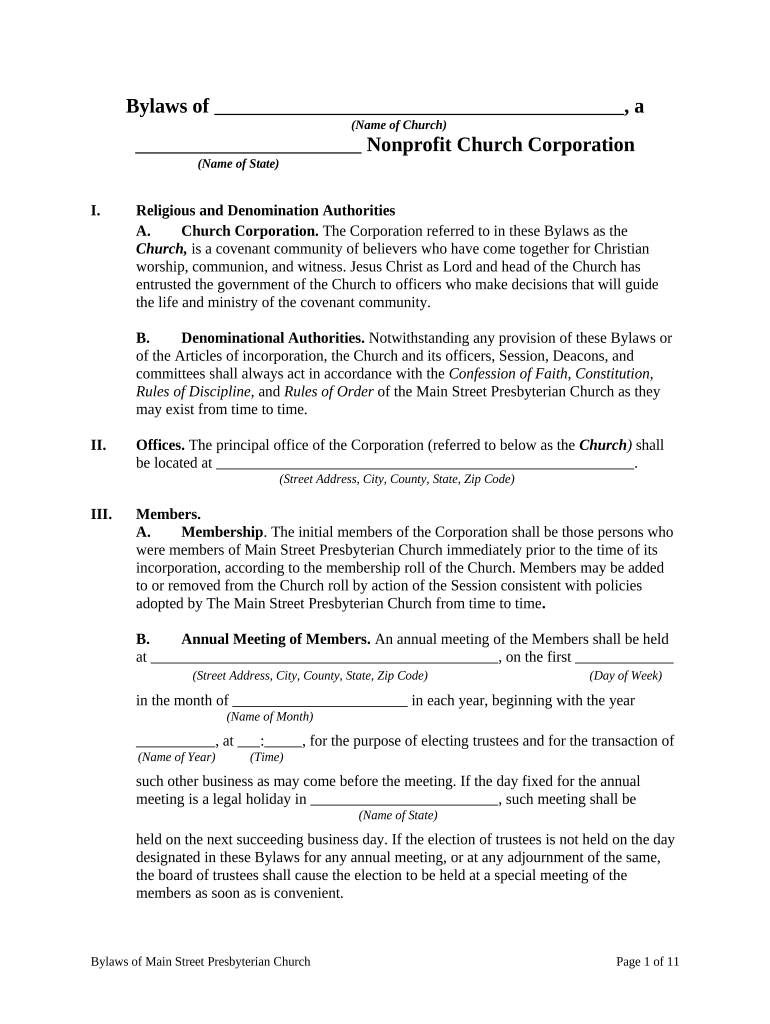
The Bylaws of Main Street Presbyterian Church are the governing rules that define the congregation's internal structure, officer roles, membership requirements, meeting procedures, quorum and voting standards, committee authorities, and amendment process. They serve as the primary internal charter that operationalizes the church's constitution, ensures consistent decision-making, and documents how the session, board, or trustees exercise authority. Clear bylaws reduce disputes, guide day-to-day governance, and provide a written basis for interpreting actions taken by leaders and committees in relation to state nonprofit law and denominational polity.

Why a Well-Drafted Set of Bylaws Benefits the Congregation

Good bylaws create predictable governance, protect member rights, define delegation and accountability, and support compliance with state nonprofit requirements and denominational expectations.

Why a Well-Drafted Set of Bylaws Benefits the Congregation

Who Typically Uses and Relies on These Bylaws

Members and committee chairs should consult the bylaws before proposing changes or executing actions that affect governance or assets.

  • Session and Elders — Reference for meeting rules, quorum, and officer duties during board decisions.
  • Clerks and Administrators — Basis for recordkeeping, membership rolls, and meeting minutes management.
  • Legal Counsel and Accountants — Used for compliance reviews, incorporation and charitable reporting, and conflict resolution.

Primary Signatories and Their Typical Roles

Clerk of Session

The Clerk keeps official records, certifies minutes and bylaws amendments, and often attests to signatures. The Clerk's certification is commonly required when submitting filings to denominational bodies or for internal validation.

Moderator/President

The Moderator (or Board Chair) presides at meetings, may sign official documents on behalf of the governing body, and is typically authorized in the bylaws to execute instruments subject to session approval.

Core Sections Every Church Bylaws Should Contain

A complete bylaws document organizes governance into clear sections so leaders and members can find rules quickly and consistently.

Name & Purpose

States the congregation's legal name and primary purpose; anchors bylaws to charitable and denominational intent and informs tax-exempt filings.
Membership

Defines membership classes, admission and removal procedures, voting rights, and expectations for participation and discipline.

Officers

Specifies officer titles, term lengths, election or appointment processes, duties, removal procedures, and succession rules.

Meetings

Sets notice requirements, quorum thresholds, voting majorities, order of business, annual meeting timing, and special meeting protocols.

Committees

Describes standing and ad hoc committees, chair selection, delegated authority, reporting duties, and limits on committee actions.

Amendments

Explains how bylaws are amended, notice and voting requirements for changes, and any required denominational or congregational approvals.

Key Required Information to Include

Legal Name: Church's incorporated name
Primary Address: Street, city, state, ZIP
Membership Criteria: Admission and removal rules
Officer Titles: Roles and term lengths
Quorum Rules: Number or percentage
Amendment Method: Voting thresholds

Risks and Consequences of Incomplete or Incorrect Bylaws

Governance Disputes: Unclear rules increase litigation and member conflicts
Unauthorised Actions: Acts without proper authority may be voidable
Loss of Tax Protections: Noncompliance can jeopardize 501(c)(3) status
Denominational Issues: Conflict with denominational polity causes discipline
Invalid Amendments: Procedural defects may invalidate changes
Recordkeeping Failures: Poor retention risks audit penalties

Common Pitfalls When Preparing Church Bylaws

  • Using ambiguous language for quorum and voting thresholds that leads to multiple interpretations and contested decisions.
  • Copying model text without adapting to state nonprofit statutes and denominational rules, producing conflicts with applicable law.
  • Failing to document amendment votes clearly in minutes, causing future challenges to whether proper procedures were followed.
  • Omitting retention and records policy, which complicates responses to inquiries, audits, or legal holds.

Step-by-Step: How to Prepare and Adopt the Bylaws

Follow a clear sequence from draft to adoption to ensure legal validity and member acceptance.

  • 01
    Drafting: Assemble a small committee to draft using state law and denominational guidance
  • 02
    Legal Review: Have counsel review for nonprofit and tax compliance
  • 03
    Notice: Give members required notice of meeting and proposed changes
  • 04
    Adoption: Hold vote per quorum and majority thresholds; record minutes

Where the Adopted Bylaws Should Be Filed and Who Receives Copies

After adoption, distribute and file the bylaws with relevant stakeholders and retain certified copies for official records.

  • Church Records: Keep an executed, dated copy in the permanent minute book
  • Denominational Office: Send a certified copy if required by polity
  • Legal Counsel: Provide counsel a copy for the corporate file
  • Finance/Bank: Provide copies to the bank for signature authority updates

Handling Digital Execution and Secure Distribution

Maintain a certified signed copy and a clear change log; retain original signed minutes and records for legal certainty.

  • Document Format: Use PDF/A for long-term preservation
  • Signature Evidence: Capture audit trail with timestamp and signer identity
  • Access Controls: Restrict editing and store on encrypted systems

Setting Up an Electronic Signing Workflow for Bylaws

Configure a simple digital workflow that mirrors the paper adoption process while adding authentication and retention controls.

Field Configuration
Upload Document PDF/A, single file with signature blocks
Signer Order Session clerk -> Moderator -> Treasurer (sequential)
Authentication Email + SMS code or stronger if required
Audit Trail Enable full event logging and certificate of completion

Typical Timelines and Deadlines to Know

Certain actions require advance notice or filing within statutory windows; schedule the drafting, notice, adoption meeting, and post-adoption filings accordingly.

Drafting Period:

Allow 2–6 weeks for committee drafting and internal review

Notice to Members:

Provide notice per existing bylaws or denomination; often 10–30 days

Adoption Meeting:

Hold the scheduled vote and record minutes on adoption date

Post-Adoption Filing:

File any required denominational or bank updates within 30–90 days

Record Update:

Place certified copy in minute book immediately after adoption

Comparing eSignature Pricing and Key Features for Executing Bylaws

Teams executing bylaws should compare price, HIPAA/21 CFR compliance, bulk-send capability, and envelope or usage limits when selecting an eSignature vendor.

signNow DocuSign Adobe Sign PandaDoc HelloSign
Starting Price $8/user/mo $15/user/mo $14/user/mo $19/user/mo $15/user/mo
Free Trial 7-day free trial Varies by vendor Varies by vendor Varies by vendor Varies by vendor
Bulk Send Yes Yes Yes Yes No
Audit Trail Yes Yes Yes Yes Yes
HIPAA Compliant Yes Yes Yes No No
Envelope Cap No cap 100 envelopes/user/year Varies by plan Varies by plan Varies by plan

Practical Examples: How Churches Use Adopted Bylaws

Real-world examples illustrate adoption, amendment, and recordkeeping practices for congregational bylaws.

Small Congregation Adoption

A church committee drafted bylaws over six weeks using denominational templates

  • Committee held a special meeting with 21 days' notice
  • The adopted bylaws were filed with the presbytery, certified by the Clerk, and placed in the minute book with a signed certificate.

Amendment After Leadership Change

A session proposed changes to officer terms following a transition

  • Notice and discussion occurred over two meetings
  • The amendment passed with the required two-thirds vote and the amended bylaws were distributed digitally and retained with a signed audit trail.

Key Adoption Milestones from Draft to Final Record

Track these milestones to ensure valid adoption and reliable archival of the executed bylaws.

01

Committee Formation

Create a drafting committee and assign responsibilities

02

Draft Completion

Finalize draft and circulate to stakeholders for comment

03

Member Notice

Provide required notice per bylaws or denominational rules

04

Formal Adoption

Hold vote, record minutes, and secure signatures

Frequently Asked Questions About Bylaws of Main Street Presbyterian Church

Answers to common governance and execution questions about church bylaws, electronic signing, and recordkeeping.


Need help? Contact support

be ready to get more
Join over 28 million airSlate SignNow users