Establishing secure connection…Loading editor…Preparing document…

Christmas Bonus Letter

This template is fully customizable. Edit the text, fill out the fields, and send it for signature. Give it a try!
Christmas Bonus Letter

What a Christmas Bonus Letter Is and When It’s Used

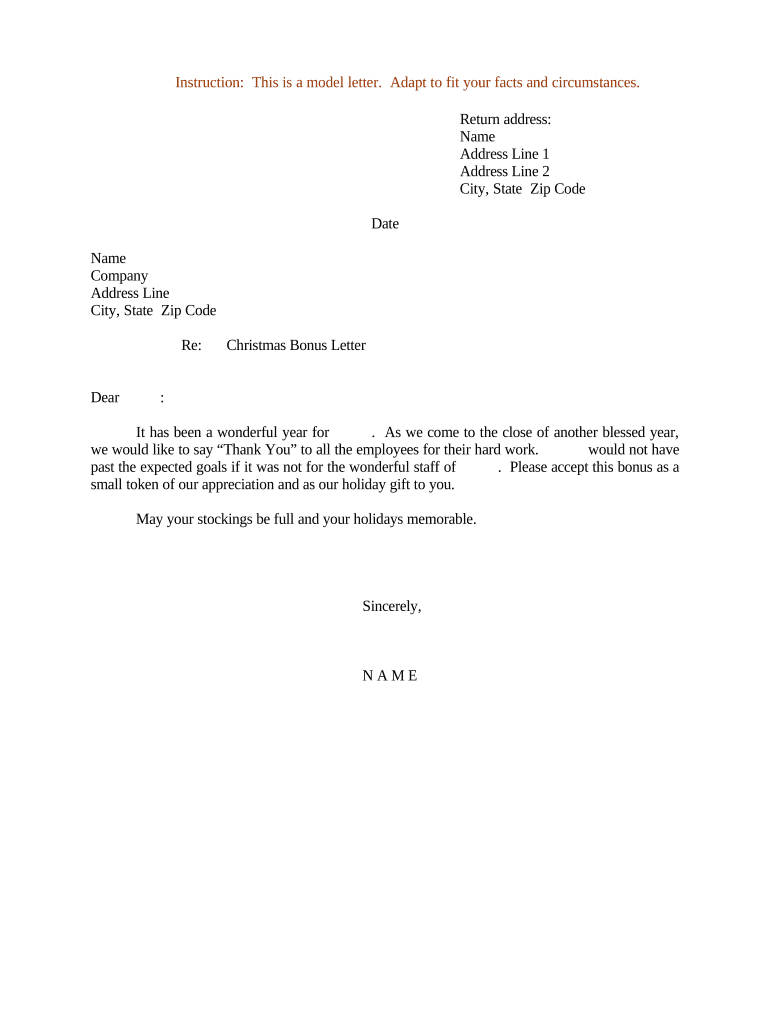
A Christmas Bonus Letter is a written employer communication that documents a discretionary or contractual year-end cash payment, gift, or noncash award provided to employees. It explains the bonus amount or formula, any conditions or service requirements, the effective date, and tax treatment. Employers use the letter to set expectations, create an audit trail for payroll and tax compliance, and confirm acceptance if required. The letter may be delivered as a signed paper document or executed electronically under U.S. e-signature law when it meets intent, consent, attribution, and retention requirements.

Why a Clear Christmas Bonus Letter Matters

A clear letter reduces misunderstandings about eligibility, timing, tax withholding, and repayment conditions while creating a record for payroll, HR, and audits.

Why a Clear Christmas Bonus Letter Matters

Who Typically Prepares and Receives This Letter

Employers, HR teams, and payroll administrators usually prepare the letter; individual employees and managers are typical recipients.

  • Employees who are eligible for year-end or discretionary bonuses receive formal notice and any acceptance request.
  • HR and payroll use the letter to document bonus policy application and to process withholding correctly.
  • Managers and compensation teams reference the letter when approving, budgeting, or reconciling year-end payouts.

Use a written letter to ensure consistent communication and to preserve evidence of the employer’s terms and any employee acknowledgements.

Key Elements to Include in a Professional Christmas Bonus Letter

A well-structured letter makes the bonus clear and legally useful. Include core terms, payment logistics, tax handling, conditions, signature lines, and recordkeeping instructions to reduce disputes and support payroll processing.

Bonus Type

State whether the bonus is discretionary, contractual, or performance-based and how the amount or formula is determined to avoid ambiguity and manage expectations.
Eligibility

Specify employees or classes eligible, any service or performance requirements, and the measurement period so determinations are auditable and consistent.

Payment Timing

Provide the payment date or schedule and whether it is a lump sum, prorated, or installment payment so payroll can plan withholding and disbursement.

Tax Treatment

Explain that bonuses are taxable wages subject to federal and applicable state withholding and any company practices for supplemental wage withholding.

Conditions

Note any conditions such as continued employment, clawback or repayment terms, or achievements required for receiving or retaining the bonus.

Signature and Acceptance

Include a signature block for the employee and employer and state whether employee signature is required to accept or merely to acknowledge receipt.

Step-by-Step: Preparing and Issuing a Christmas Bonus Letter

Follow a short sequence from drafting to recordkeeping to ensure accuracy and compliance.

  • 01
    Draft Terms: Write eligibility, amount, conditions, and tax treatment clearly.
  • 02
    Obtain Approvals: Have authorized signatories and budget owners review and approve the terms.
  • 03
    Deliver Letter: Send by secure channel (HR portal, mail, or e-signature) and request acknowledgement if required.
  • 04
    Record and Process: Log the document in HR records and instruct payroll to process withholding and disbursement.

How Distribution and Acknowledgement Typically Work

Understanding the usual routing helps ensure timely payment and compliance with withholding and recordkeeping obligations.

  • Sender Prepares Letter: HR drafts the letter and attaches policy references for consistency.
  • Manager Approval: Manager or compensation approver confirms eligibility and funding.
  • Employee Receipt: Employee receives the letter and may sign to acknowledge or accept.
  • Payroll Action: Payroll applies withholding, records the payment, and archives the signed letter.

Options for Digital Delivery and Electronic Signatures

Use secure delivery channels and compliant e-signature workflows when sending letters electronically.

  • PDF or DOCX: Common formats supported by e-signature platforms for retainable records.
  • Authentication: Use email, SMS, or stronger methods to confirm signer identity.
  • Audit Trail: Ensure capture of timestamp, IP, and action history for legal evidence.

Choose a platform that supports retention, audit trails, and the authentication strength appropriate for your risk profile.

Timing Considerations and Payroll Deadlines

Plan distribution so payroll can process withholding and year-end reporting; late communication can affect tax reporting and employee expectations.

Pre-Payment Notice:

Deliver at least one pay cycle before payment when possible to allow processing.

Payroll Cutoff:

Meet payroll submission deadlines to avoid delayed disbursement or misapplied withholding.

Year-End Reporting:

Include bonuses in W-2 wages for the calendar year when paid; coordinate with tax reporting schedules.

Acceptance Window:

Specify any deadline by which the employee must sign or opt out, if acceptance is required.

Record Retention:

Retain copies according to recordkeeping policies and statutory retention periods.

Key Milestones from Draft to Archive

Track milestones to ensure approvals, payroll processing, and proper retention of signed letters.

01

Planning and Budgeting

Define total bonus pool and eligibility before drafting the letters.

02

Draft and Legal Review

Prepare standardized language and obtain counsel review if conditions are complex.

03

Distribution and Signature

Deliver letters and collect employee acknowledgements or signatures.

04

Payroll Processing and Archival

Process payments, apply withholding, file required reports, and store signed copies.

Common Mistakes to Avoid When Preparing the Letter

  • Vague eligibility language that leads to inconsistent application and employee disputes about entitlement.
  • Failing to coordinate with payroll, causing incorrect withholding or missed year-end reporting for W-2 inclusion.
  • Not documenting conditions like clawbacks or service requirements, which complicates enforcement and recovery.
  • Delivering late in the pay cycle without clear timing, resulting in employee confusion or delayed payments.

Risks and Compliance Consequences to Watch For

Payroll Errors: Incorrect withholding can trigger IRS adjustments and interest.
Documentation Gaps: Missing records hinder audits and internal controls.
Tax Reporting: Incorrect W-2 wages reporting may lead to penalties under IRC §6721.
Labor Disputes: Inconsistent application can prompt grievances or litigation.
Privacy Violations: Including protected health information may trigger HIPAA obligations.
Notarization Risk: Unnecessary notarization adds cost with little benefit for compensation letters.

Real-World Examples of Using eSignatures for HR Documents

These examples show how organizations use electronic signatures for employee communications and administrative processing.

Martin Properties — Tim Martin, Founder

Tim Martin described processing HR documents online to maintain compliance

  • Single-platform signing reduces manual handling
  • He said he can execute documents on mobile or offline while maintaining security and efficiency.

Optica Ventures — Brian Fitzgibbons, COO

Brian Fitzgibbons highlighted simplicity for teams and customers

  • Easy-to-use interfaces lower completion friction
  • He noted the interface’s usability benefits for both internal staff and external signers.

Best Practices for Clear, Enforceable Bonus Letters

Apply these practices to reduce disputes, ensure correct payroll handling, and maintain defensible records.

Use Plain, Specific Language
Draft terms that are precise about amounts, eligibility, timing, and conditions. Specificity reduces ambiguity and makes enforcement and accounting straightforward.
Coordinate with Payroll
Confirm processing timelines, withholding methods, and ledger entries before sending letters so payments occur on schedule and reporting is accurate.
Document Approval Authority
Record who authorized the bonus and attach approval memos. Clear signatory authority prevents later challenges about the payment’s legitimacy.
Archive Signed Copies Securely
Store signed letters with audit trails and access controls. Maintain retention schedules consistent with tax and employment law requirements.

Essential Information Elements to Include

Employee Name: Legal name
Employee ID: Payroll identifier
Bonus Amount: Exact dollar value
Payment Date: MM/DD/YYYY
Tax Treatment: Withholding note
Signature Line: Signer and date

Comparing eSignature Pricing for HR Documents

Pricing and feature availability vary by vendor; signNow is listed first per platform comparisons and shows common entry-level pricing and compliance options.

signNow DocuSign Adobe Sign PandaDoc HelloSign
Starting Price $8/user/mo $15/user/mo $14/user/mo $19/user/mo $15/user/mo
Free Trial Yes, 7-day trial No No No No
Bulk Send Yes Yes Yes Yes No
Audit Trail Yes Yes Yes Yes Yes
HIPAA Compliant Yes Yes Yes No No

Frequently Asked Questions About Christmas Bonus Letters

Answers to frequent questions about legality, tax treatment, signatures, and recordkeeping for Christmas Bonus Letters.


Need help? Contact support

be ready to get more
Join over 28 million airSlate SignNow users