Establishing secure connection…Loading editor…Preparing document…

Complaint Petition

This template is fully customizable. Edit the text, fill out the fields, and send it for signature. Give it a try!
Complaint Petition

What a Complaint Petition Is and when it starts a case

A Complaint Petition is the initiating pleading a plaintiff files to begin a civil lawsuit in a U.S. court. It sets out the caption, parties, jurisdictional facts, a concise statement of the material allegations supporting each cause of action, and a prayer for relief. Filing the complaint triggers case management timelines, service requirements, and the defendant's obligation to respond. Modern practice commonly requires e-filing with the clerk and attaching a proposed summons or civil cover sheet when local rules demand them.

Why a clear Complaint Petition matters to your case

A well-crafted Complaint Petition preserves legal claims, sets jurisdiction and venue, defines relief sought, and starts the clock on defenses and statutory deadlines. Accurate pleadings reduce the risk of dismissal, sanctions, and procedural delay before discovery or adjudication.

Why a clear Complaint Petition matters to your case

Who typically prepares and files Complaint Petitions

Complaint Petitions are prepared by parties or counsel and filed with the clerk to commence litigation; the responsible filer varies by context and representation status.

  • Individual plaintiffs or claimants who represent themselves in pro se civil actions and must follow local court rules when filing.
  • Civil litigators and law firms that draft pleadings, verify jurisdictional facts, and manage e-filing and service tasks.
  • Organizations and corporations that use in-house counsel or outside counsel to initiate disputes and preserve corporate records.

Whether filed by counsel or a self-represented party, the filer must ensure proper captioning, jurisdictional statements, accurate allegations, and timely service to avoid procedural dismissal.

Core sections every professional Complaint Petition should include

Organizing a Complaint Petition around standard components ensures clarity for the court and the opposing party.

Caption

Court name, case caption, docket placeholders, and title line identifying the document as a Complaint Petition with party names and case number space.
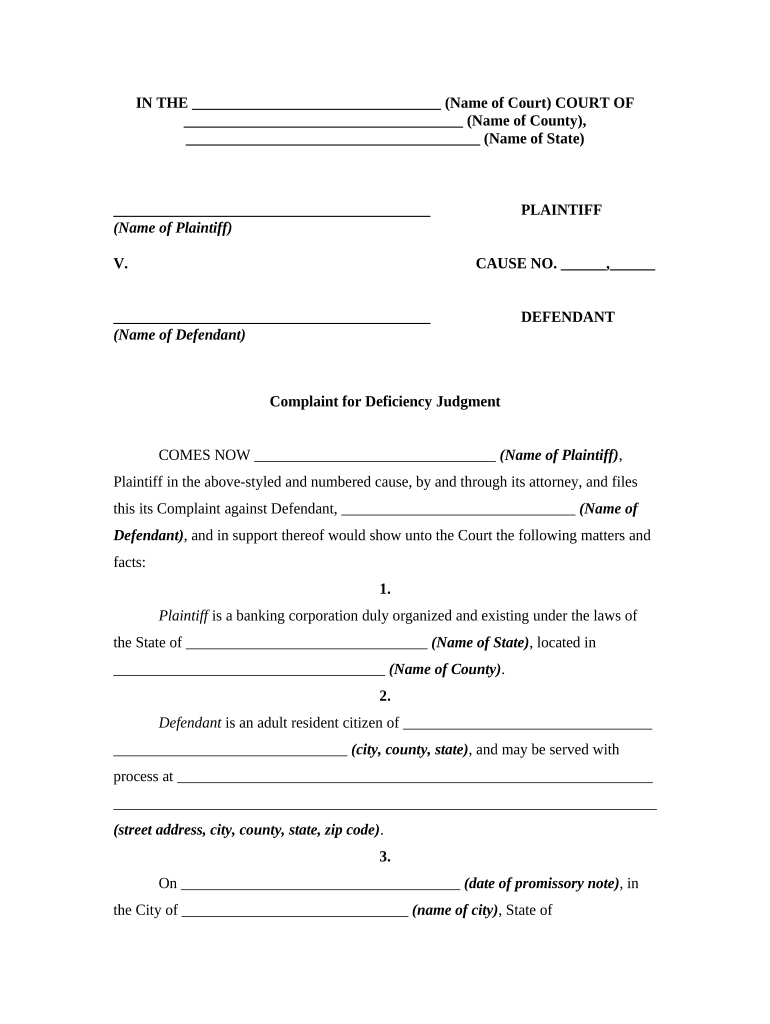
Parties

Full legal names and capacities of plaintiff(s) and defendant(s), business entity types, and contact or counsel information for service of process.

Jurisdiction

Statement of subject matter jurisdiction and venue with factual basis and statutory or constitutional citations where required by local rules.

Factual Allegations

Chronological, specific facts supporting each claim, identifying dates, acts, omissions, and actors tied to each cause of action.

Causes of Action

Numbered counts listing legal theories (negligence, breach, etc.) with elements summarized and linked to factual allegations.

Prayer for Relief

Clear statement of the relief sought, including damages, injunctive relief, declaratory relief, attorneys' fees, and any statutory remedies.

Stepwise process to prepare and file a Complaint Petition

Follow these four high-level steps to move a Complaint Petition from draft to filed status.

  • 01
    Gather information: Collect documents, dates, and party identifiers.
  • 02
    Draft complaint: Compose caption, facts, counts, and prayer for relief.
  • 03
    File with court: E-file or deliver to clerk and pay filing fee.
  • 04
    Serve defendant: Arrange service per local rules and file proof.

Typical flow from drafting to proof of service

This high-level workflow outlines the main transactional steps after you complete the petition.

  • Prepare documents: Finalize complaint, summons, and supporting exhibits.
  • E-file or clerk intake: Submit PDF or court-approved format via portal or in person.
  • Pay fees: Pay the required filing fee or request fee waiver when eligible.
  • Serve and docket: Serve defendant and file proof of service with clerk.

Recommended e-filing and document settings

Configure document properties before e-filing to reduce rejections and meet court formatting rules.

Field Configuration
Document format PDF/A where accepted; flattened for exhibits.
Signature method Use auditable e-signature with timestamp and signatory attribution.
Filing fee handling Use court portal payment or obtain fee waiver order.
Service method Certified mail or process server per local rules.

Technical requirements for submitting and sharing Complaint Petitions

Court systems and recipients commonly expect standardized file types, secure delivery, and traceable signature evidence for petitions and attachments.

  • Document formats: PDF, PDF/A, DOCX accepted depending on portal.
  • Authentication: Email link, SMS code, or stronger methods available.
  • Integrations: Works with case management and cloud storage systems.

Ensure your workflow supports audit trails, preserves original file integrity, and can generate a certificate of completion showing signer identity, timestamps, and audit events for court or opposing counsel review.

Common timing rules and deadlines to track after filing

Timing obligations vary by jurisdiction; these typical deadlines are important to monitor immediately after filing a Complaint Petition.

Statute of Limitations:

Limits for filing vary by claim type and state; missing them can bar relief.

Filing fee due:

Most courts require payment or fee waiver at time of filing.

Service deadline:

Many jurisdictions set a period to serve the defendant after filing.

Defendant response:

Federal rule typically allows 21 days to answer or move.

Default judgment timing:

A default may be sought after failure to respond within the allowed period.

Consequences of errors or omissions in a Complaint Petition

Dismissal risk: Court may dismiss for lack of jurisdiction or improper venue.
Sanctions exposure: Frivolous or false assertions can trigger monetary sanctions.
Default judgment: Failure to effect service can lead to default by operation of rules.
Statute-barred claim: Late filing can permanently bar recovery.
Service defects: Improper service may require refiling or lead to delay.
Perjury liability: False verification under oath may carry criminal penalties.

Common drafting and filing mistakes to avoid

  • Failing to state jurisdictional facts with statutory support leads to motions to dismiss and wasted time.
  • Using an incorrect caption or party name can cause clerical rejections and problems serving defendants.
  • Offering only conclusory legal claims without factual support invites demurrers or motions to strike.
  • Neglecting to include a clear prayer for relief and requested damages impedes early settlement assessment.

Security and compliance considerations for electronic Complaint Petitions

Encryption: TLS 1.2/1.3 in transit; AES-256 at rest
Certifications: ISO 27001, SOC 2 Type II, PCI DSS
HIPAA: BAA required for protected health information workflows
eSign laws: Compliant with ESIGN and UETA standards
Audit trail: Detailed timestamps, IP, and action logs preserved
Accessibility: WCAG 2.0 Level AA compatible

Real-world examples of digital workflows used with court pleadings

Practitioners and organizations report faster execution and consistent recordkeeping when they use secure electronic signing and document management together with court filings.

Martin Properties (Property Litigation)

A local property manager needed remote execution of pleadings and exhibits to start eviction proceedings quickly

  • Required mobile and offline signing capability to complete filings on site
  • "I can process and execute all of these documents online with 100% compliance and built-in security. Whether on mobile or working offline, I can get forms back to their necessary parties efficiently."

Fertility Centers of Illinois (Healthcare Matter)

A healthcare provider needed secure signature capture while protecting PHI during litigation intake

  • Needed HIPAA-compliant workflows and audit records for each signature event
  • "The airSlate SignNow team has been exceptional, responsive, the API has been great, and we're extremely happy that we chose airSlate SignNow as a company."

How a Complaint Petition compares with other initial court documents

Compare the Complaint Petition to related documents to choose the correct starting filing for your matter.

Document Type Complaint Petition Notice of Claim
Purpose initiates lawsuit provides pre-suit statutory notice
Filed with court clerk administrative or agency office
Required contents facts, counts, prayer statutory information and damages
Typical timing commences litigation often precedes lawsuit filing

Comparing common eSignature vendor pricing and features for Petition workflows

This vendor comparison focuses on starting prices and core capabilities relevant to preparing, signing, and distributing Complaint Petitions.

signNow DocuSign Adobe Sign PandaDoc HelloSign
Starting Price $8/user/mo $15/user/mo $14/user/mo $19/user/mo $15/user/mo
Free Trial 7-day free trial Varies Varies Varies Varies
Bulk Send Yes Yes Yes Yes Yes
Audit Trail Yes Yes Yes Yes Yes
HIPAA Compliant Yes Yes Yes No No
Envelope Cap No cap 100 envelopes/user/year Varies Varies Varies

Frequently asked questions about Complaint Petitions

Answers to common procedural, technical, and legal questions about preparing, signing, filing, and serving Complaint Petitions.


Need help? Contact support

be ready to get more
Join over 28 million airSlate SignNow users