Establishing secure connection…Loading editor…Preparing document…

Letter Advising Court Decision

This template is fully customizable. Edit the text, fill out the fields, and send it for signature. Give it a try!
Letter Advising Court Decision

What a Letter Advising Court Decision Is and When it’s Used

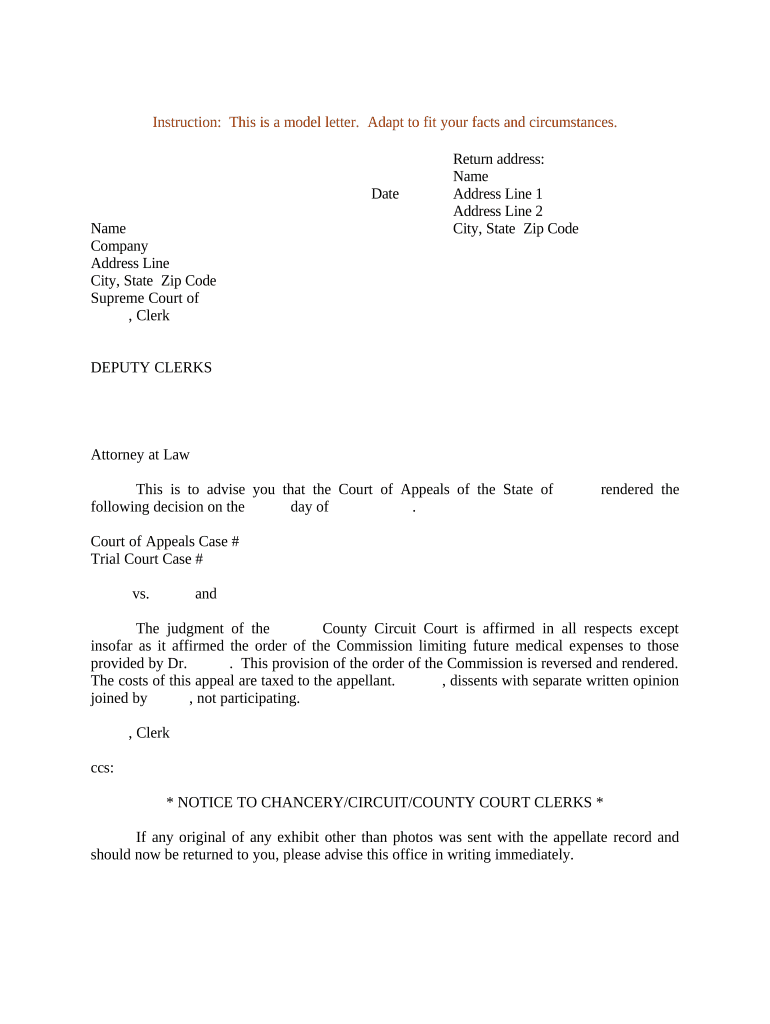
A Letter Advising Court Decision is a formal written notice from counsel, a party, or a court-appointed representative that communicates the outcome of a judicial ruling, the key holdings, and immediate next steps. It typically identifies the case caption, docket number, the decision date, the portion of the decision that affects the recipient, and whether a stay, appeal, or enforcement action follows. Although it is an informational communication rather than an official filing, recipients often rely on it to trigger deadlines, preservation steps, and business or litigation decisions.

Why a Clear Letter Matters

A concise, correct letter reduces uncertainty, establishes a clear record of notice, and helps clients and opposing parties understand immediate obligations. When prepared correctly it supports compliance with court schedules and preserves appeal rights.

Why a Clear Letter Matters

Who Typically Prepares and Receives This Letter

Common preparers and recipients vary by role and purpose; the list below captures the most frequent parties.

  • Plaintiffs and defendants—Counsel or in-house litigation teams notify their client and adverse parties of outcomes and deadlines.
  • Corporate compliance teams—Receive summaries to trigger internal escalation, contract reviews, and regulatory notices.
  • Opposing counsel and court clerks—Are copied when required by local rules or when the letter supplements a formal filing.

Tailor recipients to local rules and case-specific service requirements; preserve copies for the case file and records.

Essential Components to Include in the Letter

A professional Letter Advising Court Decision contains standardized header information, a concise decision summary, legal effect and deadlines, required attachments, a signature block, and service or filing details. Each element supports clarity, traceability, and later verification of notice.

Case Caption

Full party names, court, docket or case number, and judge or panel identification.
Decision Summary

Plain-language summary of holdings, orders entered, and the specific relief granted or denied by the court.

Immediate Actions

Deadlines to appeal, move for reconsideration, stay, or to comply with obligations imposed by the decision.

Attachments

Copy of the court opinion, docket entry, or signed order referenced in the letter.

Service Details

How the letter was served and proof of service; list of recipients and delivery method.

Signature Block

Name, title, firm or organization, contact details, and date signed; indicate electronic signature if used.

Step-by-Step: Create and Send the Letter

Follow these sequential steps to produce an accurate, enforceable notice of the court decision and ensure proper service and recordkeeping.

  • 01
    Gather case materials: Collect the opinion, docket entry, and original pleadings for reference.
  • 02
    Draft the letter: Insert caption, concise ruling summary, and required attachments reference.
  • 03
    Review for accuracy: Confirm dates, docket number, and deadlines with court records.
  • 04
    Serve and archive: Serve per local rules, note service method, and save signed copy to case file.

Digital Workflow Settings to Use When Preparing the Letter

Set up your document workflow to capture required data, authenticate signers, and retain a tamper-evident record for the case file.

Field Configuration
Case Caption Field Text field with character limit; link to case docket variable.
Attachment Upload Require PDF upload of opinion and signed order.
Signer Authentication Email + SMS code or stronger ID verification as warranted.
Audit Trail Enable timestamp, IP capture, and downloadable certificate.

How Delivery and Service Typically Flow

Service and distribution should follow court rules and common practice so notice is effective and defensible.

  • Prepare: Finalize content and attach opinion and order.
  • Authenticate: Verify signer authority before signing.
  • Serve: Send via required channels and document proof of service.
  • File record: Upload signed letter to case management system and retain a copy.

Formats and Platform Capabilities to Support the Letter

Choose tools that preserve document fidelity, capture signing metadata, and integrate with your matter management systems.

  • Supported Formats: PDF, Word (DOCX), and searchable PDF are standard.
  • Integrations: Connectors for Microsoft 365, Google Workspace, and practice management systems.
  • Audit & Storage: Tamper-evident audit trail and exportable certificate.

Confirm the platform you choose supports required signer authentication, long-term storage formats, and any planned eSubmission to court or opposing counsel.

Security and Compliance Basics for Handling the Letter

Encryption: TLS 1.2/1.3 in transit; AES-256 at rest
Audit Trail: Timestamp, IP address, and action log retained
Access Controls: Role-based access and SSO where available
HIPAA: BAA required for protected health information
21 CFR Part 11: Available controls for FDA-regulated records
SOC 2 / ISO: Operational controls and certification options

Supporting Documents to Attach and Preserve

Attach and retain documents that corroborate the decision, show delivery, and support follow-up actions; these exhibits protect parties and form the case record.

Signed Order

Include the court’s signed order or mandate showing the effective action and signature block.

Court Opinion

Attach the full written opinion or published decision to provide context for the summary.

Proof of Service

Provide certificates of service, mailing receipts, or electronic delivery receipts as applicable.

Related Filings

Add any motions, briefs, or stipulated orders referenced in the decision.

Common Drafting and Delivery Pitfalls to Avoid

  • Using an incorrect docket number or party name can cause recipient misrouting and objections to notice.
  • Failing to attach the controlling order or opinion leads to disputes about what the letter references.
  • Sending without appropriate signer authority or authentication can undermine the letter’s evidentiary value.
  • Omitting proof of service or delivery method leaves the sender exposed to claims of insufficient notice.

Risks and Potential Consequences of Errors

Missed Deadlines: Waived appeal rights or default relief
Court Sanctions: Possible monetary penalties or disciplinary action
Service Defects: Delays, further litigation, or rehearing
Confidentiality Breach: Exposure of privileged information
Invalid Signature: Challenge to authenticity of notice
Record Gaps: Difficulty proving notice in later proceedings

Time-Sensitive Items to Watch After a Decision

Several deadlines may flow from a decision; always verify the controlling timetable in the applicable court rules or statute before acting.

Appeal Window:

Varies by court—consult appellate rules for exact deadlines.

Stay Requests:

File promptly if seeking a stay pending appeal or enforcement.

Compliance Deadlines:

Comply with terms of the order by the court-set date.

Preservation Steps:

Preserve evidence and communications immediately upon notice of decision.

Service Timelines:

Serve required parties according to local rules to avoid challenges.

Key Milestones from Decision to Final Resolution

Use a milestone view to track drafting, serving, and post-decision actions so nothing is missed during the critical window after a ruling.

01

Decision Posted

Court issues opinion or order and it becomes part of the docket.

02

Notice Drafted

Counsel prepares the letter summarizing the decision and attachments.

03

Service Completed

Letter and attachments are served on all required recipients.

04

Follow-up Filings

Any stays, motions, or appeals are filed within the prescribed timeframes.

Practical Examples of Using a Letter Advising Court Decision

Two concise examples show how the letter functions in routine litigation and corporate compliance settings.

Litigation Team Example

Counsel issues a letter summarizing a motion denial and attached signed order.

  • The letter notes the 30-day appeal window and next steps for settlement.
  • The client receives clear instructions, the firm files a notice of service, and the record documents that the client was promptly informed.

Corporate Compliance Example

In-house counsel notifies executives after a regulatory decision affecting a contract.

  • The letter lists required remediation actions and deadlines.
  • Legal and operations coordinate remediation, preserve correspondence in the matter file, and schedule follow-up reporting to regulators as needed.

eSignature Vendor Comparison for Letters and Legal Notices

Basic pricing and feature differences affect cost and capability for secure signing, bulk distribution, and compliance support for legal notices.

signNow DocuSign Adobe Sign PandaDoc HelloSign
Starting Price $8/user/mo $15/user/mo $14/user/mo $19/user/mo $15/user/mo
Free Trial 7-day free trial Varies Varies Varies Varies
Bulk Send Yes Yes Yes Yes No
Audit Trail Yes Yes Yes Yes Yes
HIPAA Compliant Yes Yes Yes No No

Frequently Asked Questions and Troubleshooting

Answers to common questions about electronic signatures, service, and recordkeeping for a Letter Advising Court Decision.


Need help? Contact support

be ready to get more
Join over 28 million airSlate SignNow users