Establishing secure connection…Loading editor…Preparing document…

Criminal Jury Instructions

This template is fully customizable. Edit the text, fill out the fields, and send it for signature. Give it a try!
Criminal Jury Instructions

What Criminal Jury Instructions Are and why they matter

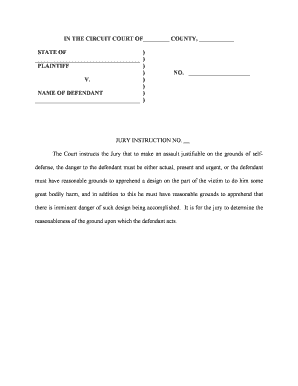
Criminal Jury Instructions are the judge-issued statements of law given to jurors to guide their deliberations in a criminal case. They explain elements of alleged offenses, standards of proof such as beyond a reasonable doubt, applicable defenses, and how to apply law to facts. Instructions can be drawn from statutory text, case law, or model instructions and often include verdict forms. Accuracy and clarity are essential because erroneous or unclear instructions can affect verdict validity and may form the basis for post-trial motions or appellate review.

Why precise Criminal Jury Instructions matter

Clear, legally accurate instructions reduce jury confusion, limit appealable errors, and ensure the verdict reflects proper legal standards. They align fact-finding with statutory elements and the burden of proof.

Why precise Criminal Jury Instructions matter

Who prepares and relies on Criminal Jury Instructions

Multiple courtroom participants draft, review, and use jury instructions at different stages of a criminal trial.

  • Trial judges who prepare and deliver the final instructions to jurors and resolve disputes about wording and legal sufficiency.
  • Prosecutors and defense attorneys who propose language, object to wording, and preserve the record for appeal.
  • Court clerks and court reporters who file, distribute, and maintain official copies of the instructions and verdict forms.

Each role helps ensure instructions reflect controlling law, relevant precedent, and the trial record.

Primary signers and authors

Trial Judge

The judge has final authority to adopt, modify, and deliver jury instructions. Judges balance proposed language, legal precedent, and fairness while making rulings on objections to preserve the appellate record.

Lead Counsel

Prosecutors or defense counsel draft proposed instructions, submit supporting authority, and argue for wording at charge conferences to align instructions with the elements, defenses, and evidence presented at trial.

Stepwise process to prepare and submit instructions

Follow a consistent sequence from drafting through delivery to reduce disputes and preserve objections for appeal.

  • 01
    Draft: Prepare proposed instructions tied to evidence and citations.
  • 02
    Exchange: Serve proposed language on opposing counsel before conference.
  • 03
    Conference: Argue disputes at the jury charge conference with record on objections.
  • 04
    Delivery: Judge finalizes and reads instructions to the jury before deliberations.

How courtroom workflow typically handles jury instructions

A predictable workflow helps courts and parties coordinate drafting, objections, and finalization within established pretrial and trial timelines.

  • Propose: Parties submit proposed instructions in writing.
  • Meet-and-Confer: Counsel attempt to narrow disputes informally.
  • Charge Conference: Judge rules on contested language on the record.
  • Record Delivery: Court file includes final instructions and verdict forms.

Typical digital workflow settings for instruction documents

Configure document workflow so reviewers, counsel, and the court can collaborate, authenticate, and archive proposed instructions securely.

Document Upload Accept PDF or DOCX; preserve pagination for citation.
Reviewer Roles Assign drafting, reviewing, and approving roles to counsel and court staff.
Authentication Method Use email, SMS code, or stronger verification per court policy.
Version Control Enable tracked revisions and export redline history.
Audit Trail Capture timestamps, IPs, and signer identity for the record.

Technical requirements for electronic handling and eSubmission

Ensure software supports secure PDF, field-level control, audit logs, and integrations that match court e-filing requirements.

  • File Types: PDF and DOCX supported
  • Integrations: Works with common court systems
  • Security: Encryption and access controls

Confirm court e-filing rules and any identity or notarization requirements before electronic submission to avoid rejection.

Core components to include in professional Criminal Jury Instructions

A well-structured set of instructions combines legal citations, element statements, standardized phrasing, and clear verdict forms to guide jurors reliably.

Element Statements

Numbered, statute-specific element descriptions for each charged offense with exact language and citation to enable jurors to apply the law to the facts presented.
Burden Language

Precise standard-of-proof language such as 'beyond a reasonable doubt' and explanation of reasonable doubt phrasing to minimize ambiguity for jurors.

Definitions

Plain-language definitions of legal terms or statutory phrases that are technical or central to the case, reducing confusion about contested concepts.

Lesser Offenses

Clear inclusion and explanation of any lesser-included offenses with guidance on how jurors should consider alternative verdicts based on evidence.

Verdict Forms

Separate, unambiguous verdict forms for each count and option to capture a unanimous or special verdict as required by jurisdictional rules.

Citations

Concise cites to controlling statutes or model instructions so the basis for each instruction is documented for the record and appellate review.

Security and compliance elements to include

Encryption: TLS in transit; AES-256 at rest
Audit Trail: Timestamps, IP, action log
Access Controls: Role-based permissions
Authentication: Email, SMS, or stronger MFA
BAA Option: Available where HIPAA applies
Retention: Secure archival and exportable logs

Consequences of incorrect or unclear instructions

Reversal Risk: Appellate reversal possible
Mistrial: Confusing wording may trigger mistrial
Sanctions: Court may sanction improper submissions
Delay: Additional hearings prolong proceedings
Jury Confusion: Ambiguity leads to inconsistent verdicts
Record Issues: Poor record impairs review

Common drafting pitfalls to avoid

  • Using nonstandard or colloquial wording that departs from controlling statutes or pattern instructions and creates ambiguity during deliberations.
  • Failing to number or label instructions consistently, which complicates references during objections, bench conferences, or when preparing the appellate record.
  • Overloading instructions with evidentiary argument or fact statements that belong in closing argument rather than in neutral legal guidance.
  • Neglecting to provide separate, clear verdict forms for each count and each lesser-included option, which risks inconsistent or invalid jury returns.

Timing and scheduling considerations

Observe local rules and trial schedules; timely service and submission preserve objections and ensure the court can address disputes before jury charge.

Proposed Submission Deadline:

Many courts require proposed instructions before or during the final pretrial conference.

Charge Conference Timing:

Charge conferences typically occur immediately before or after closing arguments depending on local practice.

Service on Opposing Counsel:

Serve proposed language in advance per court rules to allow meaningful review and objections.

Record Preservation:

Make timely, specific objections on the record to preserve appellate review of disputed instructions.

Post-Trial Motions:

File any motion for a new trial or judgment notwithstanding within the timeframe required by local or state procedural rules.

Key milestone timeline for instruction preparation

Sequence major milestones so counsel and the court can coordinate drafting, review, and final charge delivery without procedural surprises.

01

Drafting Complete

Proposed instructions are prepared and internally reviewed before service.

02

Exchange with Opposing Counsel

Serve proposals and cite supporting authority for contested language.

03

Charge Conference

Judge rules and accepts or revises instructions on the record.

04

Jury Instruction Delivery

Final instructions are read to the jury and entered into the trial record.

How criminal and civil jury instructions differ in focus

Compare core criteria to understand distinctions that affect drafting, burden language, and verdict structure.

Criteria Criminal Instructions Civil Instructions
Primary Purpose criminal guilt determination liability and damages
Burden of Proof beyond reasonable doubt preponderance of evidence
Typical Content statutory elements, defenses elements, damages, remedies
Verdict Forms guilty/not guilty; unanimity rules liability and amounts; may be general

Representative eSignature vendor comparison relevant to instruction workflows

Compare basic pricing and core features that matter for secure drafting, signature capture, and compliant recordkeeping when handling jury instruction documents.

signNow DocuSign Adobe Sign PandaDoc HelloSign
Starting Price $8/user/mo $15/user/mo $14/user/mo $19/user/mo $15/user/mo
Free Trial 7-day free trial Varies Varies Varies Varies
Bulk Send Yes Yes Yes Yes No
Audit Trail Yes Yes Yes Yes Yes
HIPAA Compliant Yes Yes Yes No No
Envelope Cap No cap 100 envelopes/user/year Varies Varies Varies

Practical examples of instruction use in trial settings

Two concise scenarios show how instructions are proposed, contested, and finalized to serve the trial record and juror guidance.

Defense Proposal

A defense team submits a focused instruction clarifying a statutory element and cites controlling precedent

  • The prosecution objects to wording as argumentative
  • The judge adopts modified language on the record to preserve appellate review and deliver a neutral instruction that accurately states the law and aligns with evidence.

Prosecution Submission

The prosecutor proposes an instruction covering lesser-included offenses tied to the evidence

  • Defense requests additional clarifying language on intent
  • After a charge conference the court issues the instruction with agreed clarifications and places the final form into the record for jury use and potential appeal.

Practical drafting and submission practices

Adopt these practices to improve clarity, reduce dispute, and protect the appellate record when working with jury instructions.

Use model or statutory language where available
Rely on approved model instructions or exact statutory wording when possible; deviations should be justified in writing with citations to authority and tied to the trial record to minimize reversible error.
Number and label each instruction clearly
Consistent numbering and concise titles allow counsel and the court to reference instructions efficiently during conferences and in post-trial filings, reducing transcription errors.
Preserve objections on the record
When disputing proposed language, make specific objections and offer alternative wording on the record so appellate courts can review whether the trial court committed legal error.
Provide clean verdict forms
Supply separate, unambiguous verdict forms for each count and each lesser-included option; ensure forms reflect unanimity and other local procedural requirements to prevent void or inconsistent verdicts.

Frequently asked questions about Criminal Jury Instructions

Answers address common procedural, drafting, and electronic handling questions encountered by counsel and court staff.


Need help? Contact support

be ready to get more
Join over 28 million airSlate SignNow users