Parties
Identify plaintiff and defendant with legal names and addresses; include insurer subsidiary or agent names where applicable.
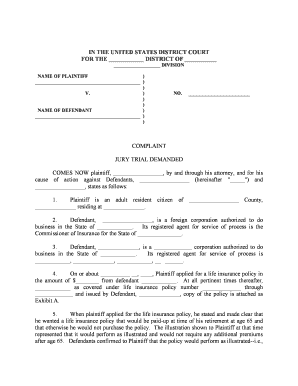
Filing this complaint enables a claimant to seek rescission, damages, punitive relief, or declaratory relief when fraudulent statements affected underwriting, coverage, or claims handling. It creates a formal record, starts litigation timelines, and compels discovery into insurer communications and policies.

Attorneys, claims professionals, and experienced self-represented litigants file these complaints; insurers, defense counsel, and coverage counsel respond or investigate via discovery.
The complaint is coordinate with supporting affidavits, exhibits, and demand letters; retaining counsel early helps align pleading strategy with jurisdictional requirements and proof available.
| Field | Configuration |
|---|---|
| Signer Roles | Plaintiff | Counsel | Notary |
| Authentication | Email + SMS code | Optional ID check |
| Routing | Sequential signing order with copies to counsel |
| Retention | Export signed PDF with audit trail |
Choose a platform that supports audit trails, secure storage, and the authentication level required by the court and your jurisdiction.
Ensure the platform meets ESIGN/UETA requirements and any industry-specific mandates such as HIPAA when protected health information is involved.
Identify plaintiff and defendant with legal names and addresses; include insurer subsidiary or agent names where applicable.
State basis for subject matter jurisdiction and venue; reference contract forum selection if relevant.
Plead specific false statements or omissions with dates, speakers, and context to satisfy pleading standards.
Describe how plaintiff relied on the misrepresentation and how it caused the loss or denial.
Quantify economic losses, claim costs, and any non-economic harms to support relief sought.
Attach policy, correspondence, claim logs, and any recorded statements that corroborate allegations.
Varies by state and claim type; check state code for fraud and contract limitations.
Serve defendants according to state rules after filing to avoid default clearance issues.
Court-ordered discovery windows differ by jurisdiction and case scheduling orders.
Respond to motions within local rule timeframes, typically 14–30 days.
Post-judgment appeal timelines usually range 30–60 days depending on court rules.
Clerk assigns case number and initiates formal proceedings.
Proof of service establishes defendant notice and triggers response deadlines.
Exchange documents, depositions, and expert disclosures to develop evidence.
Motions, settlement conferences, or trial resolve the dispute or narrow issues.
| Pleading Type | Fraud Complaint | Breach of Contract |
|---|---|---|
| Intent Requirement | specific intent | not required |
| Remedies | punitive possible | contract damages |
| Evidence Needed | intent and reliance | contract terms and breach |
| Typical Defenses | lack of specificity | contract interpretation |
| signNow | DocuSign | Adobe Sign | PandaDoc | HelloSign | |
|---|---|---|---|---|---|
| Starting Price | $8/user/mo | $15/user/mo | $14/user/mo | $19/user/mo | $15/user/mo |
| Free Trial | 7-day free trial | Varies | Varies | Varies | Varies |
| Bulk Send | Yes | Yes | Yes | Yes | No |
| Audit Trail | Yes | Yes | Yes | Yes | Yes |
| Envelope Cap | No cap | 100 envelopes/user/year | Varies | Varies | Varies |