Establishing secure connection…Loading editor…Preparing document…

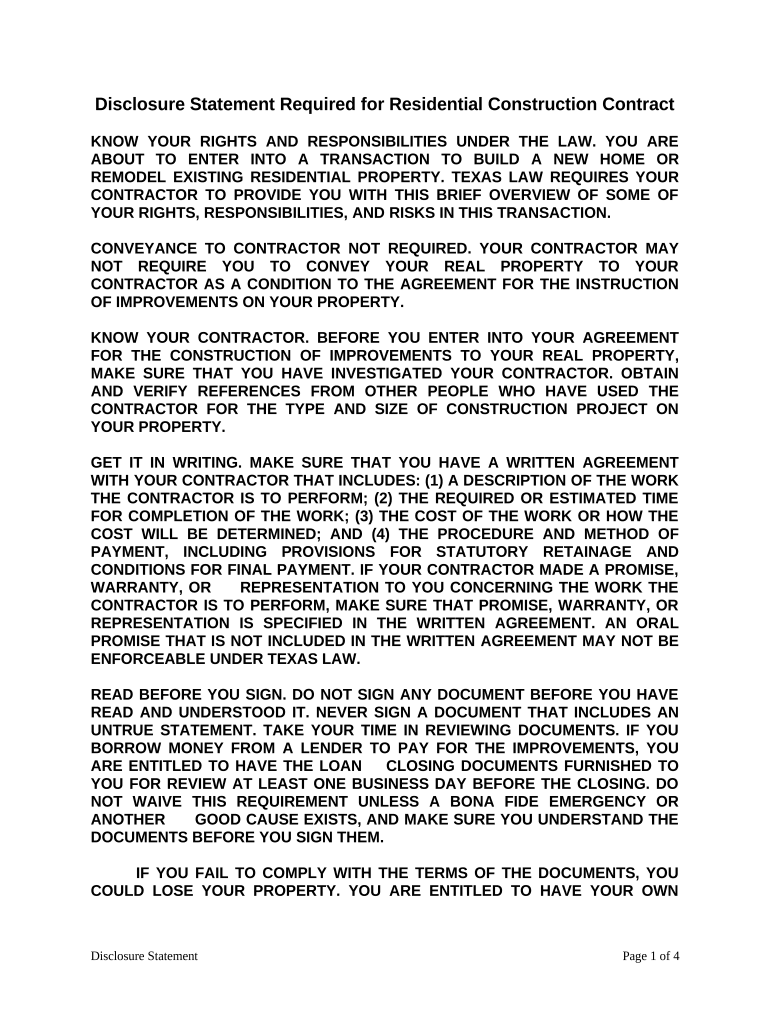
Disclosure Statement

This template is fully customizable. Edit the text, fill out the fields, and send it for signature. Give it a try!
Disclosure Statement

What a Disclosure Statement Is and When It’s Used

A Disclosure Statement is a written record that identifies material facts, relationships, or potential conflicts relevant to a transaction, professional engagement, or legal matter. It documents who the parties are, the subject matter being disclosed, the timing of disclosure, and any supporting attachments. In many contexts it protects both the disclosing party and the recipient by creating a clear trail of information. Electronic Disclosure Statements executed under ESIGN or state UETA statutes are generally enforceable in the United States, subject to a narrow set of statutory exceptions.

Why a Clear Disclosure Statement Matters

A clear Disclosure Statement reduces legal uncertainty, supports compliance, and preserves evidence of what was shared and when.

Why a Clear Disclosure Statement Matters

Who Typically Prepares or Receives This Statement

The Disclosure Statement is used across professions where transparency of relationships, material facts, or risks is required.

  • Real Estate agents, sellers, and brokers who must disclose property condition, known defects, and material facts.
  • Healthcare administrators and providers when sharing patient-related disclosures, privacy notices, or conflict-of-interest statements.
  • Legal, finance, and corporate officers who disclose relationships, compensation, or contractual conflicts to counterparties.

Core Elements Every Professional Disclosure Statement Should Include

A robust Disclosure Statement organizes information into predictable sections so recipients can quickly find names, facts, dates, and supporting evidence.

Parties

Full legal names of all disclosing and receiving parties, including entity type and contact information for reliable identification and service.
Material Facts

Concise, itemized statements of the facts being disclosed; avoid vague language and link each fact to relevant documents where possible.

Conflicts

Clear disclosure of any financial interests, familial relationships, or prior engagements that could reasonably influence the transaction or decision.

Effective Dates

Date the disclosure becomes effective and any dates of prior disclosures or material events referenced in the statement.

Attachments

List and attach supporting documents such as inspection reports, contracts, invoices, or authorization letters referenced in the statement.

Signatures

Signature blocks for authorized signers with printed name, title, date, and witness or notary lines when required by law or practice.

Step-by-Step: Completing and Signing a Disclosure Statement

Follow these steps to prepare, verify, and finalize a Disclosure Statement that meets legal and operational requirements.

  • 01
    Prepare Document: Assemble facts, attachments, and party details before populating fields.
  • 02
    Complete Fields: Enter required data exactly and attach referenced documents.
  • 03
    Review: Have a second party or counsel verify accuracy and completeness.
  • 04
    Sign & Store: Execute signatures, apply notarization if required, and archive with audit record.

Where to Send or File the Completed Statement

A Disclosure Statement may be delivered directly to counterparties, filed with a regulatory body, or retained with corporate records depending on purpose.

  • Deliver to Recipient: Email or secure portal delivery to the named recipient with a return receipt.
  • File with Agency: If required by statute or regulation, submit to the designated government agency or registrar.
  • Corporate Records: Store a copy in the company recordkeeping system as part of the contract or compliance file.
  • Public Filings: Attach to public reports only when permitted or required by securities or disclosure rules.

Configuring an Online Disclosure Workflow

Key settings make an electronic Disclosure Statement reliable: authentication, required fields, conditional logic, reminders, and storage options.

Field Configuration
Authentication Email link, SMS code, or stronger KBA as required
Conditional Fields Show or hide sections based on prior answers
Reminders Automatic follow-ups at defined intervals
Storage PDF/A export with audit trail

Technical Considerations for eSubmission and Signing

Choose a platform that supports required authentication, accepted file formats, and secure storage.

  • Integrations: Salesforce, NetSuite, Microsoft 365 integrations available
  • File Formats: PDF, DOCX, and HTML supported for export
  • Security: TLS in transit and AES-256 at rest

eSignature Pricing and Feature Comparison for Disclosure Statements

Compare entry price, trial availability, bulk send, audit capabilities, HIPAA support, and envelope limits across common vendors.

signNow DocuSign Adobe Sign PandaDoc HelloSign
Starting Price $8/user/mo $15/user/mo $14/user/mo $19/user/mo $15/user/mo
Free Trial 7-day free trial Varies Varies Varies Varies
Bulk Send Yes Yes Yes Yes Yes
Audit Trail Yes Yes Yes Yes Yes
HIPAA Compliant Yes Yes Yes No No
Envelope Cap No cap 100 envelopes/user/year Varies by plan Varies Varies

Essential Data Elements to Record

Signer Identity: Full legal name
Contact Details: Email and phone
Disclosure Items: Itemized facts
Attachments: Files listed
Execution Data: Date and time
Authentication: Method used

Key Risks of Incomplete or Incorrect Disclosures

Contract Voidance: May invalidate agreement
Regulatory Fines: Civil penalties possible
Tax Consequences: Withholding or audit risk
Professional Sanctions: Licensing discipline risk
Litigation Exposure: Increased damages risk
Reputational Harm: Trust erosion with counterparties

Common Preparation Errors to Avoid

  • Incomplete party names or using trade names instead of legal entity names, which can create ambiguity in enforcement.
  • Omitting attachments referenced in the disclosure; missing exhibits undermine the factual basis of the statement.
  • Using vague language like 'to our knowledge' without context or dates, which can increase disagreement about material facts.
  • Failing to capture execution metadata (timestamp, IP, authentication), which weakens evidentiary value in disputes.

Practical Examples from Real Customers

Real organizations use Disclosure Statements in different contexts; these examples show how statements supported compliance and workflows.

Martin Properties

A brokerage standardized disclosure packs to speed closings and reduce in-person steps.

  • Implementation reduced turnaround on signed disclosures.
  • The firm reported secure mobile execution and consistent recordkeeping across transactions, improving audit readiness and client communication without extra travel.

Fertility Centers of Illinois

A health services provider digitized patient disclosures and consent forms to improve processing.

  • Electronic execution preserved consent evidence and timestamps.
  • The center noted better tracking for consent versions and secure storage consistent with privacy and retention obligations.

Timing Considerations and Typical Deadlines

Deadlines depend on the underlying transaction, regulatory rules, and any contractually agreed dates; set internal reminders to avoid lapses.

Provide on Request:

Some disclosures must be furnished promptly when requested by counterparties

Pre-Transaction Delivery:

Deliver disclosures before contract signing when required by contract or statute

Response Deadlines:

Specify a response window for recipients to accept or dispute facts

Filing Deadlines:

File with agencies by statutory deadlines when applicable

Record Retention:

Begin retention from execution date per applicable rules

Frequently Asked Questions About Disclosure Statements

Answers to common questions about validity, electronic execution, notarization, error correction, and retention for Disclosure Statements.


Need help? Contact support

be ready to get more
Join over 28 million airSlate SignNow users