Court Caption
Start with the court name, case caption, docket number, and title of the motion so the clerk can immediately place the letter on the correct file and calendar.
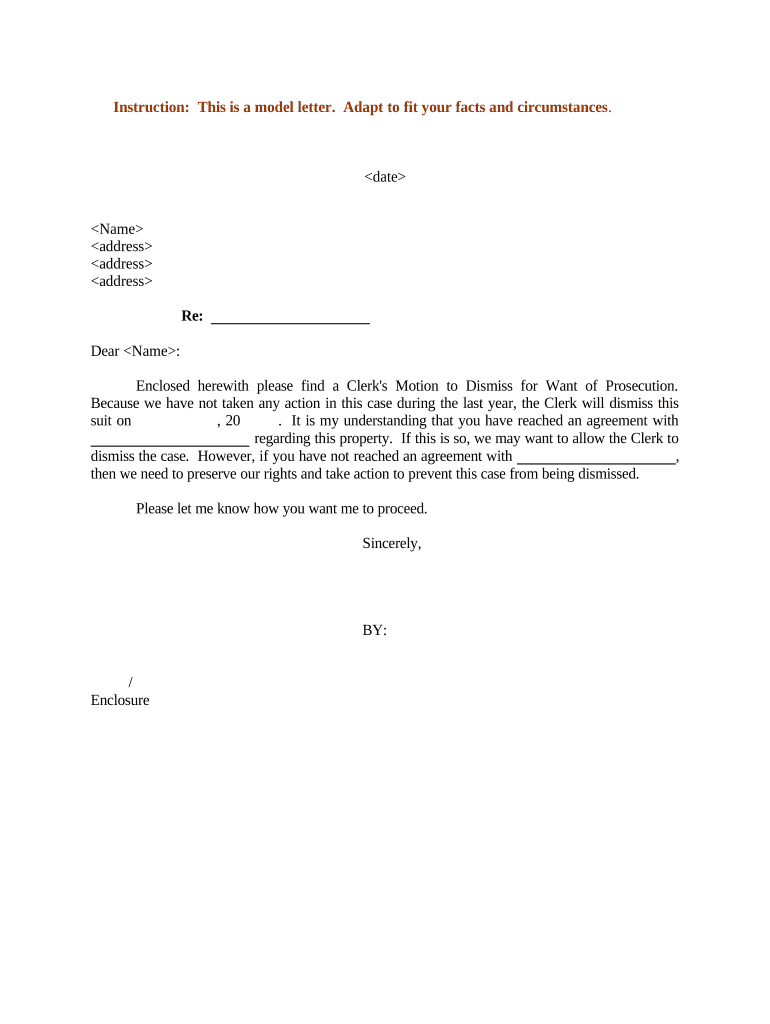
A concise, rules-compliant letter helps the clerk and judge quickly identify the procedural problem, prevents administrative dismissal or delays, and documents your attempt to cure or explain deficiencies under local rules and Federal Rule practice.

Use this letter only when local rules permit administrative correspondence; always serve opposing parties and retain proof of service.
An attorney representing a party in pending litigation who prepares the letter to preserve claims or defenses and to explain remedial steps under local court rules and Federal Rule 12 practice.
A non-lawyer party who files a short letter to the clerk seeking clarification, requesting additional time, or informing the court of corrective actions after a procedural deficiency is identified.
Start with the court name, case caption, docket number, and title of the motion so the clerk can immediately place the letter on the correct file and calendar.
Concise reference to the specific motion to dismiss (docket entry number and filing date) to tie the letter to the precise item under review.
One-paragraph explanation whether the letter opposes dismissal, requests additional time, or supplies omitted documentation to cure a filing defect.
Bullet or short paragraph summarizing legal or factual bases relevant to the motion and why dismissal would be premature or incorrect under applicable rules.
State how and when opposing counsel or parties were served and include a certificate of service line acknowledging recipients and delivery method.
Name, firm or party name, mailing address, phone, email, date, and signature (electronic or handwritten per local rules) with role or bar number as applicable.
| Field | Configuration |
|---|---|
| Document Title | Use 'Letter Regarding Clerk's Motion to Dismiss' exactly. |
| Filing Category | Choose 'Other' or 'Administrative' per court choices. |
| Service Method | ECF service or certified mail per local rule. |
| Attachments | Attach exhibits as separate, labeled PDF files. |
Retain copies of the timestamped e-filing receipt and maintain local copies for your case file and client records.
Federal Rule 12(a)(1)(A)(i) often sets a 21-day responsive pleading period.
Many courts set 7–30 day windows for administrative correspondence.
Count service date when calculating response or cure periods.
File timely extension motions if the letter requests more time.
Clerk may set a briefing or hearing deadline after review.
Prepare the letter, attach corrected pleadings, and obtain client or co-counsel review.
E-file the letter and supporting files through the court portal.
Serve opposing counsel and retain proof of service for the record.
Clerk logs the letter and forwards to chambers or issues procedural instructions.
| signNow | DocuSign | Adobe Sign | PandaDoc | HelloSign | |
|---|---|---|---|---|---|
| Starting Price | $8/user/mo | $15/user/mo | $14/user/mo | $19/user/mo | $15/user/mo |
| Free Trial | 7‑day trial | No trial listed | No trial listed | Yes, limited | Yes, limited |
| Bulk Send | Yes | Yes | Yes | Yes | No |
| Audit Trail | Yes | Yes | Yes | Yes | Yes |
| Envelope Cap | No cap | 100 envelopes/user/year | Varies by plan | Varies by plan | Varies by plan |
A defense firm files a letter clarifying that service was defective and asks the clerk to accept corrected proof of service.
A pro se plaintiff submits a short letter explaining a missing exhibit was inadvertent and requests leave to supplement.