Establishing secure connection…Loading editor…Preparing document…

Indiana Affidavit

This template is fully customizable. Edit the text, fill out the fields, and send it for signature. Give it a try!
Indiana Affidavit

What an Indiana Affidavit Is and when it’s used

An Indiana Affidavit is a sworn written statement of facts signed by an affiant and typically acknowledged before a notary public for use in court, administrative matters, real estate transactions, or other legal processes. Affidavits present testimonial facts in documentary form and may attach exhibits or declarations. Electronic execution is generally permitted under the federal ESIGN Act (15 U.S.C. §7001) and state electronic transaction laws (UETA in most states), but some categories (for example wills or certain court filings) may remain excluded from e-signature rules.

Why an affidavit matters in Indiana proceedings

Affidavits convert firsthand facts into admissible sworn evidence, streamline pretrial and administrative workflows, and create durable records of statements. Properly executed affidavits reduce the need for live testimony and help courts and agencies decide procedural matters efficiently.

Why an affidavit matters in Indiana proceedings

Who typically prepares or signs an Indiana Affidavit

The following groups most often prepare, request, or sign affidavits in Indiana.

  • Attorneys and paralegals preparing sworn statements for litigation, probate, or administrative hearings.
  • Title and real estate professionals using affidavits to verify facts in closings and title curative work.
  • Private individuals or corporate officers attesting under oath for transactions, disputes, or benefits.

Different use cases affect required language, jurat wording, or supporting exhibits — choose the format appropriate to the purpose.

Step-by-step: preparing an affidavit for signature

Follow these practical steps to prepare, verify, and execute an Indiana Affidavit.

  • 01
    Gather facts: Collect dates, documents, and exhibits that support each factual statement.
  • 02
    Draft the jurat: Include oath language and jurisdiction; tailor the jurat to Indiana practice.
  • 03
    Attach exhibits: Label exhibits and reference them by exhibit letter or number in the body.
  • 04
    Notarize: Sign before a notary or via an approved RON process where available.

How affidavit execution and filing typically flow

This overview shows the common workflow from preparation to final record retention.

  • Prepare document: Draft affidavit with numbered facts and labeled exhibits.
  • Select signing method: Choose in-person notarization or compliant e-sign/RON if permitted.
  • Execute and notarize: Affiant signs and the notary completes the jurat and certificate.
  • File or deliver: Submit to court, county office, or requesting party per instructions.

Configuring an online affidavit workflow

Key settings ensure identity verification, required fields, and correct routing for sworn statements.

Field Configuration
Required Fields Make name, date, jurat, and signature mandatory
Authentication Use email+SMS or stronger ID verification where needed
Attachments Require exhibits as uploaded PDFs with labels
Notary Options Enable RON or in-person notarization workflow

Technical considerations for digital affidavits

Ensure the platform supports secure PDFs, identity checks, and audit logs before e-signing or notarizing an affidavit.

  • File formats: PDF and DOCX supported
  • Integrations: Salesforce, NetSuite, Google Workspace
  • Authentication: Email, SMS, or KBA available

Confirm the vendor supports required notary options, retention, and evidentiary audit trails to meet legal and procedural needs.

Essential parts of a professional Indiana Affidavit

A complete affidavit uses standard structure and clear jurat language to maximize admissibility and ease of notarization.

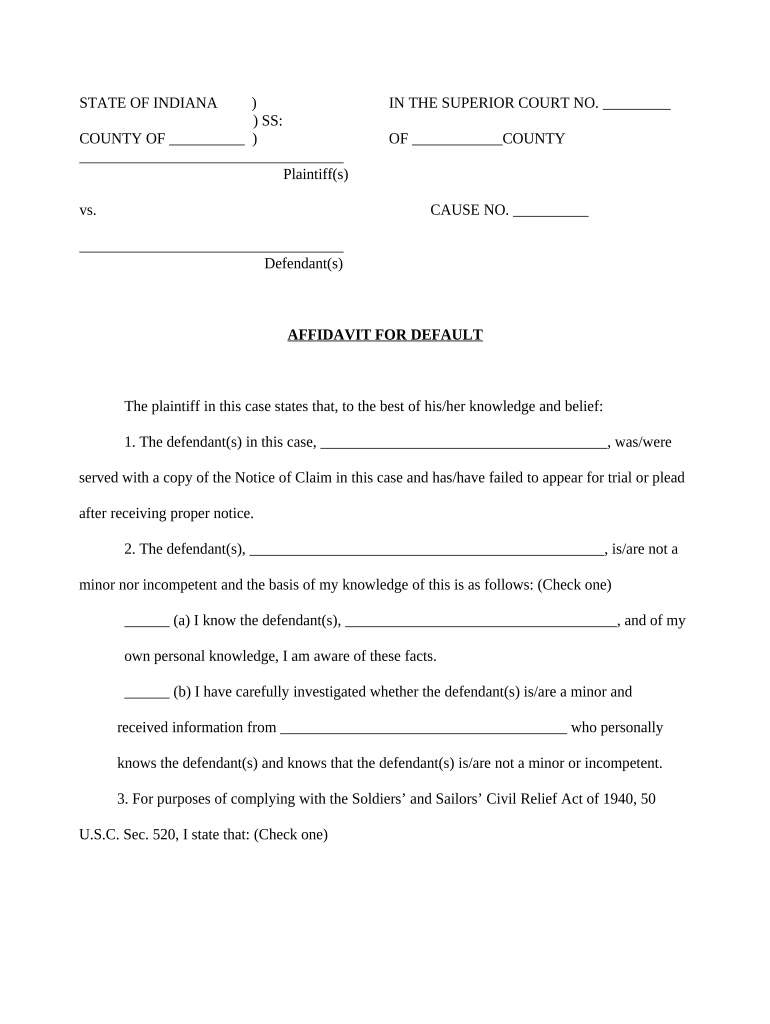
Caption

Case or matter caption with court and docket details so the affidavit is tied to the proper proceeding and readily filed.
Introductory clause

Identify the affiant, residence, age if relevant, and the statement 'under oath' or 'sworn' to establish the sworn nature.

Numbered statements

Present facts in short numbered paragraphs for clarity and to facilitate citation in motions or hearings.

Exhibits

Attach labeled exhibits (Exhibit A, B) and reference them precisely in the body to support assertions and evidence.

Jurat block

Include the notary jurat with venue (county, state), date, and notary signature and seal for proper acknowledgment.

Signature line

Affiant signs and dates the affidavit at the jurat; electronic signatures require an audit trail and consent evidence.

Security and compliance checkpoints

Encryption: AES-256 at rest
Transport: TLS 1.2/1.3 in transit
Audit Trail: Detailed action logs
Certifications: SOC 2 Type II, ISO 27001
HIPAA: BAA available
E-Sign Law: ESIGN and UETA compliant

Legal risks and consequences

Perjury risk: Criminal exposure
Rejection: Court may refuse affidavit
Delay: Proceedings may be postponed
Sanctions: Possible civil sanctions
Notary defects: Affects admissibility
Data privacy: HIPAA/FERPA exposure

Common preparation mistakes to avoid

  • Omitting the jurat or venue information, which prevents notaries from properly completing the acknowledgment and can render the affidavit invalid.
  • Using vague or argumentative language rather than precise factual statements, increasing the risk that courts treat the affidavit as improper opinion or hearsay.
  • Failing to attach supporting exhibits or failing to label them clearly, making it difficult for the court or opposing parties to verify referenced materials.
  • Mismatching affiant name or signature details with identification presented to the notary, causing notarization refusal or later evidentiary challenges.

Timing and filing considerations for affidavits

Affidavits are often time-sensitive; align execution with hearing dates and statutory deadlines to preserve evidentiary value.

Before hearing:

File or provide the affidavit prior to hearings per local rules

Statute deadlines:

Use affidavit within statute of limitations relevant to the claim

Notarization date:

Notarize on the date signed to ensure jurat accuracy

RON recording:

Retain RON audio-video per state notary rules if used

Retention period:

Follow record retention rules after filing and case closure

Key milestones and processing stages

Track these sequential stages from draft to archived record for a complete lifecycle view.

01

Draft prepared

Affidavit drafted with exhibits and internal review

02

Affiant verification

Affiant reviews facts and confirms accuracy

03

Notarization

Signed before notary in-person or via compliant RON

04

Filing and retention

Filed with court or delivered; retained per policy

Pricing snapshot for e-sign options used with affidavits

Comparing starter pricing, core features, and compliance considerations for common e-sign providers; signNow is listed first as the baseline.

signNow DocuSign Adobe Sign PandaDoc HelloSign
Starting Price $8/user/mo $15/user/mo $14/user/mo $19/user/mo $15/user/mo
Free Trial 7-day free trial, no card required Varies by plan Varies by plan Varies by plan Varies by plan
Bulk Send Yes Yes Yes Yes Varies
Audit Trail Yes Yes Yes Yes Yes
HIPAA Compliant Yes Varies by plan Varies by plan Varies by plan Varies by plan
Envelope Cap No cap 100 envelopes/user/year Varies Varies Varies

Frequently asked questions about Indiana Affidavits

Answers to common execution, notarization, and admissibility questions for affidavits used in Indiana matters.


Need help? Contact support

be ready to get more
Join over 28 million airSlate SignNow users