Establishing secure connection…Loading editor…Preparing document…

Employee Purchase Plan

This template is fully customizable. Edit the text, fill out the fields, and send it for signature. Give it a try!
Employee Purchase Plan

What an Employee Purchase Plan Is and Why It Matters

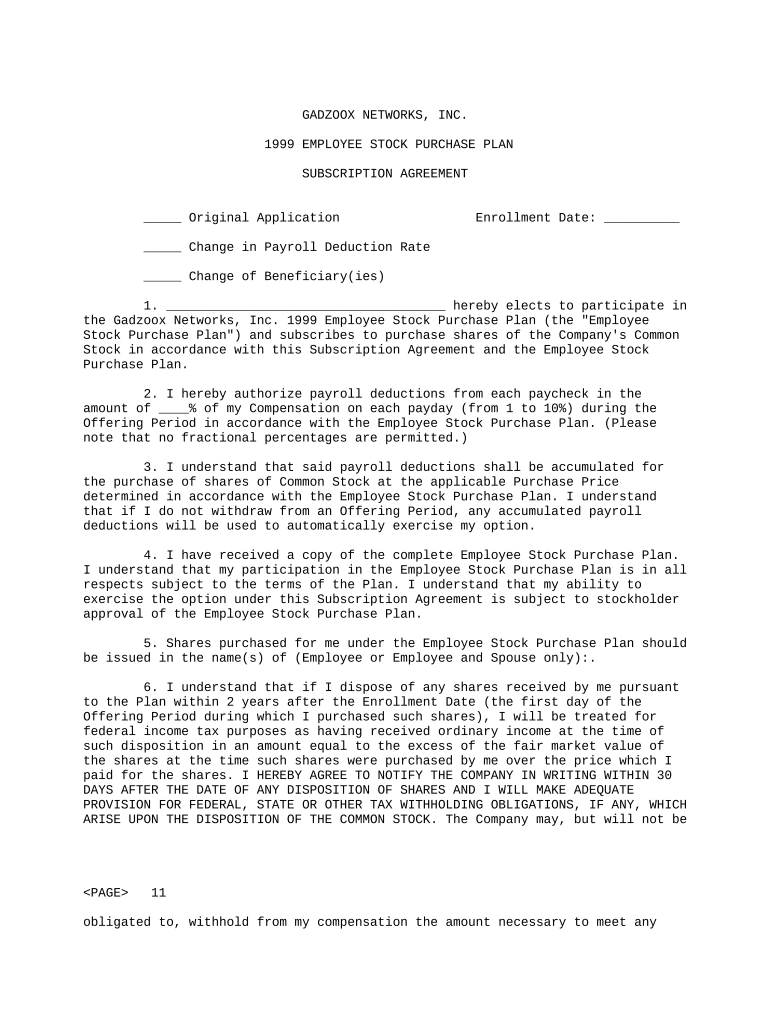
An Employee Purchase Plan is a formal agreement that lets employees buy goods, services, or company equity under predefined terms, such as pricing, eligibility, payment method, and vesting schedule. Employers use these documents to record offer details, payroll deductions, tax treatment, and transfer restrictions. The plan can include purchase price, quantity limits, participation period, and contingencies for termination or change of control. When executed electronically, an Employee Purchase Plan must meet U.S. e-signature rules (ESIGN and applicable state UETA statutes) to be enforceable.

Practical Benefits of a Clear Employee Purchase Plan

Clear Employee Purchase Plans reduce disputes, document tax obligations, and set predictable payroll processing. A written plan helps HR, payroll, and legal teams enforce eligibility, handle withholding, and preserve evidence of consent. Properly executed electronic signatures provide audit trails and legal standing under ESIGN and UETA.

Practical Benefits of a Clear Employee Purchase Plan

Who Typically Completes and Relies on This Plan

HR, payroll, legal teams, and participating employees use the Employee Purchase Plan to set terms, authorize payroll deductions, and document consent.

  • HR administrators: manage eligibility lists, enrollment windows, and payroll deduction setup.
  • Payroll teams: apply withholding rules, process post-tax or pre-tax contributions, and reconcile entries.
  • Employees: opt in, specify amounts, and retain copies for personal tax records.

Core Elements Every Professional Employee Purchase Plan Should Include

A professional Employee Purchase Plan includes eligibility, pricing, payment terms, tax treatment, transfer restrictions, and dispute resolution to reduce ambiguity and align expectations.

Eligibility

Define who may participate, service or tenure requirements, and exclusions such as executive-only or part-time employee rules to ensure consistent enrollment and compliance with company policy.
Pricing

Specify the exact purchase price formula, any employee discounts, per-transaction quantity caps, currency, and the correction procedure for pricing errors to prevent disputes over consideration.

Payment Terms

State payment methods, payroll deduction timing, installment schedules, rounding rules, and the effect of missed or partial payments on delivery rights or stock issuance to protect both parties.

Tax Treatment

Describe withholding responsibility, reporting (W-2 or 1099), timing of tax recognition, and approximate tax consequences; advise consulting payroll tax counsel for complex equity or fringe benefits.

Transfer Restrictions

Include assignment clauses, rights of first refusal, lockup periods, conditions for secondary transfers, and broker-dealer or transfer-agent instructions to comply with securities rules and company policy.

Dispute Resolution

Specify governing law, arbitration or court jurisdiction, procedures for notice and remedy, and interim injunctive relief options for stock transfers to limit litigation costs and clarify enforcement steps.

Required Fields and Key Identifiers

Employee Name: Full legal name as on ID
Employee ID: Company-assigned unique employee identifier
Plan Effective Date: Enter as MM/DD/YYYY date
Purchase Amount: Specify currency and amount
Tax Classification: Indicate withholding and reporting
Signature Method: Selected electronic signature method

Step-by-Step: Complete and Execute the Plan

Follow these steps to complete and execute an Employee Purchase Plan accurately and maintain required records for payroll and tax purposes.

  • 01
    Prepare: Confirm eligibility and price terms before sending.
  • 02
    Populate: Enter employee details, dates, and payment schedule.
  • 03
    Authorize: Obtain required approvals from HR or finance.
  • 04
    Execute: Collect signatures and store signed copy securely.

Online Signing Workflow Overview

Typical eSigning workflow for an Employee Purchase Plan includes upload, field placement, signer authentication, signing, and automated delivery of records.

  • Upload: Sender uploads signed document template.
  • Place Fields: Add signature, date, and data fields.
  • Authenticate: Use email link, SMS code, or stronger methods.
  • Complete: Signer reviews, signs, and receives certificate.

Configuring the Digital Workflow for the Plan

Configure the online workflow to match approval order, authentication, and notification requirements for the Employee Purchase Plan.

Field for configuration header row Configuration settings used to define workflow behavior
Signing order and role assignment settings Choose sequential or parallel signing order
Authentication method and strength selection Email link, SMS code, or KBA
Notification and reminder schedule settings Email recipients, reminder cadence, and receipts
Document retention and audit record policy Save PDF plus audit trail metadata

Technical Requirements for eSubmission and Integrations

Choose a platform that supports PDF, DOCX, strong encryption, and integrations with payroll or HR systems used for Employee Purchase Plan processing.

  • File formats: PDF, DOCX, XLSX supported
  • Integrations: Salesforce, NetSuite, Google Workspace
  • Authentication: Email, SMS, SSO options

Typical Deadlines and Processing Expectations

Common deadlines and processing expectations for enrollment, payroll deductions, and tax reporting related to Employee Purchase Plans.

Enrollment window deadline:

Specified by employer; typically open for limited period

Payroll deduction start date:

Next payroll cycle after effective date

Employee acceptance cutoff:

Must be signed before offer expiration to be valid

Tax reporting timeframe:

Employers report on W-2 or 1099 per IRS rules

Document retention start:

Keep executed records from effective date forward

Common Preparation Mistakes to Avoid

  • Missing or inaccurate employee identifiers can cause withholding errors, delay payroll processing, and trigger backup withholding or tax reporting corrections with the IRS.
  • Failing to specify payment timing or rounding rules often leads to disputes when amounts deducted do not match expected purchase totals.
  • Using inconsistent signature methods without documented consent risks enforceability under ESIGN and may complicate audit trails.
  • Not accounting for tax reporting (W-2 vs 1099) for certain benefits or equity transfers can create retrospective liabilities and penalties.

Risks and Legal Consequences of Incorrect Plans

Tax penalties: IRC §6721: per-return fines
Backup withholding: 24% rate applies
Invalid signature: May be unenforceable without intent evidence
I-9 risk: 8 CFR §274a.2: penalties possible
Privacy breach: HIPAA violations require BAA and controls
Notarization defect: Missing notarization may delay transfer

eSignature Vendor Pricing and Feature Snapshot for Employee Purchase Plans

Compare baseline pricing and key feature availability for common eSignature vendors when processing an Employee Purchase Plan.

signNow DocuSign Adobe Sign PandaDoc HelloSign
Starting Price $8/user/mo $15/user/mo $14/user/mo $19/user/mo $15/user/mo
Free Trial 7-day free trial Varies by plan Varies by plan Varies by plan Varies by plan
Bulk Send Yes (Business Premium) Yes Yes Yes Limited or no
Audit Trail Yes Yes Yes Yes Yes
HIPAA Compliant Yes Yes Yes No No
Envelope Cap No envelope cap 100 envelopes/user/year Varies by plan Varies by plan Varies by plan

Frequently Asked Questions About Employee Purchase Plans

[INTRO] Answers to common questions about completing, signing, and retaining Employee Purchase Plans, including e-signature validity and compliance considerations.


Need help? Contact support

be ready to get more
Join over 28 million airSlate SignNow users