Establishing secure connection…Loading editor…Preparing document…

Letter Explaining Bankruptcy

This template is fully customizable. Edit the text, fill out the fields, and send it for signature. Give it a try!
Letter Explaining Bankruptcy

What a Letter Explaining Bankruptcy Is and When It’s Used

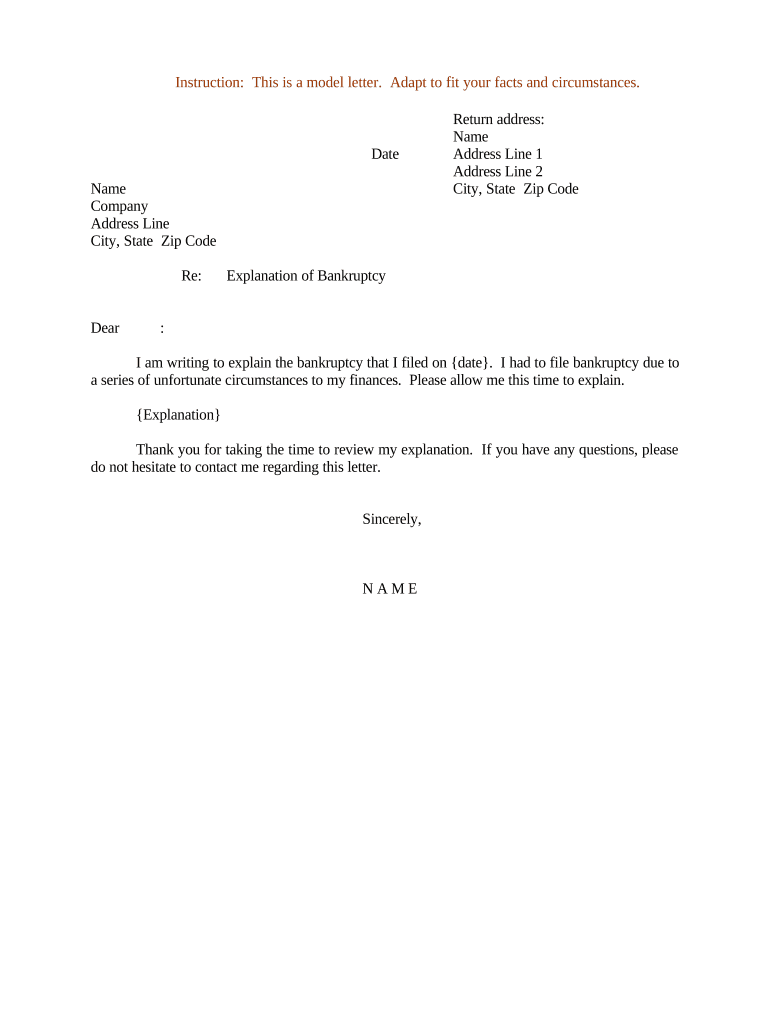
A Letter Explaining Bankruptcy is a formal, written statement from a debtor describing the circumstances that led to a bankruptcy filing and summarizing the case outcome. It typically identifies the bankruptcy chapter, filing and discharge dates, the court and case number, and whether debts were discharged, reaffirmed, or subject to a repayment plan. Creditors, landlords, mortgage underwriters, employers, and lenders commonly request this document to assess risk, verify status, or decide on extensions of credit or tenancy. The letter is an explanatory supplement, not a legal pleading, and should be factual, concise, and supported by court documents when appropriate.

Why You Might Prepare a Letter Explaining Bankruptcy

A clear explanatory letter helps third parties understand the timeline, legal outcome, and any ongoing obligations related to the bankruptcy, reducing misunderstandings and speeding underwriting or tenancy decisions.

Why You Might Prepare a Letter Explaining Bankruptcy

Who Typically Prepares or Asks For This Letter

Common requesters and preparers vary by context but generally include lenders, landlords, and attorneys.

  • Mortgage lenders and underwriters — used to evaluate refinancing, mortgage applications, or loan modifications when bankruptcy appears in credit history.
  • Landlords and property managers — requested during rental screening to confirm discharge status and ability to meet future rent obligations.
  • Attorneys and trustees — prepare or verify letters for creditors, third-party negotiations, or settlement discussions in consumer or business bankruptcies.

Essential Components to Include in a Professional Letter

A well-structured letter is factual, succinct, and supported by court documents; it addresses creditor questions and clarifies current obligations and contact points.

Case ID

Court name, district, and full case number so recipients can independently verify the filing and outcome through court records if needed.
Filing Details

Chapter filed, filing date, and trustee name, giving clear context about the nature of the proceeding and the party administering claims.

Disposition

Discharge date or current status (pending, dismissed, converted) plus statement on whether particular debts were discharged or reaffirmed.

Outstanding Obligations

Identify any debts that remain payable, reaffirmation agreements in place, or scheduled payments under a plan so recipients know ongoing liabilities.

Supporting Proof

List attached evidence such as the discharge order, schedules, trustee contact, or docket entries to substantiate the statements in the letter.

Contact Info

Provide the debtor’s preferred contact, counsel or trustee contact information, and a statement about consent to release further verification details.

Step-by-Step: How to Draft and Deliver the Letter

Follow a simple sequence to prepare an accurate letter and speed third-party review.

  • 01
    Gather documents: Collect discharge order and schedules.
  • 02
    Draft facts: State chapter, dates, and outcomes.
  • 03
    Attach proof: Include the discharge or trustee memo.
  • 04
    Send securely: Deliver via certified mail or secure eSubmission.

Where to Send, File, or Submit the Letter

Choose the delivery route that matches the recipient’s verification preferences and legal risk profile.

  • Email to Requester: Send as a PDF attachment to the named contact.
  • Upload to Portal: Use lender or landlord secure portals when available.
  • Certified Mail: Use return receipt for a physical proof of delivery.
  • Court or Trustee: Provide copy directly to the trustee or file as directed when required.

Configuring a Secure Online Workflow for Submission

Set up authentication, document fields, and retention settings before eSubmitting to meet legal and auditing needs.

Field Configuration
Signers and Roles Debtor | Counsel | Trustee
Authentication Method Email link, SMS code, or KBA
Required Fields Signature, date, printed name
Retention Policy Keep signed copy for minimum retention period

Digital Signing and eSubmission Considerations

Use a platform that captures an audit trail, supports standard document formats, and offers secure storage.

  • Formats: PDF, DOCX supported
  • Authentication: Email or SMS codes
  • Audit Trail: Timestamped activity log

Timing: Common Deadlines and Response Windows

Observe recipient deadlines and bankruptcy timelines to avoid forfeiting rights or creating confusion about obligations.

Request Response Window:

Respond to creditor requests generally within 30 days when asked for verification.

After Discharge:

Send a discharge-backed letter promptly after the court issues the discharge order.

Plan Confirmation:

Provide status updates if case converted or plan remains active.

Loan Applications:

Disclose bankruptcy status on applications per lender timelines and instructions.

Record Retention:

Keep copies for required retention periods specified elsewhere in this guide.

Common Mistakes to Avoid When Preparing the Letter

  • Using vague language such as 'debts resolved' without specifying which accounts were discharged or reaffirmed, which causes follow-up requests.
  • Failing to attach the discharge order or schedules; omitting proof is the most common reason creditors reject or delay processing.
  • Incorrect case numbers or dates that prevent verification against court dockets and create the appearance of inaccuracy or fraud.
  • Sharing sensitive account numbers or unnecessary personal data in unsecured email rather than providing secure, redacted copies with verification.

Risks and Consequences of an Incorrect or Misleading Letter

Denial of Request: Application or tenancy may be denied
Further Verification: Triggers expanded document requests
Potential Liability: Misstatements can create legal exposure
Credit Impact: Incorrect entries may affect credit decisions
Delay in Processing: Slows underwriting or approval timelines
Trustee Notification: May require trustee or counsel involvement

Typical eSignature Provider Pricing and Feature Snapshot

Compare starting price and core capabilities when selecting an eSignature provider for secure letter delivery and audit-trail retention.

signNow DocuSign Adobe Sign PandaDoc HelloSign
Starting Price $8/user/mo $15/user/mo $14/user/mo $19/user/mo $15/user/mo
Free Trial 7-day free trial Varies by plan Varies by plan Varies by plan Varies by plan
Bulk Send Yes Yes Yes Yes No
Audit Trail Yes Yes Yes Yes Yes
HIPAA Compliant Yes Yes Yes No No
Envelope Cap No envelope cap 100 envelopes/user/year Varies Varies Varies

Frequently Asked Questions About Letters Explaining Bankruptcy

Answers to common questions about validity, supporting documents, e-signing, notarization, and what to do if facts change.


Need help? Contact support

be ready to get more
Join over 28 million airSlate SignNow users