Establishing secure connection…Loading editor…Preparing document…

Georgia Name Change Form

This template is fully customizable. Edit the text, fill out the fields, and send it for signature. Give it a try!
Georgia Name Change Form

What the Georgia Name Change Form Is and When It Applies

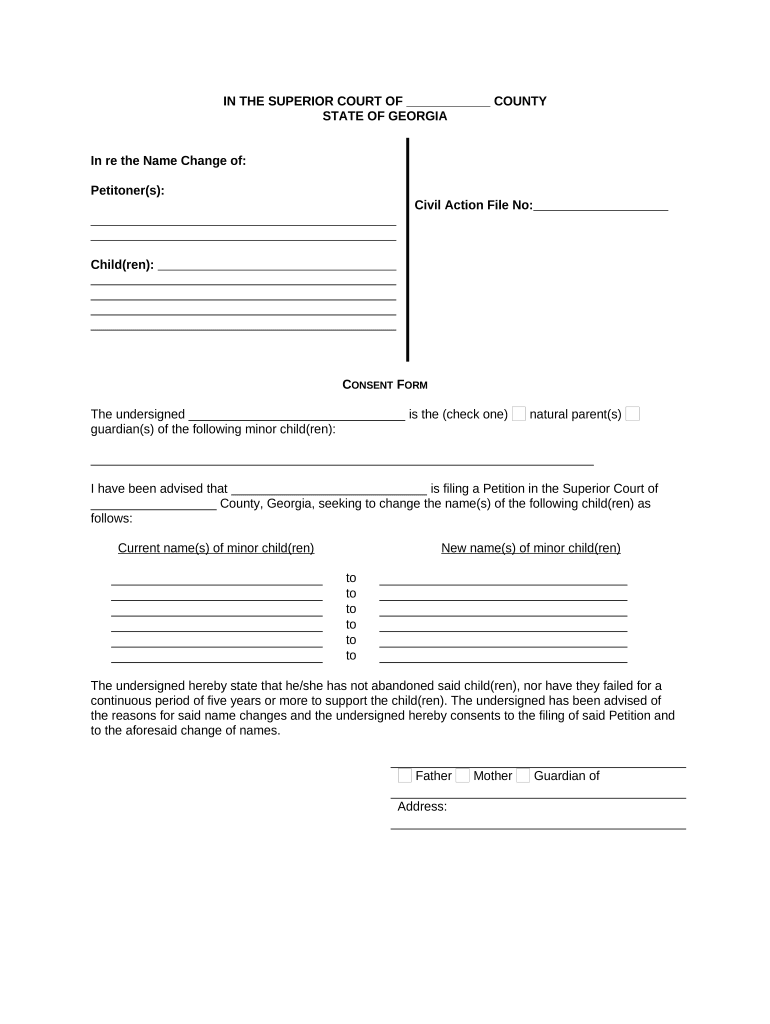
The Georgia Name Change Form is a court petition used to request a legal change of name for an adult or minor within Georgia's judicial system. It initiates the probate or superior court process, documents the petitioner’s current and desired names, grounds for the change, and required supporting information such as birth date and identification. Filing the form begins the public and procedural steps—service, possible publication, and hearing—leading to a judicial order that updates official records when granted.

Why Completing the Georgia Name Change Form Matters

Filing a correct petition creates an official court record authorizing your new legal name and enables updates to identification and benefit records.

Why Completing the Georgia Name Change Form Matters

Who Typically Prepares and Signs This Form

Individuals, parents on behalf of minors, and legal representatives commonly prepare the petition before filing with the probate or superior court.

  • Self-represented petitioner seeking a personal name change after marriage, divorce, or other personal reasons.
  • Parent or guardian filing for a minor where consent and proof of guardianship are required.
  • Attorney or court-appointed counsel preparing the petition in more complex cases or contested matters.

The petitioner must sign under penalty of perjury; attorneys, guardians, or court officers may also sign where authorized.

Step-by-Step: Filing the Georgia Name Change Petition

Complete and file the petition following these sequential steps to begin the court process.

  • 01
    Prepare Petition: Complete all fields and attach required IDs and affidavits.
  • 02
    File with Court: Submit to the appropriate county probate or superior court with filing fee.
  • 03
    Serve Interested Parties: Provide notice to required parties per local rules.
  • 04
    Attend Hearing: Appear on the scheduled date or submit required waivers.

How the Name Change Process Moves Through the Court

The form starts a predictable procedural flow: filing, notification, review, and judicial decision.

  • Submission: Clerk files petition and assigns case number.
  • Notice: Court orders service or publication as required.
  • Review: Judge reviews petition and supporting evidence.
  • Order: Judge issues decree granting or denying change.

Setting Up an Online Workflow for the Petition

Configure a digital workflow to collect signatures, store documents securely, and produce court-ready PDFs.

Field Configuration
Document Template Use the official petition PDF or DOCX template.
Signer Authentication Email plus government ID check where required.
Notification Settings Automatic reminders and service tracking.
Storage Location Encrypted cloud storage with access controls.

Digital Filing and eSubmission Considerations

Verify court acceptance of electronic filings and acceptable eSignature methods before submitting any petition online.

  • Document Formats: PDF and PDF/A preferred for court filings.
  • Authentication Options: Email link, SMS code, or ID verification.
  • Integrations: Connectors for cloud storage and case management.

Keep local court rules in mind: some counties require in-person filing, original signatures, or additional verification steps.

Typical Timelines and Local Deadlines to Expect

Processing times and deadlines vary by county; use these common timeframes to plan filing and service.

Filing Date:

Petition becomes active on the clerk’s filing date.

Service Window:

Service typically required within 30 days of filing.

Publication Period:

If ordered, publication can require 3–4 weeks of notices.

Hearing Scheduling:

Hearings often set 30–90 days after filing.

Final Decree Issuance:

Judge signs order at or after the hearing; times vary.

Key Milestones From Petition to Decree

Track these numbered stages to monitor progress from initial filing through final court order.

01

1. Petition Preparation

Complete form and verify identity documents and attachments.

02

2. Court Filing

Clerk accepts petition and assigns a hearing date.

03

3. Notice or Publication

Serve required parties or publish notice per court order.

04

4. Hearing and Order

Judge grants decree and clerk issues certified order.

Common Pitfalls to Avoid When Preparing the Form

  • Incomplete identification attachments that do not match the petitioner’s name cause processing delays and requests for supplemental proof.
  • Filing in the wrong county or using an incorrect court form can result in dismissal and require re-filing with additional fees.
  • Failure to serve required parties or to comply with publication instructions often leads to postponement of the hearing or denial.
  • Unsigned petitions, missing dates, or incorrect jurat wording frequently prompt clerks to refuse acceptance until corrected.

Risks and Legal Consequences of Errors

Case Dismissal: Filing defects can lead to dismissal.
Fee Loss: Fees may be forfeited on dismissal.
Delay: Process delays pending corrective filings.
Record Mismatch: Inconsistent records hinder ID updates.
Notarization Rejection: Missing notarization can invalidate filings.
Perjury Risk: False statements expose criminal penalties.

Essential Components Every Petition Should Include

A complete petition assembles the procedural elements judges and clerks expect to evaluate a name change request.

Caption

Court name, county, case number, and party identification to establish jurisdiction and case tracking.
Petitioner Details

Full current name, requested new name, birth details, and residence information for identity and venue determination.

Grounds

Concise factual statement explaining why the name change is sought without unnecessarily inflammatory or irrelevant detail.

Notices

Proof of service or publication affidavits showing compliance with notice requirements when applicable.

Supporting Documents

Certified birth certificate, photo ID, marriage or divorce decree, and any required waivers or consents.

Order Form

Proposed final decree or order for the judge’s signature to streamline issuance if granted.

Frequently Asked Questions About the Georgia Name Change Form

Answers to common questions about completing, filing, and enforcing a Georgia name change petition.


Need help? Contact support

be ready to get more
Join over 28 million airSlate SignNow users