Establishing secure connection… Loading editor… Preparing document…
Navigation

Fill and Sign the Jury Instruction 122 Race and or Sex Discrimination Hostile Work Environment Created or Permitted by Supervisor with Form
Fill and Sign the Jury Instruction 122 Race and or Sex Discrimination Hostile Work Environment Created or Permitted by Supervisor with Form

How it works

Open the document and fill out all its fields.
Apply your legally-binding eSignature.
Save and invite other recipients to sign it.

Rate template

4.8
35 votes
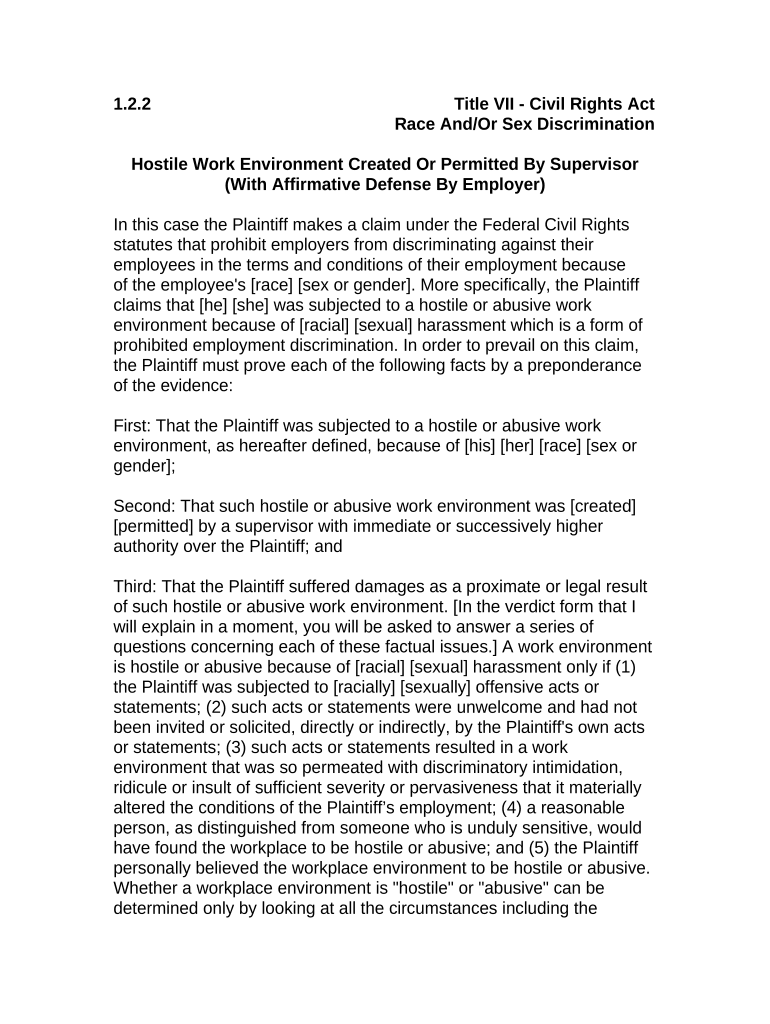
1.2.2 Title VII - Civil Rights Act Race And/Or Sex Discrimination Hostile Work Environment Created Or Permitted By Supervisor (With Affirmative Defense By Employer) In this case the Plaintiff makes a claim under the Federal Civil Rights statutes that prohibit employers from discriminating against their employees in the terms and conditions of their employment because of the employee's [race] [sex or gender]. More specifically, the Plaintiff claims that [he] [she] was subjected to a hostile or abusive work environment because of [racial] [sexual] harassment which is a form of prohibited employment discrimination. In order to prevail on this claim, the Plaintiff must prove each of the following facts by a preponderance of the evidence: First: That the Plaintiff was subjected to a hostile or abusive work environment, as hereafter defined, because of [his] [her] [race] [sex or gender]; Second: That such hostile or abusive work environment was [created] [permitted] by a supervisor with immediate or successively higher authority over the Plaintiff; and Third: That the Plaintiff suffered damages as a proximate or legal result of such hostile or abusive work environment. [In the verdict form that I will explain in a moment, you will be asked to answer a series of questions concerning each of these factual issues.] A work environment is hostile or abusive because of [racial] [sexual] harassment only if (1) the Plaintiff was subjected to [racially] [sexually] offensive acts or statements; (2) such acts or statements were unwelcome and had not been invited or solicited, directly or indirectly, by the Plaintiff's own acts or statements; (3) such acts or statements resulted in a work environment that was so permeated with discriminatory intimidation, ridicule or insult of sufficient severity or pervasiveness that it materially altered the conditions of the Plaintiff’s employment; (4) a reasonable person, as distinguished from someone who is unduly sensitive, would have found the workplace to be hostile or abusive; and (5) the Plaintiff personally believed the workplace environment to be hostile or abusive. Whether a workplace environment is "hostile" or "abusive" can be determined only by looking at all the circumstances including the frequency of the discriminatory conduct; its severity; whether it was physically threatening or humiliating; and whether it unreasonably interfered with the employee's work performance. The effect on the employee’s mental and emotional well being is also relevant to determining whether the Plaintiff actually found the workplace environment to be hostile or abusive; but while psychological harm, like any other relevant factor, may be taken into account, no single factor is required. Conduct that only amounts to ordinary socializing in the workplace such as occasional horseplay, sexual flirtation, sporadic or occasional use of abusive language, gender related jokes, and occasional teasing, does not constitute an abusive or hostile environment. Only extreme conduct amounting to a material change in the terms and conditions of employment is actionable. When a hostile or abusive work environment is created by the conduct of a supervisor with immediate or successively higher authority over the Plaintiff, the Defendant employer is responsible under the law for such behavior and the resulting work environment. [When a hostile or abusive work environment is created and carried on by nonsupervisory fellow workers of the Plaintiff, the Defendant, as the Plaintiff’s employer, will be responsible or liable for permitting such behavior only if the Plaintiff proves by a preponderance of the evidence that the Plaintiff’s supervisor or successively higher authority knew (that is, had actual knowledge), or should have known (that is, had constructive knowledge), of the hostile or abusive work environment and permitted it to continue by failing to take remedial action. To find that a supervisor had constructive knowledge of a hostile or abusive work environment - - that is, that the supervisor should have known of such environment - - the Plaintiff must prove that the hostile or abusive environment was so pervasive and so open and obvious that any reasonable person in the supervisor’s position would have known that the harassment was occurring. Even though you may have already determined that the Plaintiff was in fact exposed to a hostile or abusive work environment, that alone is not determinative of the issue of the supervisor’s knowledge; rather, you must find that the discriminatory harassment to which the Plaintiff was exposed was so pervasive and unconcealed that knowledge on the part of the supervisor may be inferred.] Finally, in order for the Plaintiff to recover damages for having been exposed to a discriminatorily hostile or abusive work environment because of [race] [sex], the Plaintiff must prove that such damages were proximately or legally caused by the unlawful discrimination. For damages to be the proximate or legal result of unlawful conduct, it must be shown that, except for such conduct, the damages would not have occurred. If you find that the Plaintiff has proved each of the things [he] [she] must prove in support of [his] [her] claim, you will then consider the Defendant’s affirmative defense to that claim. In order to prevail on the affirmative defense, the Defendant must prove each of the following acts by a preponderance of the evidence: FIRST OPTION [First: That the Defendant exercised reasonable care to prevent and correct promptly, any sexually harassing behavior in the workplace; and Second: That the Plaintiff unreasonably failed to take advantage of the preventive or corrective opportunities provided by the Defendant to avoid or correct the harm [or otherwise failed to exercise reasonable care to avoid harm].] SECOND OPTION [First: That the Defendant exercised reasonable care to prevent any sexually harassing behavior in the workplace; and Second: That the Defendant took reasonable and prompt corrective action after the Plaintiff took advantage of the preventive or corrective opportunities provided by Defendant].] THIRD OPTION First: That the Defendant exercised reasonable care to prevent any sexually harassing behavior in the workplace; and Second: That the Plaintiff unreasonably failed to take advantage of the Preventive or corrective opportunities provided by the Defendant to avoid or correct the harm [or otherwise failed to exercise reasonable care to avoid harm] or that, if the Plaintiff did take advantage of reventive or corrective opportunities, the Defendant responded by taking reasonable and prompt corrective action].] In the verdict form that I will explain in a moment, you will be asked to answer a series of questions concerning each of these factual issues. [Ordinarily, proof of the following facts will suffice to establish the exercise of “reasonable care” by the employer: (a) that the employer had promulgated an explicit policy against sexual harassment in the workplace; (b) that such policy was fully communicated to its employees; and (c) that such policy provided a reasonable avenue for the Plaintiff to make a complaint to higher management. Conversely, proof that an employee did not follow a complaint procedure provided by the employer will ordinarily suffice to establish that the employee “unreasonably failed” to take advantage of a corrective opportunity.] If you find that the Plaintiff has proved [his] [her] claim [and that the Defendant has not proved its affirmative defense], you must then determine the amount of damages the Plaintiff has sustained. In considering the issue of the Plaintiff's damages, you are instructed that you should assess the amount you find to be justified by a preponderance of the evidence as full, just and reasonable compensation for all of the Plaintiff's damages, no more and no less. Compensatory damages are not allowed as a punishment and must not be imposed or increased to penalize the Defendant. Also, compensatory damages must not be based on speculation or guesswork because it is only actual damages that are recoverable. [On the other hand, compensatory damages are not restricted to actual loss of time or money; they cover both the mental and physical aspects of injury - - tangible and intangible. Thus, no evidence of the value of such intangible things as emotional pain and mental anguish has been or need be introduced. In that respect it is not value you are trying to determine, but an amount that will fairly compensate the Plaintiff for those claims of damage. There is no exact standard to be applied; any such award should be fair and just in the light of the evidence.] You should consider the following elements of damage, to the extent you find them proved by a preponderance of the evidence, and no others: (a) Net lost wages and benefits to the date of trial; (b) Emotional pain and mental anguish. [(c) Punitive damages, if any (as explained in the Court’s instructions)] [You are instructed that any person who claims damages as a result of an alleged wrongful act on the part of another has a duty under the law to "mitigate" those damages - - that is, to take advantage of any reasonable opportunity that may have existed under the circumstances to reduce or minimize the loss or damage. So, if you should find from a preponderance of the evidence that the Plaintiff failed to seek out or take advantage of a business or employment opportunity that was reasonably available under all the circumstances shown by the evidence, then you should reduce the amount of the Plaintiff's damages by the amount that could have been reasonably realized if the Plaintiff had taken advantage of such opportunity.] [The Plaintiff also claims that the acts of the Defendant were done with malice or reckless indifference to the Plaintiff's federally protected rights so as to entitle the Plaintiff to an award of punitive damages in addition to compensatory damages. In some cases punitive damages may be awarded for the purpose of punishing the Defendant for its wrongful conduct and to deter others from engaging in similar wrongful conduct. However, an employer may not be held liable for punitive damages because of discriminatory acts on the part of its managerial employees where those acts by such employees are contrary to the employer’s own good faith efforts to comply with the law by implementing policies and programs designed to prevent such unlawful discrimination in the workplace. So, an award of punitive damages would be appropriate only if you find for the Plaintiff and then further find from a preponderance of the evidence (1) that a higher management official of the Defendant personally acted with malice or reckless indifference to the Plaintiff’s federally protected rights, and (2) that the employer itself had not acted in a good faith attempt to comply with the law by adopting policies and procedures designed to prohibit such discrimination in the workplace. If you find that punitive damages should be assessed against the Defendant, you may consider the financial resources of the Defendant in fixing the amount of such damages.] 1.2.2 Title VII - Civil Rights Act Race And/Or Sex Discrimination Hostile Work Environment Created Or Permitted By Supervisor (With Affirmative Defense By Employer) SPECIAL INTERROGATORIES TO THE JURY Do you find from a preponderance of the evidence: 1. That the Plaintiff was subjected to a hostile or abusive work environment because of [his] [her] [race] [sex or gender]? Answer Yes or No 2. That such hostile or abusive work environment was [created] [permitted] by a supervisor with immediate or successively higher authority over the Plaintiff? Answer Yes or No 3. That the Plaintiff suffered damages as a proximate or legal result of such hostile or abusive work environment? Answer Yes or No [Note: If you answered No to any one of the preceding three questions, you need not answer the remaining questions.] OPTION NO. 1 [4. That the Defendant exercised reasonable care to prevent and correct promptly any sexually harassing behavior in the workplace? Answer Yes or No 5. That the Plaintiff unreasonably failed to take advantage of any preventive or corrective opportunities provided by the Defendant to avoid or correct the harm? Answer Yes or No ] OPTION NO. 2 [4. That the Defendant exercised reasonable care to prevent any sexually harassing behavior in the workplace? Answer Yes or No 5. That the Defendant took reasonable and prompt corrective action after the Plaintiff took advantage of the preventive or corrective opportunities provided by the Defendant? Answer Yes or No ] OPTION NO. 3 [4. That the Defendant exercised reasonable care to prevent any sexually harassing behavior in the workplace? Answer Yes or No 5. That - - (a) The Plaintiff unreasonably failed to take advantage of any preventive or corrective opportunities provided by the Defendant to avoid or correct the harm? Answer Yes or No OR (b) The Plaintiff took advantage of the preventive or corrective opportunities provided by the Defendant and the Defendant then responded by taking reasonable and prompt corrective action? Answer Yes or No ] 6. That the Plaintiff should be awarded damages to compensate for a net loss of wages and benefits to the date of trial? Answer Yes or No If your answer is Yes, in what amount? $       7. That the Plaintiff should be awarded damages to compensate for emotional pain and mental anguish? Answer Yes or No If your answer is Yes, in what amount? $       8(a). That a higher management official of the Defendant acted with malice or reckless indifference to the Plaintiff’s federally protected rights? Answer Yes or No (b) If your answer is Yes, that the Defendant itself had not acted in a good faith attempt to comply with the law by adopting policies and procedures designed to prohibit such discrimination in the workplace? Answer Yes or No (c) If your answer is Yes, what amount of punitive damages, if any, should be assessed against the Defendant? $       . SO SAY WE ALL. Foreperson DATED:       ANNOTATIONS AND COMMENTS That part of this instruction dealing with the proof necessary to establish the existence of a hostile or abusive work environment is derived from Meritor Savings Bank v. Vinson, 477 U.S. 57, 106 S.Ct. 2399, 91 L.Ed.2d 49 (1986) and Harris v. Fork Lift Systems, Inc., 510 U.S. 17, 114 S.Ct. 367, 126 L.Ed.2d 295 (1993). The remainder of the instruction is derived from Faragher v. City of Boca Raton, 524 U.S. 775, 118 S.Ct. 2275, 141 L.Ed.2d 662 (1998), overruling Faragher v. City of Boca Raton, 111 F.3d 1530 (11th Cir. 1997) en banc., and holding that where the hostile work environment was generated by the conduct of a supervisor with immediate (or successively higher) authority over an employee, the employer is vicariously liable for the supervisor’s conduct (subject to an affirmative defense where there is no tangible employment action). It is unclear what effect the Supreme Court believed an employer’s taking of prompt corrective action, upon notification of a complaint, should have on that employer’s ability to assert an affirmative defense. The articulated rationale for the Court’s decision in Faragher suggests that an employer who takes prompt remedial action should not be subject to “automatic” vicarious liability and hence should be able to assert the affirmative defense. One of the central veins of the Supreme Court’s reasoning in both Faragher and Ellerth is the goal of encouraging employers to provide a clear policy that encourages immediate reporting by a victim enabling the employer to promptly eliminate sexual harassment. Absent a recognition of an affirmative defense where both parties act as intended, the affirmative defense fails to further the purpose of which it has been created. In other words, if there is no affirmative defense where the victimized employee immediately invoked the employer’s complaint procedure and the employer then took prompt reasonable action to eliminate the existing harassment and prevent future harassment, the affirmative defense would fail to reward, and thus encourage, the type of employee-employer interaction held out as the intended goal of Title VII. Indeed, when adopting the affirmative defense, the Supreme Court clearly identified this as the desired goal: “indeed, a theory of vicarious liability for misuse of supervisory power would be at odds with the statutory policy if it failed to provide employers with some such incentive.” Faragher, 118 S.Ct. 2275, 2292 (1998). Accord, Burlington Indust. v. Ellerth, 118 S.Ct. 2257 (1998). Nevertheless, the language of the two prong test in Faragher is written in the disjunctive, which, if read literally, means that as long as an employee has not unreasonably failed to take advantage of the procedures provided by the employer - -that is presumably if the employee has lodged a complaint - - the employer may no longer assert an affirmative defense, even if the employer has instituted effective anti-harassment procedures and has promptly corrected and eliminated harassing behavior upon receiving a complaint by the employee. At this writing there is sparse case authority on this issue. Two judges have stated that the Faragher test as written was tailored for the facts before the Supreme Court, which involved a case in which the employee had never complained, hence the test as written was designed to be applied in that context. See Indest v. Freeman Decorating, et al., 164 F.3d 258 (5th Cir. 1999); Mirakhorli v. DFW Management Co., 1999 WL 354226 (May 24, 1999, N.D. Tex.). cf.. Coates v. Sundor Brands, 164 F.3d 1361 (11th Cir. 1999) (Barkett, J., concurring) (interpreting Faragher to mean that a prompt response by an employer to halt reported harassment is sufficient to satisfy the employer’s affirmative defense and relieve the employer of liability for a hostile environment under Title VII). Another judge, however, has concluded that the Faragher test must be applied as written, even in cases with facts unlike those before the Court. Indest v. Freeman Decorating, Inc., et al., 168 F.3d 795 (5th Cir. 1999) (Weiner, J., concurring). (But Judge Weiner also concludes that where an employee has promptly complained, one will rarely need to address an affirmative defense because it will be unlikely that the conduct complained of will have risen to the severe and pervasive level necessary to even support the plaintiff’s claim). Accordingly, each court must determine, given this uncertainty, which approach it chooses to follow. Three options are provided in the text, with corresponding interrogatory questions, suggesting language to be used depending on which interpretation the Court chooses. The first option is the literal two prong Faragher defense. The second option is for use when the court takes the expansive view of the Faragher rationale. Thus, where it is shown that the Plaintiff took advantage of the preventive or corrective opportunities provided by the Defendant, the Defendant may have the benefit of the Faragher affirmative defense if Defendant proves that it took reasonable and prompt corrective action when it became aware of the Plaintiff’s claim. The Third Option is a variation of the Second and applies where there is a dispute as to whether the Plaintiff took advantage of the preventive/corrective opportunities provided by the Defendant and/or whether the Defendant responded promptly and reasonably. With regard to remedies, see the Annotations and Comments following Federal Claims Instruction 1.2.1, supra. In that portion of this instruction (Federal Claims Instruction 1.2.2) dealing with damages, the elements of back pay and front pay are listed but would normally be recoverable in a hostile environment case only where the Plaintiff is also claiming a constructive discharge. See Federal Claims Instruction 1.9.2, infra. Punitive damages will ordinarily not be assessed against employers with only constructive knowledge of the violations. Id., Splunge v. Shoney’s, Inc., 97 F.3d 488, 491 (11th Cir. 1996). To get punitive damages a Title VII plaintiff must “show either that the discriminating employee was ‘high[] up the corporate hierarchy,’ or that ‘higher management’ countenanced or approved [his] behavior.” Dudley, 166 F.3d at 1323 (internal citations omitted). In Dudley, the Eleventh Circuit held that a store comanager and store manager were not sufficiently high enough up the employer’s corporate hierarchy to allow their discriminatory acts to be the basis for punitive damages against the corporation. Id. With regard to the statutory standard for punitive damages requiring proof that the employer acted “with malice or reckless indifference to [the employee’s] federally protected rights,” see Kolstad v. American Dental Association, U. S. , 119 S.Ct. 2118 (1999).

Valuable advice on preparing your ‘Jury Instruction 122 Race And Or Sex Discrimination Hostile Work Environment Created Or Permitted By Supervisor With’ online

Exhausted by the inconvenience of managing paperwork? Look no further than airSlate SignNow, the leading eSignature solution for individuals and businesses. Bid farewell to the laborious task of printing and scanning documents. With airSlate SignNow, you can smoothly finalize and sign documents online. Utilize the powerful features integrated into this user-friendly and cost-effective platform and transform your method of document management. Whether you need to authorize forms or collect eSignatures, airSlate SignNow simplifies it all with just a few clicks.

Adhere to this detailed guide:

  1. Access your account or register for a complimentary trial with our service.
  2. Click +Create to upload a file from your device, cloud storage, or our form library.
  3. Open your ‘Jury Instruction 122 Race And Or Sex Discrimination Hostile Work Environment Created Or Permitted By Supervisor With’ in the editor.
  4. Click Me (Fill Out Now) to finalize the document on your end.
  5. Add and designate fillable fields for other participants (if needed).
  6. Proceed with the Send Invite settings to request eSignatures from others.
  7. Download, print your version, or convert it into a reusable template.

Don’t fret if you need to collaborate with your coworkers on your Jury Instruction 122 Race And Or Sex Discrimination Hostile Work Environment Created Or Permitted By Supervisor With or submit it for notarization—our solution equips you with everything necessary to accomplish such tasks. Register with airSlate SignNow today and elevate your document management to a new height!

Here is a list of the most common customer questions. If you can’t find an answer to your question, please don’t hesitate to reach out to us.

Need help? Contact Support

The best way to complete and sign your jury instruction 122 race and or sex discrimination hostile work environment created or permitted by supervisor with form
Save time on document management with airSlate SignNow and get your jury instruction 122 race and or sex discrimination hostile work environment created or permitted by supervisor with form eSigned quickly from anywhere with our fully compliant eSignature tool.

How to Sign a PDF Online How to Sign a PDF Online

How to fill out and sign forms online

In the past, coping with paperwork required lots of time and effort. But with airSlate SignNow, document management is quick and easy. Our robust and user-friendly eSignature solution lets you easily fill out and electronically sign your jury instruction 122 race and or sex discrimination hostile work environment created or permitted by supervisor with form online from any internet-connected device.

Follow the step-by-step guide to eSign your jury instruction 122 race and or sex discrimination hostile work environment created or permitted by supervisor with form template online:

  • 1.Register for a free trial with airSlate SignNow or log in to your account with password credentials or SSO authentication.
  • 2.Click Upload or Create and import a form for eSigning from your device, the cloud, or our form collection.
  • 3.Click on the document name to open it in the editor and use the left-side toolbar to fill out all the empty fields appropriately.
  • 4.Put the My Signature field where you need to eSign your sample. Type your name, draw, or import a photo of your regular signature.
  • 5.Click Save and Close to accomplish modifying your completed document.

Once your jury instruction 122 race and or sex discrimination hostile work environment created or permitted by supervisor with form template is ready, download it to your device, save it to the cloud, or invite other parties to electronically sign it. With airSlate SignNow, the eSigning process only takes a few clicks. Use our powerful eSignature solution wherever you are to handle your paperwork efficiently!
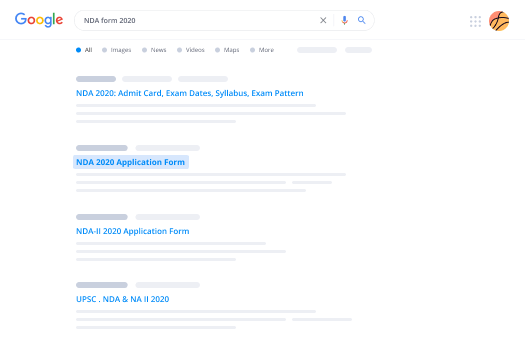

How to Sign a PDF Using Google Chrome How to Sign a PDF Using Google Chrome

How to fill out and sign paperwork in Google Chrome

Completing and signing paperwork is easy with the airSlate SignNow extension for Google Chrome. Adding it to your browser is a quick and productive way to deal with your paperwork online. Sign your jury instruction 122 race and or sex discrimination hostile work environment created or permitted by supervisor with form sample with a legally-binding electronic signature in a couple of clicks without switching between programs and tabs.

Follow the step-by-step guidelines to eSign your jury instruction 122 race and or sex discrimination hostile work environment created or permitted by supervisor with form template in Google Chrome:

  • 1.Navigate to the Chrome Web Store, find the airSlate SignNow extension for Chrome, and add it to your browser.
  • 2.Right-click on the link to a document you need to approve and select Open in airSlate SignNow.
  • 3.Log in to your account with your password or Google/Facebook sign-in option. If you don’t have one, sign up for a free trial.
  • 4.Use the Edit & Sign menu on the left to fill out your sample, then drag and drop the My Signature option.
  • 5.Add a picture of your handwritten signature, draw it, or simply type in your full name to eSign.
  • 6.Make sure all data is correct and click Save and Close to finish editing your paperwork.

Now, you can save your jury instruction 122 race and or sex discrimination hostile work environment created or permitted by supervisor with form sample to your device or cloud storage, send the copy to other individuals, or invite them to electronically sign your document via an email request or a protected Signing Link. The airSlate SignNow extension for Google Chrome improves your document processes with minimum time and effort. Try airSlate SignNow today!
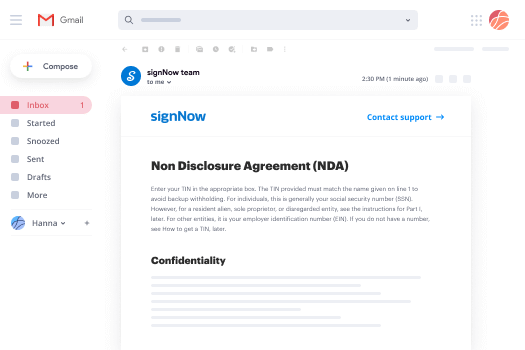

How to Sign a PDF in Gmail How to Sign a PDF in Gmail How to Sign a PDF in Gmail

How to fill out and sign paperwork in Gmail

When you get an email with the jury instruction 122 race and or sex discrimination hostile work environment created or permitted by supervisor with form for approval, there’s no need to print and scan a file or download and re-upload it to a different tool. There’s a better solution if you use Gmail. Try the airSlate SignNow add-on to promptly eSign any paperwork right from your inbox.

Follow the step-by-step guide to eSign your jury instruction 122 race and or sex discrimination hostile work environment created or permitted by supervisor with form in Gmail:

  • 1.Go to the Google Workplace Marketplace and look for a airSlate SignNow add-on for Gmail.
  • 2.Set up the program with a corresponding button and grant the tool access to your Google account.
  • 3.Open an email containing an attachment that needs signing and utilize the S key on the right panel to launch the add-on.
  • 4.Log in to your airSlate SignNow account. Opt for Send to Sign to forward the document to other parties for approval or click Upload to open it in the editor.
  • 5.Put the My Signature field where you need to eSign: type, draw, or import your signature.

This eSigning process saves time and only takes a couple of clicks. Use the airSlate SignNow add-on for Gmail to adjust your jury instruction 122 race and or sex discrimination hostile work environment created or permitted by supervisor with form with fillable fields, sign paperwork legally, and invite other parties to eSign them al without leaving your inbox. Boost your signature workflows now!
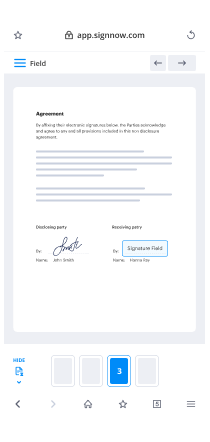
How to Sign a PDF on a Mobile Device How to Sign a PDF on a Mobile Device How to Sign a PDF on a Mobile Device

How to fill out and sign forms in a mobile browser

Need to quickly complete and sign your jury instruction 122 race and or sex discrimination hostile work environment created or permitted by supervisor with form on a smartphone while working on the go? airSlate SignNow can help without the need to install additional software programs. Open our airSlate SignNow solution from any browser on your mobile device and add legally-binding electronic signatures on the go, 24/7.

Follow the step-by-step guidelines to eSign your jury instruction 122 race and or sex discrimination hostile work environment created or permitted by supervisor with form in a browser:

  • 1.Open any browser on your device and follow the link www.signnow.com
  • 2.Create an account with a free trial or log in with your password credentials or SSO authentication.
  • 3.Click Upload or Create and import a file that needs to be completed from a cloud, your device, or our form catalogue with ready-to go templates.
  • 4.Open the form and fill out the empty fields with tools from Edit & Sign menu on the left.
  • 5.Add the My Signature area to the sample, then enter your name, draw, or add your signature.

In a few simple clicks, your jury instruction 122 race and or sex discrimination hostile work environment created or permitted by supervisor with form is completed from wherever you are. Once you're done with editing, you can save the document on your device, create a reusable template for it, email it to other people, or ask them to electronically sign it. Make your paperwork on the go speedy and productive with airSlate SignNow!
How to Sign a PDF on iPhone How to Sign a PDF on iPhone

How to fill out and sign forms on iOS

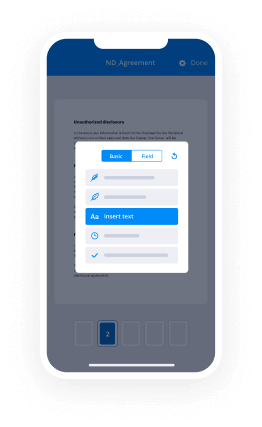
In today’s corporate environment, tasks must be done quickly even when you’re away from your computer. Using the airSlate SignNow app, you can organize your paperwork and sign your jury instruction 122 race and or sex discrimination hostile work environment created or permitted by supervisor with form with a legally-binding eSignature right on your iPhone or iPad. Install it on your device to conclude contracts and manage documents from just about anywhere 24/7.

Follow the step-by-step guidelines to eSign your jury instruction 122 race and or sex discrimination hostile work environment created or permitted by supervisor with form on iOS devices:

  • 1.Go to the App Store, search for the airSlate SignNow app by airSlate, and set it up on your device.
  • 2.Launch the application, tap Create to add a form, and choose Myself.
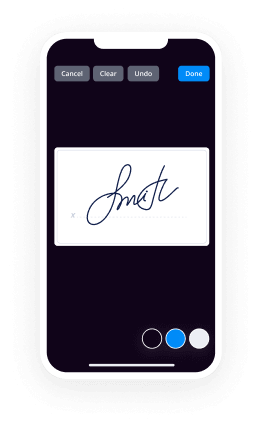
  • 3.Choose Signature at the bottom toolbar and simply draw your autograph with a finger or stylus to eSign the form.
  • 4.Tap Done -> Save right after signing the sample.
  • 5.Tap Save or take advantage of the Make Template option to re-use this paperwork later on.

This method is so straightforward your jury instruction 122 race and or sex discrimination hostile work environment created or permitted by supervisor with form is completed and signed in just a few taps. The airSlate SignNow app works in the cloud so all the forms on your mobile device are kept in your account and are available whenever you need them. Use airSlate SignNow for iOS to improve your document management and eSignature workflows!
How to Sign a PDF on Android How to Sign a PDF on Android

How to fill out and sign forms on Android

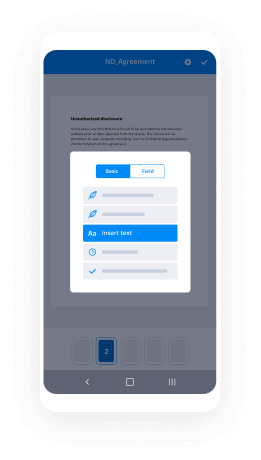
With airSlate SignNow, it’s simple to sign your jury instruction 122 race and or sex discrimination hostile work environment created or permitted by supervisor with form on the go. Install its mobile app for Android OS on your device and start enhancing eSignature workflows right on your smartphone or tablet.

Follow the step-by-step guidelines to eSign your jury instruction 122 race and or sex discrimination hostile work environment created or permitted by supervisor with form on Android:

  • 1.Navigate to Google Play, search for the airSlate SignNow application from airSlate, and install it on your device.
  • 2.Sign in to your account or create it with a free trial, then upload a file with a ➕ option on the bottom of you screen.
  • 3.Tap on the uploaded document and choose Open in Editor from the dropdown menu.
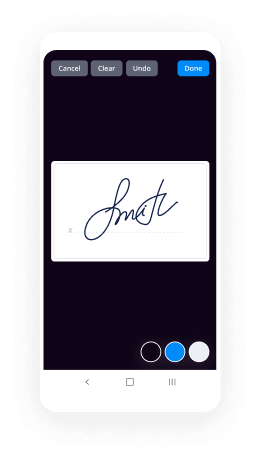
  • 4.Tap on Tools tab -> Signature, then draw or type your name to eSign the sample. Complete blank fields with other tools on the bottom if required.
  • 5.Use the ✔ button, then tap on the Save option to finish editing.

With an intuitive interface and total compliance with main eSignature requirements, the airSlate SignNow app is the best tool for signing your jury instruction 122 race and or sex discrimination hostile work environment created or permitted by supervisor with form. It even operates without internet and updates all record changes when your internet connection is restored and the tool is synced. Complete and eSign forms, send them for eSigning, and generate multi-usable templates anytime and from anywhere with airSlate SignNow.

Sign up and try Jury instruction 122 race and or sex discrimination hostile work environment created or permitted by supervisor with form
  • Close deals faster
  • Improve productivity
  • Delight customers
  • Increase revenue
  • Save time & money
  • Reduce payment cycles