Establishing secure connection…Loading editor…Preparing document…

Jury Instruction

This template is fully customizable. Edit the text, fill out the fields, and send it for signature. Give it a try!
Jury Instruction

What a Jury Instruction Is

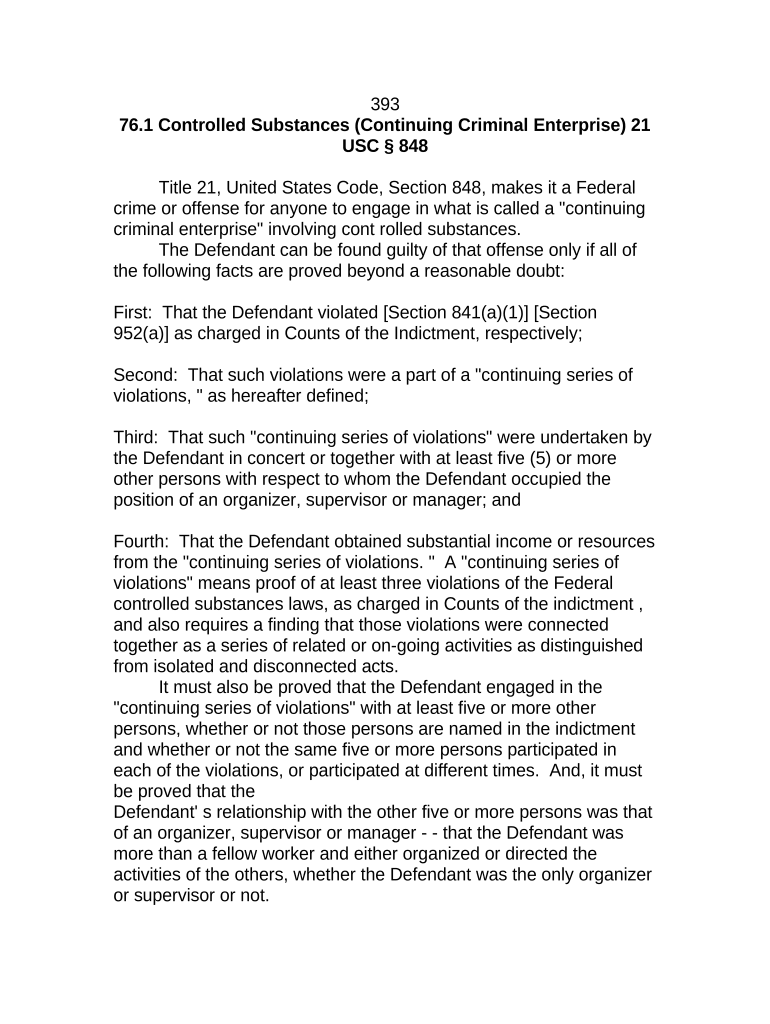
A Jury Instruction is the set of legal directions a judge gives jurors explaining the law they must apply to the facts presented at trial. These written and sometimes oral instructions define elements of each claim, the burden of proof, definitions of legal terms, and standards for evaluating evidence. Attorneys typically propose draft instructions for the court to consider; the judge issues the final instruction the jury will use when deliberating. Accuracy and clear alignment with controlling precedent are critical to avoid reversible error on appeal.

Why clear, accurate Jury Instructions matter

Correctly drafted instructions reduce juror confusion, preserve issues for appeal, and help ensure the verdict rests on proper legal standards rather than misunderstanding. They align factual findings with the governing law and protect both parties' rights at trial.

Why clear, accurate Jury Instructions matter

Who prepares and relies on Jury Instructions

Judges and trial counsel share responsibility for proposing, reviewing, and approving jury instructions; clerks and court staff handle filing and distribution.

  • Trial Judges — Draft or select final instructions and rule on objections to preserve the appellate record.
  • Plaintiffs and Defense Attorneys — Propose model or tailored instructions supported by authority and trial facts.
  • Court Clerks / Clerical Staff — File, docket, and distribute approved instructions and any proposed drafts to counsel and the jury.

All participants should document proposals and objections clearly; preservation of objections at the charge conference is essential for appellate review.

Core components of a professional Jury Instruction

A complete instruction package presents each legal element, cites authority, sets the applicable burden, and offers plain-language definitions while remaining faithful to precedent and statutory text.

Case Caption

Court name, case number, party names, and style appearing on top of the instruction packet for identification and docketing.
Instruction Text

Precise, neutral statement of legal standards and elements framed for juror comprehension without argument or advocacy language.

Legal Authority

Citation to controlling statutes, pattern instructions, or case law supporting the instruction and demonstrating its legal basis.

Burden / Standard

Clear statement of the burden of proof (e.g., preponderance, clear and convincing, beyond a reasonable doubt) tied to specific claims.

Definitions

Plain-language definitions of technical terms, legal phrases, and evidentiary concepts that jurors must apply during deliberations.

Verdict Reference

Cross-reference to the verdict form or special interrogatories to ensure consistency between instruction and verdict format.

Essential items to include on every Jury Instruction

Case Caption: Court, case number, parties.
Instruction Number: Sequential identifier for each instruction.
Text Body: Complete instruction paragraphs.
Authority: Statute or case citation.
Burden: Standard of proof indicated.
Docket Date: Filing or approval date.

Step-by-step: Preparing and submitting proposed Jury Instructions

Follow an ordered process to draft, serve, present, and preserve objections to proposed instructions so the record supports the court’s final charge.

  • 01
    Draft: Prepare proposed instructions with citations and supporting authority.
  • 02
    Exchange: Serve draft instructions on opposing counsel per local rules.
  • 03
    Conference: Attend charge conference and state objections on the record.
  • 04
    Submit: File the court-approved instructions and provide jurors the final charge.

Where to file and how the proposed instructions reach the jury

Proposed instructions typically move through counsel, the clerk, the judge, and finally to the jury via the court’s established procedures.

  • File with Clerk: File proposed instructions in the case record per local filing rules.
  • Serve Opposing Counsel: Provide opposing counsel copies for review and conference.
  • Charge Conference: Judge rules on objections and finalizes the charge.
  • Deliver to Jury: Present final instructions orally and/or in writing to jurors for deliberation.

Digital submission and e-filing considerations

Many courts accept electronic filing and document uploads; check the local e-filing rules before submitting proposed jury instructions.

  • File Formats: PDF or PDF/A is preferred for fixed-format judicial documents.
  • Authentication: Use the court’s e-filing account and signer authentication as required.
  • Retention: Maintain copies of submitted drafts, objections, and the endorsed final charge.

Confirm local rule specifics for e-filing, formatting, and signature requirements; some courts still require a paper courtesy copy for the judge in addition to electronic submission.

Typical deadlines and timing expectations

Courts set schedules for serving and filing proposed instructions; local rules or standing orders usually specify time frames and formats.

Proposed Instruction Deadline:

Set by local rule or pretrial order; dates vary by court.

Objection Deadline:

Objections typically raised at the charge conference to preserve appellate review.

Charge Conference Timing:

Occurs before jury deliberations—often immediately after closing arguments.

Final Charge Delivery:

Judge presents the charge to the jury prior to deliberation.

Post-Verdict Motions:

Motions for new trial or judgment notwithstanding the verdict follow local appellate timelines.

Common drafting and procedural mistakes to avoid

  • Using argumentative language that suggests a factual conclusion rather than stating neutral legal standards.
  • Failing to cite controlling authority or relying on stale or nonbinding precedent for the specific jurisdiction.
  • Not stating the burden of proof clearly, creating ambiguity for juror decision-making.
  • Neglecting to preserve objections on the record at the charge conference, risking waiver on appeal.

Consequences of incorrect or unclear Jury Instructions

Reversal Risk: Appellate courts may reverse or remand for incorrect instructions.
New Trial: Material error can require a new trial.
Judicial Sanctions: Courts may sanction parties for frivolous or abusive filings.
Waiver: Failure to object can forfeit appellate review.
Jury Confusion: Ambiguous wording can lead to inconsistent verdicts.
Delay: Instructions needing correction prolong post-trial proceedings.

Real-world examples of document workflows

Court-related documents are frequently prepared and circulated electronically; the following customer stories illustrate broader document workflow benefits.

BIS — Dan Rotelli, CEO

The interface is simple and easy-to-use for our team; more importantly, it is just as easy for our customers.

  • Streamlined internal approvals and external signatures.
  • We chose a solution with SOC 2 certification and strict ESIGN/UETA compliance to support legally defensible electronic document processes.

Fertility Centers of Illinois — John Butler, Founder

airSlate SignNow provides us with the flexibility needed to get the right signatures on the right documents, in the right formats.

  • Integration into back-office systems supported varied workflows.
  • The vendor’s responsiveness and API capabilities helped us move sensitive forms online while meeting compliance and audit requirements.

Frequently asked questions and common issues

Answers to common procedural and technical questions about drafting, submitting, and preserving jury instructions.


Need help? Contact support

eSignature platform comparison for document workflows involving Jury Instructions

Many courts and counsel use eSignature platforms to prepare, circulate, and archive proposed instructions; below is a high-level vendor feature and pricing comparison.

signNow DocuSign Adobe Sign PandaDoc HelloSign
Starting Price $8/user/mo $15/user/mo $14/user/mo $19/user/mo $15/user/mo
Free Trial 7-day free trial Varies Varies Varies Varies
Bulk Send Yes Yes Yes Yes No
Audit Trail Yes Yes Yes Yes Yes
HIPAA Compliant Yes Yes Yes No No
Envelope Cap No cap 100 envelopes/user/year Varies by plan Varies by plan Varies by plan
be ready to get more
Join over 28 million airSlate SignNow users