Statutory Elements
Clear statement of the legal elements jurors must find to determine property subject to forfeiture, including causation and nexus to the offense.
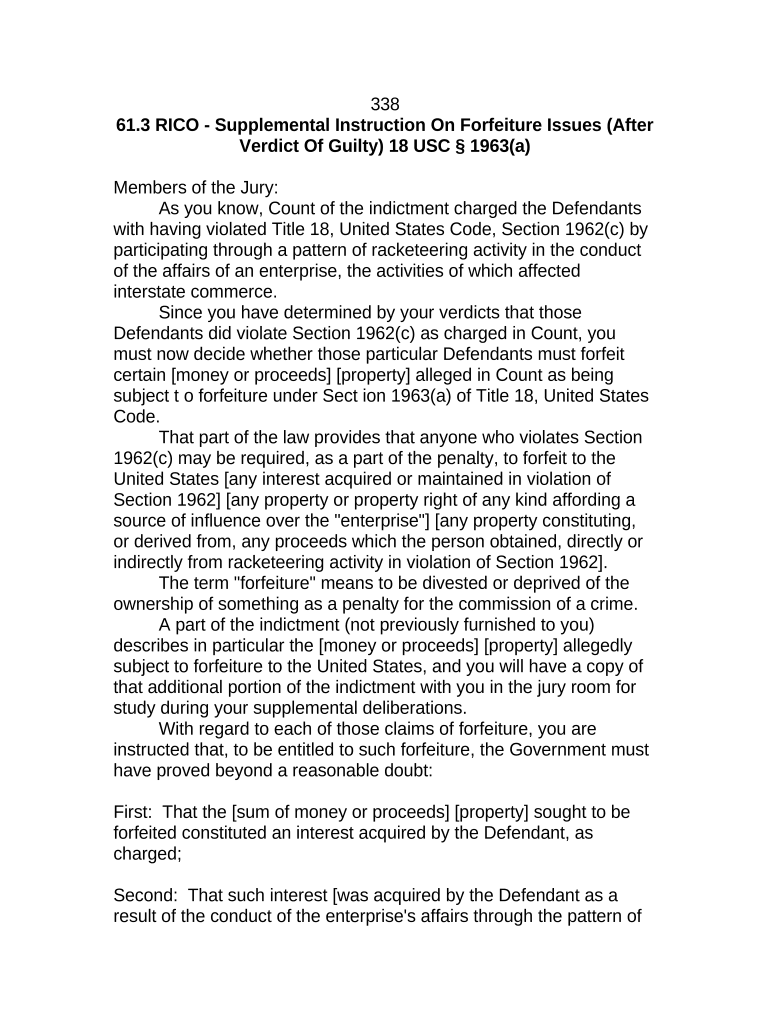
Clear, accurate supplemental instructions help preserve the record for judgment and appeal, guide jurors through statutory forfeiture criteria, and reduce post-trial litigation over property interests. They support consistent sentencing and proper notice to potential third-party claimants.

Prosecutors, defense counsel, and judges use the supplemental instruction when forfeiture is sought after a RICO conviction. It frames the jury's role and evidentiary standards.
Effective use depends on accurate case data, proper timing at sentencing or a related hearing, and attention to third-party notice and claim procedures.
Office of the United States Attorney or state prosecutor who drafts forfeiture language, submits proposed jury instructions, and presents the evidentiary showing at sentencing or a separate forfeiture hearing.
Criminal defense attorney who challenges forfeiture allegations, preserves objections to jury language, advises defendant on third-party claim strategy, and may prepare post-trial motions or appeals.
Clear statement of the legal elements jurors must find to determine property subject to forfeiture, including causation and nexus to the offense.
Specific, unambiguous description of assets, accounts, or interests so third parties can identify affected property and assert claims.
Instruction explaining which party bears the burden and the standard required for forfeiture-related findings.
Language describing notice, claim filing deadlines, and procedures for innocent third parties to assert an interest.
Structured verdict questions or forms that capture the jury's findings in a way the court can adopt for entry of judgment.
Steps for court and counsel to ensure objections, colloquy, and evidence are on the record for appeal or collateral challenge.
| Field | Configuration |
|---|---|
| Template | Use court-formatted template for clarity |
| Signers and Reviewers | Prosecutor, defense, and judge review order |
| Authentication | Ensure filing with official court signatures |
| Scheduling | File ahead of sentencing or hearing |
Courts and counsel may use electronic systems to prepare, share, and file proposed instructions; integrations and secure transmission are key considerations.
When using e-signature or e-filing tools, choose platforms that support audit trails, role-based access, and evidence preservation to meet court and statutory requirements.
Submit proposed instructions before the sentencing calendar
Hearing scheduled at sentencing or separately per court order
Court issues notice allowing claim filing within statutory window
Claims due within the time framed by the court or statute
File objections on the record before judgment entry
| signNow | DocuSign | Adobe Sign | PandaDoc | HelloSign | |
|---|---|---|---|---|---|
| Starting Price | $8/user/mo | $15/user/mo | $14/user/mo | $19/user/mo | $15/user/mo |
| Free Trial | Yes, 7-day free trial | No | No | Yes, limited | Yes, limited |
| Bulk Send | Yes | Yes | Yes | Yes | No |
| Audit Trail | Yes | Yes | Yes | Yes | Yes |
| HIPAA Compliant | Yes | Yes | Yes | No | No |
Prosecutor submits instruction at sentencing to identify proceeds
Defense objects to broad property language during conference