Establishing secure connection…Loading editor…Preparing document…

Leaseback Form

This template is fully customizable. Edit the text, fill out the fields, and send it for signature. Give it a try!
Leaseback Form

What a Leaseback Form Is and when it’s used

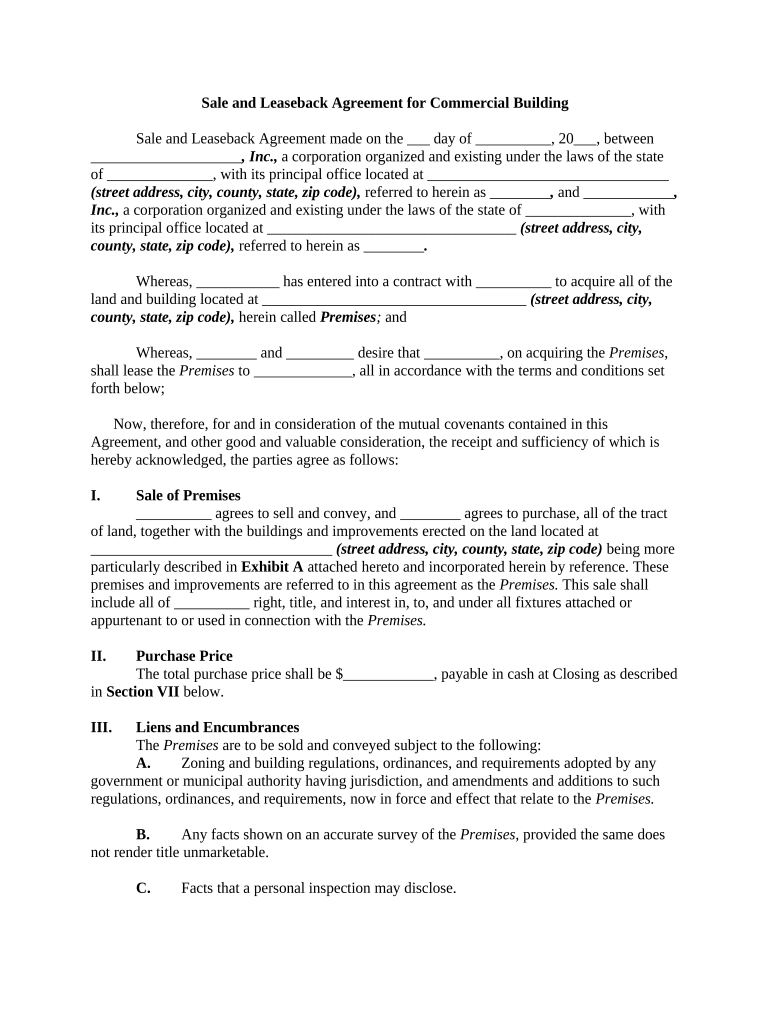
A Leaseback Form documents an agreement where ownership of real property transfers to a buyer while the seller remains in possession as a tenant under a lease. Typical sale-leaseback transactions specify the purchase price, leaseback term, rent or consideration, property description, permitted uses, and obligations for maintenance, taxes, and insurance. These forms are commonly used to free capital, preserve business continuity, or enable continued occupancy after a sale. Properly drafted leaseback forms coordinate title transfer, lease obligations, recording or notice, and any lender or lienholder consents required.

Why a clear Leaseback Form matters

A precise Leaseback Form reduces ambiguity about possession, rent, maintenance, and post-closing rights. Well-structured terms protect buyer and seller interests, reduce disputes, and help ensure compliance with recording, tax, and lender requirements.

Why a clear Leaseback Form matters

Common parties who prepare or sign a Leaseback Form

Typical users include sellers who retain occupancy, buyers acquiring property, and third parties such as title companies or lenders who review closing documents.

  • Real estate investors and asset managers who convert owned property into leased assets to free capital.
  • Business owners selling property but continuing operations on site under a leaseback arrangement.
  • Title companies, lenders, and attorneys who review and record documents and ensure lien priority.

Each party needs clarity on authorization, who executes the form, and any consents required from lenders or tenants in common.

Core parts of a professional Leaseback Form

A professional form groups essential terms so rights and obligations are easy to find and enforce.

Parties

Full legal names and entity types for buyer, seller, and any guarantors; clearly identify signatory authority and contact details.
Property

Legal description, parcel ID, and street address to avoid ambiguity and ensure correct recording and tax treatment.

Purchase Terms

Purchase price, deposit amounts, adjustments, escrow instructions, and conditions precedent to closing and transfer of title.

Leaseback Terms

Lease commencement, duration, renewal options, rent amount and schedule, security deposit, permitted uses, and tenant responsibilities.

Rights & Remedies

Default definitions, cure periods, damages, liens, indemnities, and landlord's remedies for late payment or breach.

Recording & Consents

Instructions for recording deed or lease, lender consents, title company deliverables, and any subordination or estoppel requirements.

Required data elements at a glance

Parties: Legal names and entity types
Property ID: Legal description and address
Effective Date: MM/DD/YYYY format
Term Length: Months or years specified
Consideration: Rent or monetary amount
Signatures: Printed name and date

Step-by-step: completing a Leaseback Form

Follow these steps to prepare, execute, and finalize a leaseback transaction with minimal friction.

  • 01
    Prepare: Assemble buyer/seller details, legal description, and preliminary title report.
  • 02
    Negotiate: Agree purchase price, lease term, rent, and any contingencies or seller protections.
  • 03
    Execute: Sign, notarize if required, and collect lender or third-party consents.
  • 04
    Finalize: Record deed or memorandum, distribute copies, and update insurance and tax records.

Configuring an online Leaseback workflow

Set up digital fields and signing order to match your closing checklist and compliance needs.

Field Configuration
Upload Document Use PDF or DOCX; confirm legal description appears on a single page for clarity.
Add Fillable Fields Place name, date, initials, and checkbox fields. Use conditional fields for optional clauses.
Set Signers Assign roles in order: seller, buyer, title agent, lender signer if required.
Authentication Choose email link, SMS code, or stronger ID verification per transaction risk.

Delivering and sharing the Leaseback Form securely

Choose delivery channels that preserve document integrity and provide an audit trail for signatures and consents.

  • Integrations: Support for Salesforce, NetSuite, Microsoft 365, Google Workspace
  • File Types: PDF and DOCX formats are standard for recording and signature
  • Authentication: Email link, SMS code, or advanced KBA as needed

Maintain copies in secure cloud storage with version control and an audit trail to document execution history and any post-signature changes.

Where to send or file the completed Leaseback Form

After execution, route the form to parties that must act or retain records and record documents where required by local law.

  • Buyer / Investor: Provide executed originals for investor records and funding steps.
  • Title Company: Deliver deed, leaseback, and any estoppel or lender consents for closing.
  • County Recorder: Record deed or memorandum of lease per county requirements to protect title.
  • Lender: Send copies to lender for payoff or subordination confirmation when required.

Key milestones in a leaseback transaction

Track critical dates from negotiation through recording to ensure rights vest and obligations begin on schedule.

01

Execute Purchase Agreement

Signed contract establishes closing date and contingencies.

02

Closing and Title Transfer

Transfer of title and funding; deed prepared for recording.

03

Lease Commencement

Lease term and rent obligations begin per agreed effective date.

04

Record Deed or Memorandum

Record to protect buyer's interest and notify third parties.

Timing considerations and typical deadlines

Common timing targets reduce dispute risk—adjust dates for lender or jurisdictional requirements.

Closing Date:

Occurs on the contract-specified date when title and funds transfer.

Recording Window:

Record deed or memorandum promptly; many closings record within 7–30 days.

Lease Rent Commencement:

Often the closing date or specified effective date; confirm in lease terms.

Insurance Effective Date:

Align liability and property insurance with closing and occupancy transition.

Lender Consent Deadline:

Match any lender consent timelines required before closing to avoid funding delays.

Common preparation mistakes to avoid

  • Incomplete legal description or wrong parcel ID that causes recording rejections and title exceptions, delaying closing.
  • Mismatched party names between deed, lease, and corporate documents, which can trigger lender or title objections.
  • Missing lender consents or undisclosed encumbrances that result in funding holds or post-closing disputes.
  • Unsigned exhibits, undefined renewal mechanics, or vague rent formulas that create enforcement ambiguity later.

Risks and potential consequences of errors

Recording Defect: Lost priority
Tax Issues: Assessment disputes
Lender Breach: Foreclosure risk
Unenforceable Terms: Invalid lease provisions
Eviction Delays: Possession disputes
Financial Penalties: Late fees or damages

Supporting documents and export options

Include commonly required attachments and save executed copies in standard formats for recordkeeping and recording.

Supporting Docs

Title report, lender payoff letter, estoppel certificates, corporate resolutions, and proof of insurance attached as exhibits.

Recording Copy

Provide a clean, signed PDF of deed and any memorandum of lease formatted per county requirements.

Saved Formats

Store executed documents as PDF/A for long-term retention and DOCX for editable drafts if needed.

Delivery Records

Maintain audit trails showing delivery timestamps, signer authentication, and executed copies for each party.

eSignature vendor comparison for executing Leaseback Forms

Trusted eSignature providers differ on price, HIPAA support, envelope limits, and bulk-sending features; signNow is listed first for neutral comparison.

signNow DocuSign Adobe Sign PandaDoc HelloSign
Starting Price $8/user/mo $15/user/mo $14/user/mo $19/user/mo $15/user/mo
Free Trial 7-day free trial, no credit card Varies by plan Varies by plan Free tier available Free tier available
Bulk Send Yes Yes Yes Yes No
Audit Trail Yes Yes Yes Yes Yes
HIPAA Compliant Yes Yes Yes No No

Real-world leaseback scenarios (illustrative)

These concise examples show how leaseback terms address practical goals for sellers and buyers.

Investor Liquidity Case

A small retail owner sells property to an investor to free capital while keeping premises

  • Sale closed with a six-month rent holiday
  • The leaseback clarified rent, renewal, and repair obligations, preventing disputes and enabling reinvestment in operations.

Corporate Continuity Case

A corporation divests a facility but needs uninterrupted operations during transition

  • Buyer agreed to a two-year leaseback with tenant improvements
  • Carefully defined commencement, insurance, and assignment provisions preserved operational continuity and satisfied lender conditions.

Frequently asked questions about Leaseback Forms

Answers to typical legal and execution questions when preparing or signing a leaseback agreement.


Need help? Contact support

be ready to get more
Join over 28 million airSlate SignNow users