Establishing secure connection…Loading editor…Preparing document…

Appreciation Letter to Employee

This template is fully customizable. Edit the text, fill out the fields, and send it for signature. Give it a try!
Appreciation Letter to Employee

What an Appreciation Letter to Employee Is and When to Use It

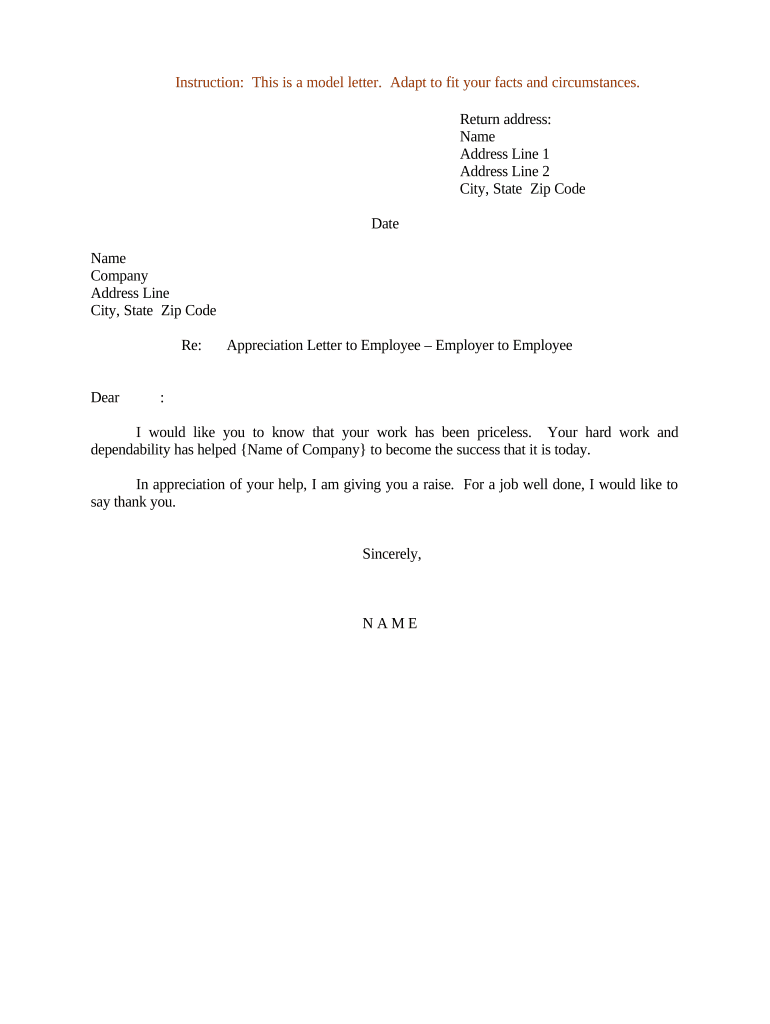
The Appreciation Letter to Employee is a concise, written acknowledgement from an employer that documents an employee's contribution, achievement, or milestone. It typically states the reason for recognition, specific accomplishments or metrics, the date, and the name and title of the issuer. While not normally a contractual instrument, the letter becomes part of the personnel record and may inform reviews, promotion decisions, or discretionary awards. Employers should avoid language that implies future compensation or guaranteed terms unless authorized and documented through separate formal agreements.

Why Use an Appreciation Letter to Employee

An Appreciation Letter to Employee reinforces positive behavior, records contributions for HR processes, and supports employee morale and retention through formal acknowledgement.

Why Use an Appreciation Letter to Employee

Who Typically Issues and Receives These Letters

Organizations of all sizes use appreciation letters; responsibilities vary by role and company policy.

  • HR administrators — prepare standardized templates, attach letters to personnel files, and track recognitions across review cycles.
  • Direct supervisors — supply specific examples, review wording for accuracy, and issue letters for team-level achievements.
  • Senior leaders — deliver strategic acknowledgements for company-wide milestones or exceptional contributions tied to organizational goals.

Who Signs and Issues an Appreciation Letter

HR Manager

Coordinates issuance and recordkeeping, confirms the letter aligns with HR policy, and files the signed copy in the employee record. Advises managers on wording to avoid unintended contractual promises or compensation commitments.

Department Head

Authorizes recognition, supplies specific achievement details, and signs where executive approval is required. Works with HR to route the finalized document and determine any accompanying noncontractual rewards.

Essential Elements to Include in an Appreciation Letter to Employee

Include clear, verifiable information so the letter functions as both recognition and reliable personnel documentation.

Purpose

Describe the specific reason for recognition, citing project names, dates, and measurable outcomes when available to make the commendation both meaningful and defensible.
Recipient Details

List full legal name, current job title, department, and employee ID if used; correct identification prevents mismatches in HR systems and payroll.

Specific Achievements

Summarize concrete actions, contributions, or results with supporting figures or examples where possible to reduce ambiguity.

Issuer Information

Include the name, title, and contact information of the person signing the letter and the approving manager or HR representative.

Effective Date

Record the date the letter is issued; this establishes when recognition was made and can be relevant to performance period calculations.

Distribution

Note where copies will be stored and who will receive them (employee, personnel file, manager), to maintain an auditable record.

Step-by-Step: Drafting and Issuing the Letter

Follow a consistent sequence to draft, approve, deliver, and file the appreciation letter while preserving auditability.

  • 01
    Draft: Write a factual, specific recognition statement and fill required fields.
  • 02
    Review: Manager or HR reviews content for accuracy and compliance with policy.
  • 03
    Approve: Authorized signer signs and dates the letter per company procedure.
  • 04
    File: Store signed copy in HRIS and distribute employee copy as directed.

How to Configure an Online Appreciation Letter Workflow

Standardize templates and routing rules when using digital forms to reduce errors and speed approvals.

Field Configuration
Template Use a locked template with fillable fields for consistency.
Signature Placement Add signature and date fields for issuer and approver.
Approval Workflow Route from manager to HR for final sign-off.
Storage Destination Auto-save to HRIS folder and employee personnel file.

Digital Delivery and Platform Considerations

Choose delivery and e-signature options that preserve identity evidence, timestamps, and a verifiable audit trail.

  • File Format: PDF or DOCX preferred for HR systems.
  • Signer Authentication: Email link or SMS code are common options.
  • Access Control: Limit viewing to HR and authorized managers.

Integrations with HRIS and cloud storage (for example, Microsoft 365, Google Workspace, or an ATS) simplify routing and retention. Ensure whichever platform you use supports audit trails, configurable templates, and the access controls required by policy.

Typical Digital Process for an Appreciation Letter to Employee

A concise, repeatable sequence reduces errors when sending letters electronically; each step captures audit data.

  • Prepare Letter: Open template, populate required fields, and save draft.
  • Add Signer: Assign issuer and approver fields and authentication method.
  • Send: Deliver via secure link or email with access controls.
  • Record: Save signed copy to HRIS and personnel folder.

Timing and Typical Internal Deadlines

Set clear internal timelines to maintain timely recognition and ensure proper filing.

Issue Promptly:

Send the letter within seven business days of the recognized event where possible.

Manager Review:

Allow 48–72 hours for supervisory review before issuance.

HR Filing:

File the signed copy within the next payroll cycle or 14 days.

Employee Copy:

Provide the employee a copy immediately after signing.

Record Retention:

Follow retention schedule in company policy and legal requirements.

Key Milestones from Draft to Archive

Track milestone stages so approvals and records are completed in order and within set timeframes.

01

Recognition Event

Identify and document the achievement prompting the letter.

02

Draft Completed

Draft the letter with exact facts and dates.

03

Approval Obtained

Manager and HR approve and sign the finalized document.

04

Archive in HRIS

Store the signed letter in the personnel record with access controls.

Common Mistakes to Avoid When Preparing an Appreciation Letter to Employee

  • Using vague language that does not document specific contributions or measurable outcomes, reducing the letter's utility in performance reviews.
  • Including statements that imply promised raises or contractual commitments without separate documented approval from compensation authorities.
  • Misspelling names or using outdated titles, which can create mismatches in HR systems and diminish the letter's validity.
  • Failing to follow company routing and approval steps, which can lead to incomplete records or disputes about authenticity.

Risks and Consequences of Incorrect or Improper Letters

Implied Contract: May create an unintended obligation.
Record Errors: Mismatched data harms HR accuracy.
Disciplinary Exposure: Incorrect facts can prompt grievances.
Privacy Breach: Improper content may violate confidentiality.
Regulatory Risk: Healthcare references may trigger HIPAA concerns.
Reputational Harm: Poorly worded letters affect morale.

Workplace Examples of Appreciation Letters That Work

Two concise examples illustrate typical content and structure for common recognition scenarios.

Peer Recognition Example

This letter acknowledges a team member for exceptional collaboration on the Q2 product launch, including specific process improvements and timeline adherence.

  • It cites a 20% reduction in defects and two on-time deliverables.
  • The letter closes with the signer's name, title, issuance date, and a note that a copy has been placed in the personnel file for inclusion in the next performance review cycle.

Leadership Acknowledgement Example

A leader commends an individual for leading a cross-functional initiative that met cost-savings targets and improved client satisfaction scores.

  • It highlights a quantified $50,000 savings and a 12-point satisfaction increase.
  • The document ends with manager signature, distribution to HR, and a statement that no additional compensation is promised unless separately approved by the compensation committee.

Comparing eSignature Options for Issuing Appreciation Letters

Basic e-signature features suffice for appreciation letters, but choose a provider that supports templates, audit trails, and HR integrations for consistent recordkeeping.

signNow DocuSign Adobe Sign PandaDoc HelloSign
Starting Price $8/user/mo $15/user/mo $14/user/mo $19/user/mo $15/user/mo
Free Trial Yes, 7-day free trial Varies by vendor Varies by vendor Varies by vendor Varies by vendor
Bulk Send Yes Yes Yes Yes No
Audit Trail Yes Yes Yes Yes Yes
HIPAA Compliant Yes Yes Yes No No

FAQs About the Appreciation Letter to Employee

Answers to common administrative and legal questions about drafting, signing, and storing appreciation letters.


Need help? Contact support

be ready to get more
Join over 28 million airSlate SignNow users