Estate Identification
Decedent full name, date of death, probate case number, and court name so recipients can easily verify the matter being closed and match the petition to court records.
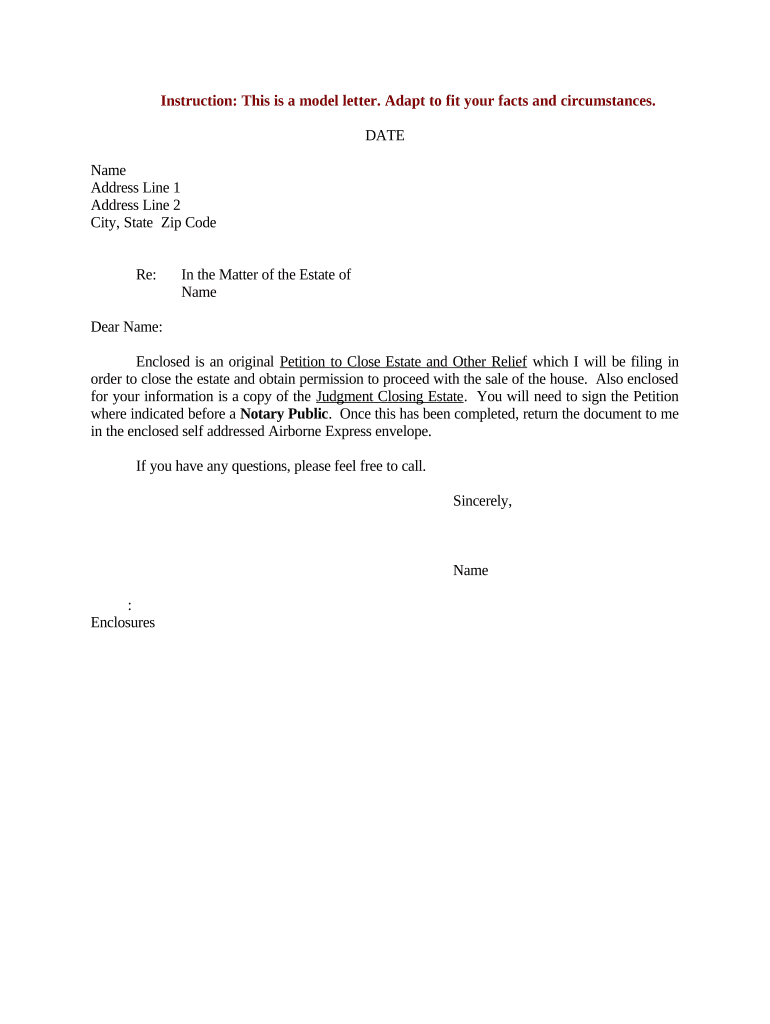
A concise, accurate signature request reduces processing delays, lowers the risk of creditor or beneficiary disputes, and creates a clear record of consent required by probate courts. Properly drafted letters also document that interested parties received disclosure about the petition, help satisfy statutory notice obligations, and support efficient electronic or paper filing of the closing documents.

Probate attorneys, court-appointed personal representatives (executors/administrators), and estate settlement firms commonly prepare these letters to collect signatures from beneficiaries, next of kin, and occasionally creditors.
Clear routing instructions and uniform signature blocks make it easier for all parties to respond within required timelines and for the personal representative to proceed with closing steps.
The executor or administrator appointed by the probate court who prepares the closing petition, coordinates distributions, and ensures signatures and supporting documents are collected before filing the petition to close estate.
A named beneficiary or heir who must review the accounting and sign the petition or consent form; their signature confirms acceptance of the final distribution and often triggers the court’s authority to discharge the personal representative.
Decedent full name, date of death, probate case number, and court name so recipients can easily verify the matter being closed and match the petition to court records.
State exactly what the signer must sign (petition, consent, affidavit), where to sign, and whether initials, signature, and date are required on each page.
List required attachments such as certified death certificate, final accounting, receipts, or conveyance documents that must accompany the signed petition when filed.
Provide a specific return deadline and explain court or distribution consequences for late responses to avoid unnecessary delays or contested filings.
Include preferred return methods (mail, courier, secure e-signature), the mailing address or upload portal, and contact details for questions about the petition.
Indicate whether signatures must be notarized in-person, may use remote online notarization (RON), or require witness attestations under state law.
| Field | Configuration |
|---|---|
| Signature Field | Require signature, printed name, date |
| Authentication | Email link or SMS code |
| Attachments | Attach death certificate and accounting |
| Audit Trail | Enable IP and timestamp logging |
Decide acceptable delivery channels and whether you will accept remote notarization or require in-person notarization for valid execution.
Confirm each method in the letter and note any additional authentication (ID checks, notarization) required to help clerks accept the petition without further inquiry.
Request return within 30 days
Allow time for in-person or RON appointments
File petition within 7–14 days of complete signatures
Observe applicable creditor notice deadlines
Distribute assets after court order issues
Assemble petition, accounting, and supporting documents.
Deliver letters and e-sign invites with deadline language.
Receive notarized or e-signed consents and retain audit trails.
Submit signed petition and exhibits to the probate clerk for approval.
Executor requests signatures from two beneficiaries to close a small estate
Attorney sends signature request with detailed accounting attached