Establishing secure connection…Loading editor…Preparing document…

Letter Regarding Referral of Account to Collection Agency

This template is fully customizable. Edit the text, fill out the fields, and send it for signature. Give it a try!
Letter Regarding Referral of Account to Collection Agency

What the Letter Regarding Referral of Account to Collection Agency Is

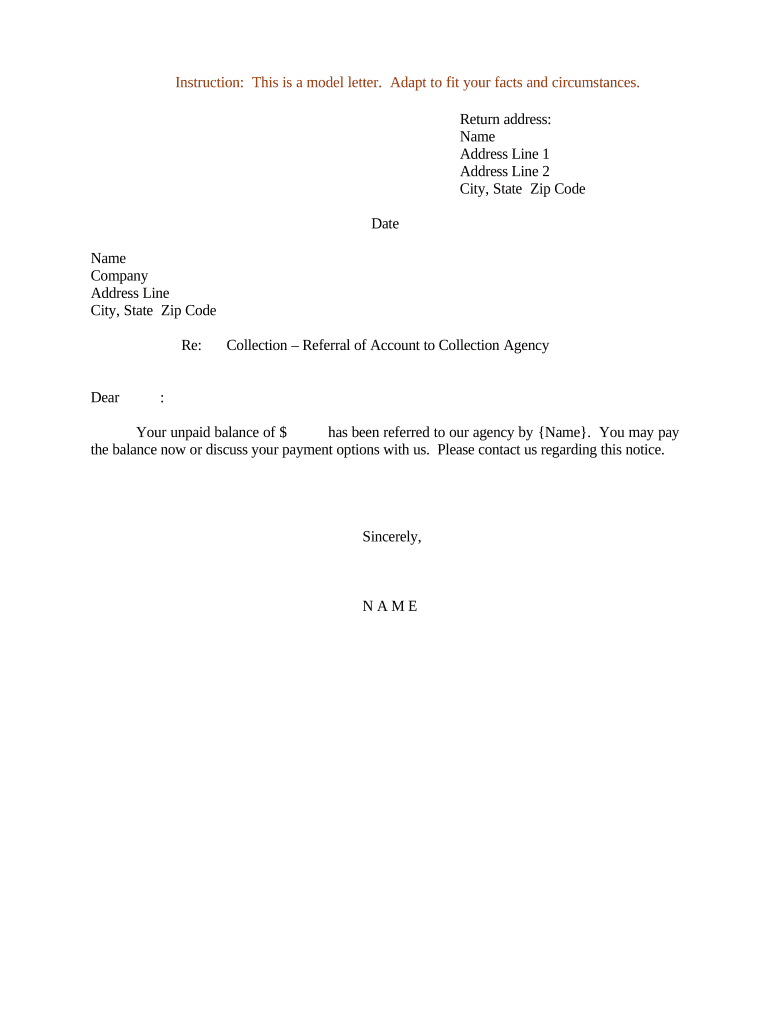
A Letter Regarding Referral of Account to Collection Agency is a formal written notice sent by a creditor or authorized agent to a debtor and, where applicable, to third parties, stating that an outstanding account will be transferred to a collections firm if payment or a settlement plan is not reached. The letter documents the outstanding balance, dates of service or transactions, prior collection attempts, and a last date to cure before referral. It creates a paper trail used by the creditor, the receiving collection agency, and, if needed, in subsequent legal or regulatory proceedings.

Why Use a Formal Referral Letter

A clear referral letter preserves evidence of attempts to collect, sets a firm deadline, and establishes the scope of authority transferred to a collection agency. It reduces miscommunication and supports compliance with consumer protection rules such as the Fair Debt Collection Practices Act (FDCPA).

Why Use a Formal Referral Letter

Who Typically Prepares and Receives This Letter

The receiving party is usually a licensed collection agency or attorney engaged to collect the debt on behalf of the creditor; provide agency contact details and scope of authority in the letter.

  • Accounts receivable teams at small or midsize businesses managing unpaid invoices and aging accounts.
  • Healthcare billing departments referring patient balances when internal collection attempts fail.
  • Property managers or landlords referring unpaid rent or lease-related debts to a collection agency.

Step-by-Step: Preparing the Referral Letter

Follow a consistent sequence when preparing the letter to ensure accuracy, compliance, and defensible documentation.

  • 01
    Verify balance: Confirm outstanding amount and itemized charges.
  • 02
    Document history: Summarize prior notices, dates, and contact attempts.
  • 03
    Set cure deadline: Specify final date to pay or contact before referral.
  • 04
    Authorize agency: State what rights and actions the agency may take.

How to Configure an Online Referral Letter Workflow

When sending the letter electronically, configure roles, authentication, and retention to match your compliance needs.

Field Configuration
Signer Authentication Email link or SMS code; use stronger auth for high-risk accounts
Template Use a locked template with required fields and audit trail enabled
Signer Order Creditor signs first, then authorized agent or reviewer
Notifications Enable recipient and internal alerts on view and sign events

Where to Send or File the Referral Letter

Select recipients and filing destinations that preserve chain of custody and meet regulatory or contract requirements.

  • Debtor Copy: Mail or email the debtor a dated copy of the referral letter
  • Collection Agency: Deliver to the contracted agency with an authorization form
  • Internal File: Store a signed copy in the account record or billing system
  • Legal Counsel: Share with counsel if litigation is anticipated or required

Distribution and eSubmission Considerations

Ensure chosen channels align with consumer disclosures and authentication strength appropriate to the account type and risk level.

  • Email Delivery: Creates timestamped receipt evidence
  • Certified Mail: Provides delivery confirmation and legal proof
  • eSignature: Captures audit trail and signer attribution

Timelines, Deadlines, and Processing Expectations

Key dates affect when you may refer an account, when a collection agency may act, and reporting obligations to credit bureaus.

Pre-referral Notice:

Allow reasonable cure time, commonly 30 days before referral

Final Demand:

Issue as last internal notice at least 7–14 days before referral

Referral Date:

Date document is transferred and agency gains authority

Credit Reporting:

Agency may report delinquency after referral per bureau rules

Statute of Limitations:

Varies by state; verify before referring older accounts

Key Milestones from Account Aging to Agency Action

A milestone timeline helps coordinate internal collections and external referral so each step is auditable and timely.

01

Internal Aging Review

Identify delinquent accounts meeting referral criteria.

02

Final Demand Issued

Send last notice with clear cure deadline.

03

Approval & Authorization

Obtain manager sign-off to transfer account.

04

Agency Referral

Transfer account file and sign authorization agreement.

Common Mistakes to Avoid When Preparing a Referral Letter

  • Sending a referral without verifying the current balance can create disputes and collection delays.
  • Failing to include prior notice dates and supporting invoices weakens the documentation for the collection agency.
  • Using vague authorization language can leave the agency without clear limits on permitted collection actions.
  • Neglecting consumer notice requirements or dispute-handling language risks FDCPA or state-law violations.

Penalties and Legal Risks of an Incorrect or Deficient Letter

FDCPA Liability: 15 U.S.C. §1692 exposure for abusive or misleading statements
Defamation Risk: Improper statements about debt may trigger legal claims
Consumer Complaints: State regulator actions or attorney general inquiries
Credit Reporting Errors: Inaccurate reporting can lead to correction orders
Contract Breach: Transferring accounts in violation of contract terms
Regulatory Fines: State licensing or privacy penalties for noncompliance

How This Letter Differs from Similar Notices

Compare the referral letter to other related notices to ensure you choose the correct document and legal process.

Criteria Referral Letter Final Demand Notice
Purpose transfer to agency last internal demand
Authority delegates collection rights requests payment
Recipient agency + debtor debtor only
Timing after internal attempts before referral

eSignature Vendor Pricing and Feature Snapshot for Sending Referral Letters

This comparison highlights starting prices and a few practical feature differences relevant to sending and archiving referral letters electronically.

signNow DocuSign Adobe Sign PandaDoc HelloSign
Starting Price $8/user/mo $15/user/mo $14/user/mo $19/user/mo $15/user/mo
Free Trial 7-day free trial Varies by vendor Varies by vendor Varies by vendor Varies by vendor
Bulk Send Yes (premium plan) Yes Yes Yes No
Audit Trail Yes Yes Yes Yes Yes
Envelope Cap No cap 100 envelopes/user/year Varies Varies Varies

Essential Data Elements to Include in the Letter

Account ID: Unique internal identifier
Outstanding Amount: Numeric currency value
Transaction Dates: Dates of service or billing
Contact Info: Creditor and agency contact
Authorization: Scope of collection authority
Signature: Authorized representative signature

Key Components to Include in a Professional Referral Letter

A professional referral letter should be concise, factual, and contain the documentation a collection agency needs to validate and pursue the claim.

Account Summary

Include original balance, payments credited, adjustments, and current outstanding balance with a brief itemization of charges.
Transaction Dates

List dates of last payment, service or delivery, and invoice dates to support timeliness and statute of limitations analysis.

Prior Communications

Summarize prior billing notices, dates, and any dispute correspondence; include copies when possible to reduce follow-up time.

Authorization Clause

State explicitly what the agency may do, such as contact the debtor, set payment plans, or place accounts for collection, and any restrictions.

Attachments

Attach invoices, signed contracts, statements of account, and proofs of delivery as supporting documentation.

Signature Block

Provide printed name, title, date, and a signature from an authorized representative to validate the referral.

Examples: How Referral Letters Are Used in Practice

Real-world scenarios show how the letter is adapted to different account types and industries.

Healthcare Example

A hospital billing office documents unpaid patient balances with itemized charges and insurance adjustments

  • Agency receives full account history
  • The agency resolves balances via payment plans, while the hospital retains audit copies for six years under HIPAA.

Property Management Example

A property manager documents unpaid rent and late fees with lease references

  • Manager authorizes limited collection actions
  • The agency contacts the tenant, negotiates repayment, and reports delinquency per credit bureau rules.

Frequently Asked Questions About Referral Letters

Answers to common questions about drafting, delivery, legal risks, and recordkeeping when referring accounts to a collection agency.


Need help? Contact support

be ready to get more
Join over 28 million airSlate SignNow users