Establishing secure connection…Loading editor…Preparing document…

Louisiana Notice of Representation in Criminal Proceedings

This template is fully customizable. Edit the text, fill out the fields, and send it for signature. Give it a try!
Louisiana Notice of Representation in Criminal Proceedings

What the Louisiana Notice of Representation in Criminal Proceedings Is

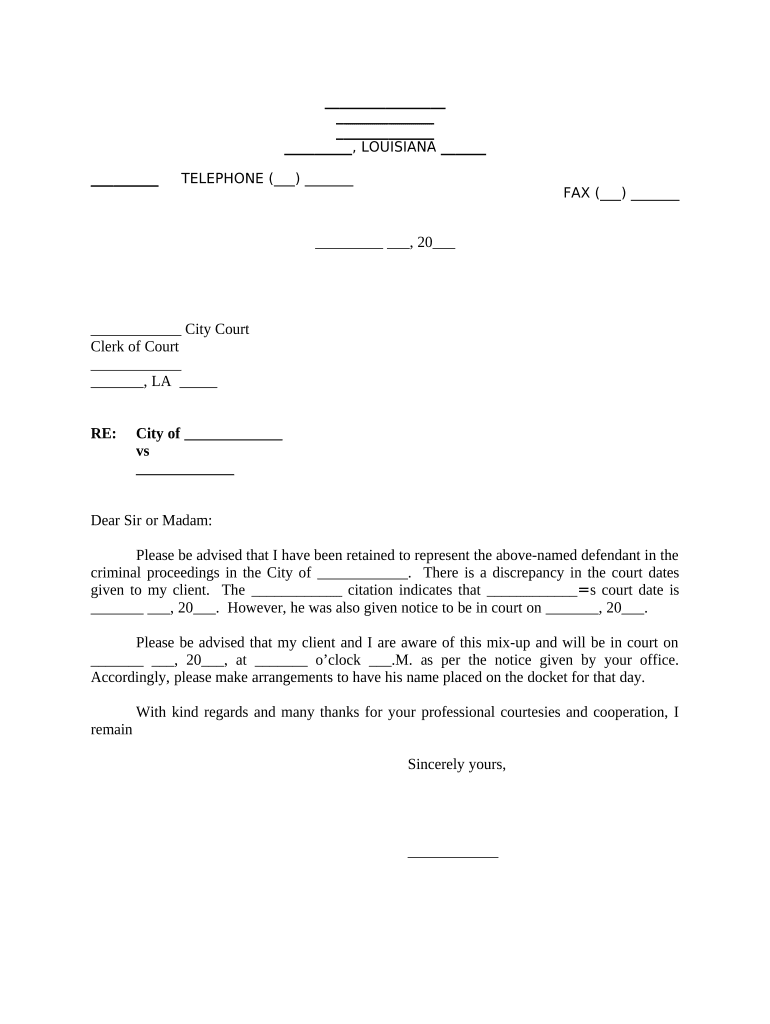
The Louisiana Notice of Representation in Criminal Proceedings is a written filing used to notify a court and the prosecuting authority that an attorney or law firm now represents a defendant. It records counsel's contact details, the case caption and number, and the scope of representation so the court and opposing parties receive official notice and service can be routed correctly.

Why filing a formal notice matters in Louisiana criminal cases

Filing a notice ensures counsel receives all pleadings, calendar notices, and discovery; it preserves the client’s right to counsel-of-record and helps avoid miscommunication or procedural defaults in fast-moving criminal dockets.

Why filing a formal notice matters in Louisiana criminal cases

Who files and relies on this notice

Typical filers include retained defense attorneys, public defenders, and assigned conflict counsel who must create an official record of representation.

  • Private defense attorneys who enter appearances and need service routed to their office.
  • Public defender offices formally recording appointment or substitution of counsel.
  • Assigned conflict or appellate counsel documenting limited or specific representation.

Courts, prosecutors, and clerks use the notice to route future filings and to ensure the official case record reflects current counsel.

Quick sequential steps to prepare and file the notice

Use this short checklist to produce a compliant notice and get it on the court record promptly.

  • 01
    Confirm case data: Verify caption and docket number on charging document.
  • 02
    Draft notice: Populate required fields precisely and state representation scope.
  • 03
    Sign and date: Attorney signs; include bar number and date.
  • 04
    File and serve: File with court clerk and serve prosecutor per local rules.

Where the notice goes after you prepare it

Filing and service typically follow a simple routing: court clerk filing, prosecutor service, and placement in defendant’s case file.

  • Court Clerk: File the notice with the clerk to join counsel to the case.
  • Prosecutor: Serve the district attorney or local prosecutor's office.
  • Case File: Clerk places the notice in the official case record.
  • All Future Service: New filings are routed to the counsel contact provided.

How to complete and route a digital notice using an e-filing workflow

Map each form field to your e-filing or document platform settings before sending to ensure seamless court and prosecutor delivery.

Field Configuration
Case Caption Auto-fill from case lookup or paste exact caption.
Docket Number Validate format and prevent submission if mismatch.
Service List Attach prosecutor email and clerk e-filing address.
Signature Block Require attorney signature and date field before submission.

Technical considerations for e-signing and electronic submission

Ensure the platform you use supports court e-filing formats and produces a preserved audit trail for service and signature records.

  • PDF Support: Must produce court-ready PDFs.
  • Audit Trail: Record IP, timestamp, and signer identity.
  • Authentication: Support email or SMS signer verification.

Courts and prosecutors commonly accept electronically filed notices when the platform preserves the signed PDF and an audit record; verify local e-filing rules before submitting.

Typical e-sign and vendor pricing considerations for notice filing

Compare basic pricing and capabilities that affect how you prepare and sign official notices; signNow is listed first per vendor comparison norms.

signNow DocuSign Adobe Sign PandaDoc HelloSign
Starting Price $8/user/mo $15/user/mo $14/user/mo $19/user/mo $15/user/mo
Free Trial 7-day free trial No No No Yes, limited
Bulk Send Yes Yes Yes Yes No
Audit Trail Yes Yes Yes Yes Yes
HIPAA Compliant Yes Yes Yes No No

Security and compliance considerations for digital notices

In Transit: TLS 1.2/1.3 encryption
At Rest: AES-256 encryption
HIPAA: BAA required for PHI
21 CFR Part 11: Supported for regulated records
SOC 2: Type II certification available
ISO 27001: International security standard

Risks and penalties from incorrect or late notices

Missed Service: May lead to procedural defaults
Incorrect Case Number: Filing could be misapplied
Late Filing: Court may decline to recognize appearance
I-9 or Tax Links: Related forms carry fines
Data Exposure: Improper storage risks HIPAA/CCPA issues
Intentional Misrepresentation: Ethics or contempt consequences

Common mistakes to avoid when preparing a notice

  • Using an incorrect or abbreviated defendant name that differs from charging documents, which can prevent the clerk from associating the notice with the correct case.
  • Failing to include a valid docket number or including an outdated number; clerks often reject notices they cannot match to an existing file.
  • Not serving the prosecuting authority or failing to follow local service rules; courts may reject filings if opposing counsel was not properly served.
  • Relying on an unsigned or improperly dated notice; many clerks require an attorney signature and a date to accept an appearance.

Timing and deadlines to keep in mind

Timely filing and service prevent procedural disputes; follow both court local rules and the prosecutor’s service preferences.

File Upon Retention:

File the notice immediately after counsel accepts representation to ensure prompt service.

Serve Prosecutor Promptly:

Serve the DA or assigned prosecutor when you file the notice per local rules.

Update When Scope Changes:

File an amended notice if representation becomes limited or terminated.

Respond to Clerk Inquiries:

Address any clerk requests for correction within specified timeframes.

Preserve Evidence for Appeals:

Retain signed notices and audit trails for potential appellate proceedings.

Key milestones from retention to court recognition

Use this milestone sequence to track what must happen after counsel is retained and before counsel is treated as counsel-of-record.

01

Counsel Retained

Client engages attorney and provides case details for drafting.

02

Notice Prepared

Attorney drafts notice with caption, case number, scope, and signature.

03

File and Serve

File with clerk and serve prosecutor in compliance with local rules.

04

Court Recognition

Clerk updates case file; future service routed to counsel.

Practical tips to ensure a clean, accepted filing

Follow these practices to reduce rejection risk and ensure counsel receives all case materials and court notices.

Verify identifying information before filing
Cross-check the case caption, defendant name, and docket number against the charging instrument. A single-character error can mislink filings; clerks have limited time to reconcile mismatches and may reject or delay entry into the case file.
Provide a clear service address and email
Include an office address and monitored attorney email to receive future filings and court notices. Digital service addresses are increasingly relied upon; an inactive or generic email can result in missed deadlines or miscommunication.
State the scope of representation explicitly
Specify whether representation is full, for a single hearing, or appellate-only. Clear scope prevents disputes about authority to act or receive confidential materials and avoids duplication of counsel entries in the file.
Preserve signed copies and audit trails
Keep the signed PDF and a complete audit trail showing signer identity, timestamps, and delivery receipts. This record supports proof of service and the authenticity of the attorney’s appearance in later proceedings.

Example scenarios showing proper use of the notice

These concise examples illustrate common workflows for counsel entering appearances in Louisiana criminal matters.

Private Attorney Appearance

A retained defense lawyer is hired after arraignment and prepares the notice to reflect full representation.

  • The attorney includes bar number and office contact for service.
  • The notice is filed electronically and served on the prosecutor, who thereafter sends discovery and hearing notices to counsel.

Assigned Counsel for Limited Hearing

Conflict counsel is appointed for a specific suppression hearing and files a limited-scope notice.

  • The notice specifies representation only for that hearing date.
  • The court and prosecutor record the limitation to avoid future service to counsel beyond the assigned appearance.

Who is authorized to sign and submit the notice

Defense Counsel

An attorney admitted to practice in the state or court signs the notice to enter an appearance on behalf of the defendant. The signature, printed name, bar ID, and contact information confirm the attorney’s authority to accept service.

Public Defender

An authorized public defender or appointed attorney may sign to document representation. Offices should include assignment or appointment identifiers to assist court clerks in matching the appearance to the public defender docket.

Frequently asked questions about notices of representation

Answers to common procedural and technical questions when preparing or submitting the Louisiana Notice of Representation in Criminal Proceedings.


Need help? Contact support

be ready to get more
Join over 28 million airSlate SignNow users