Establishing secure connection…Loading editor…Preparing document…

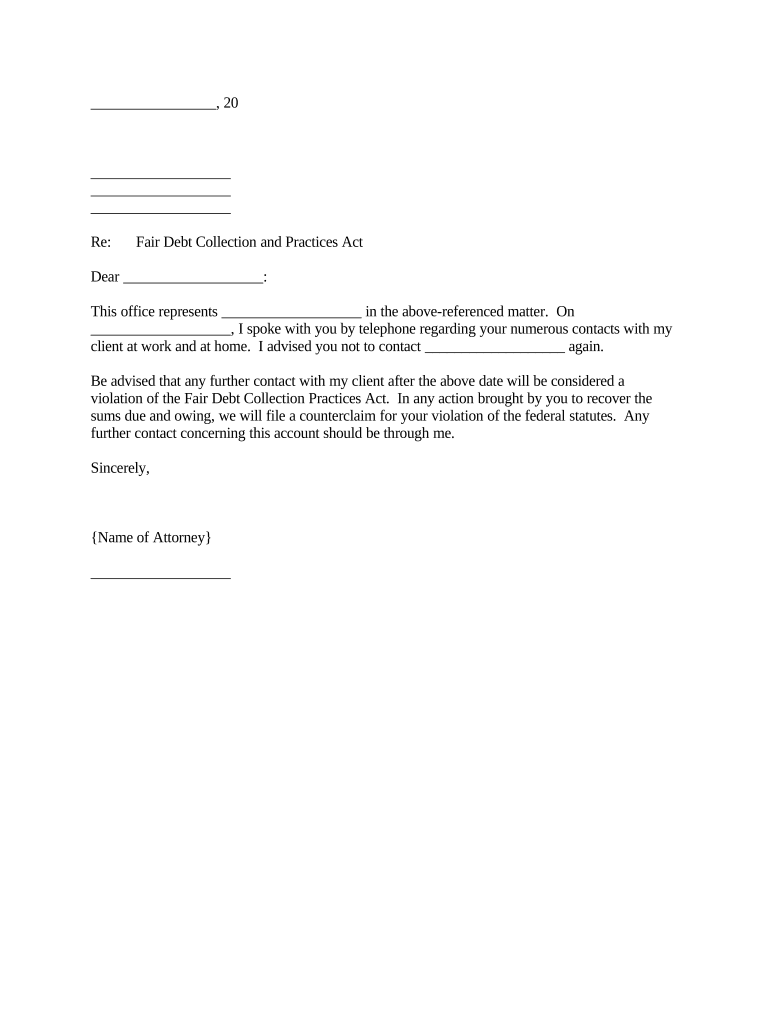
Debt Collection Letter

This template is fully customizable. Edit the text, fill out the fields, and send it for signature. Give it a try!
Debt Collection Letter

What a Debt Collection Letter Is and When It’s Used

Debt Collection Letter is a written demand sent by a creditor or debt collector to a debtor describing the amount owed, the basis for the debt, and instructions for payment or dispute. It can serve as a formal demand, a pre-collection notice, or documentation before legal action. Proper letters include account details, balance breakdown, payment options, a clear date, and dispute rights under federal and state law. When delivered electronically, they must meet ESIGN and UETA requirements to be enforceable and reproducible in court.

Why a Clear Debt Collection Letter Matters

A Debt Collection Letter clarifies the outstanding balance, documents the creditor's claim, and provides a formal opportunity for repayment or dispute. A well-crafted letter improves recovery chances, creates evidence for potential litigation, and helps satisfy regulatory notice requirements.

Why a Clear Debt Collection Letter Matters

Who Prepares and Sends Debt Collection Letters

Creditors, collection agencies, law firms, and small businesses use Debt Collection Letters to formalize claims and prompt payment.

  • Creditors: in-house billing teams sending initial demand letters and payment options.
  • Collection agencies: follow FDCPA rules and document communications for compliance and audit.
  • Law firms: issue demand letters prior to litigation and preserve evidence for court.

Step-by-Step: Prepare and Deliver a Debt Collection Letter

Follow these steps to prepare and deliver a compliant Debt Collection Letter accurately and document the process for records.

  • 01
    Gather Details: Collect account number, charges, dates, and supporting statements.
  • 02
    Confirm Balance: Calculate current balance, interest, fees, and credits applied.
  • 03
    Draft Letter: State amount due, basis of debt, dispute instructions, and payment options.
  • 04
    Send & Record: Deliver via certified mail or e-delivery; save proof of sending.

Security and Compliance Essentials for Electronic Letters

Encryption: AES-256 encryption at rest and TLS 1.2/1.3 for transit
Audit Trail: Tamper-evident logs with timestamps
Access Controls: Role-based permissions and SSO
BAA Support: Business Associate Agreement available
Certifications: SOC 2 Type II; ISO 27001
Retention: Durable records and legal compliance

Common Penalties and Risks to Avoid

Incorrect TIN: 24% backup withholding
Late Notice: $60–$330 per form penalties
FDCPA Violation: Civil damages and attorney fees
Breach of Privacy: HIPAA fines if PHI exposed
Invalid Service: Court may dismiss claim
Statute Limits: Dates affect enforceability

Common Preparation Mistakes to Avoid

  • Failing to include precise account identifiers causes misapplied payments and slows collection; always verify invoice or account number before sending.
  • Using ambiguous language about amounts or fees creates disputes; break down principal, interest, and fees to reduce misunderstanding and contestation.
  • Omitting dispute procedures or failing to state the deadline for disputes may invalidate collection attempts under consumer protection statutes.
  • Sending letters without proof of delivery or electronic consent weakens evidence in court; retain delivery receipts, audit trails, and signed acknowledgements.

Essential Sections to Include in a Debt Collection Letter

Core sections of a Debt Collection Letter define obligations, timelines, dispute options, and payment methods to ensure clarity and legal compliance.

Opening

Identify the creditor and sender, explain the account relationship briefly, reference original contract or invoice, and state the total amount owed with a concise opening paragraph to set context.
Account Details

Provide account or invoice number, original charge date, itemized charges, payments received, interest and fees applied, and a running balance so the debtor can reconcile the claim easily.

Demand Statement

Clearly state the amount due, the deadline for payment, acceptable payment methods, and consequences of nonpayment, including referral to collections or litigation under governing law.

Dispute Rights

Explain how to dispute the debt, what documentation to provide, timeframes for dispute submission, and how disputes affect collection activity during review under applicable consumer protection statutes.

Payment Options

List permitted payment channels, instructions for partial payments, settlement offers, and where to send payment along with contact information for payment questions, including online, mail, and phone methods.

Signature

Provide the sender's printed name, title, company, mailing address, signature block, and date signed. For electronic letters, include a verifiable audit trail and signer attribution.

How Delivery and Signing Typically Work

Typical delivery and signing paths for Debt Collection Letters include mail, email, certified delivery, and eSignature.

  • Prepare Document: Assemble account details and supporting statements.
  • Select Delivery: Choose certified mail or authenticated electronic delivery.
  • Obtain Consent: For e-delivery, get ESIGN consumer disclosure and consent.
  • Record Proof: Save tracking numbers, signed copies, and audit logs.

Configuring an Electronic Workflow for Debt Letters

Configure an electronic workflow to place fields, set authentication, and capture audit data for each signer.

Field Configuration
Signature Field Required for signer; date and IP recorded automatically.
Initials Field Optional; use for multi-page confirmation.
Payment Field Attach invoice and instruction; accept multiple payment types.
Authentication Email+SMS code; stronger KBA for high-risk accounts.
Retention Policy Auto-save completed PDF and store audit trail.

Platform Capabilities to Support Debt Collection Letters

Choose a delivery platform that supports secure e-signing, audit trails, and the required authentication levels for consumer-facing notices.

  • Formats Supported: PDF, DOCX, HTML file formats supported
  • Integrations: CRM and accounting systems
  • Authentication: Email, SMS, or KBA options

Timing and Deadlines to Consider

Key timing considerations affect dispute windows, statute of limitations, and tax reporting implications for collection activity.

Send Promptly:

Issue demand within business timeline to preserve rights.

Dispute Window:

Allow at least 30 days for written dispute response.

Statute of Limitations:

Varies by state; verify local civil procedure rules.

Tax Reporting:

Retain records for IRS requirements; consult IRC §6501

Collection Litigation:

Allow time for pre-suit notices and service requirements.

Pricing and Feature Snapshot for eSignature Vendors

Compare common eSignature vendors and feature availability relevant to Debt Collection Letters and secure electronic delivery.

signNow DocuSign Adobe Sign PandaDoc HelloSign
Starting Price $8/user/mo $15/user/mo $14/user/mo $19/user/mo $15/user/mo
Free Trial 7-day free trial Varies Varies Varies Varies
Bulk Send Yes Yes Yes Yes No
Audit Trail Yes Yes Yes Yes Yes
HIPAA Compliant Yes Yes Yes No No
Envelope Cap No cap 100 envelopes/user/year Varies Varies Varies

Real-World Examples of Debt Collection Letters in Use

Real-world examples show how Debt Collection Letters resolve disputes and preserve enforcement options before litigation.

Small Business Recovery

A regional landscaping company sent a detailed Debt Collection Letter after 60 days past due and documented multiple delivery attempts.

  • Client paid in full within two business days.
  • The letter included account breakdown, dispute instructions, and a deadline; preserving the audit trail and delivery receipts allowed quick reconciliation and avoided collection agency fees and court involvement for the business.

Law Firm Pre-Suit

A consumer law firm sent a validation letter prior to suit and negotiated a reduced settlement while documenting the debtor's dispute correspondence.

  • Negotiation avoided court and saved costs.
  • Because dispute procedures and payment options were clearly stated, counsel resolved the matter through settlement; preserved signed electronic records and timestamps allowed the firm to validate proper notice and close the case efficiently.

Practical Best Practices for Debt Collection Letters

Practical guidance to reduce disputes and ensure Debt Collection Letters are enforceable and useful as evidence.

Be clear, specific, and verifiable
Use plain language, include exact amounts, invoice numbers, and dates, and avoid threatening or misleading statements. Clarity reduces disputes and supports evidentiary value should enforcement proceed to collections or litigation.
Document every communication and delivery attempt
Record dates, methods, delivery receipts, signed agreements, email headers, IP addresses, and any dispute correspondence. Comprehensive documentation proves notice, helps rebut completeness challenges, and is valuable for regulatory audits or courtroom proceedings.
Comply with FDCPA, state laws, and disclosures
Avoid prohibited practices such as harassment or misrepresentation. Include required validation notices, observe communication restrictions, and ensure any electronic consent satisfies ESIGN requirements to reduce statutory risk and administrative penalties.
Use secure electronic signature workflows and retention
Select platforms that provide tamper-evident signed PDFs, audit trails, strong authentication options, and retention controls. Proper eSign workflows reduce processing time, preserve admissible evidence, and help comply with HIPAA or other sector-specific rules when applicable.

Frequently Asked Questions About Debt Collection Letters

Answers to frequent questions about creating, delivering, and enforcing Debt Collection Letters, including electronic delivery and documentation best practices.


Need help? Contact support

be ready to get more
Join over 28 million airSlate SignNow users