Establishing secure connection…Loading editor…Preparing document…

Letter Regarding Customer Complaint Follow-Up

This template is fully customizable. Edit the text, fill out the fields, and send it for signature. Give it a try!
Letter Regarding Customer Complaint Follow-Up

What the Letter Regarding Customer Complaint Follow-Up Is

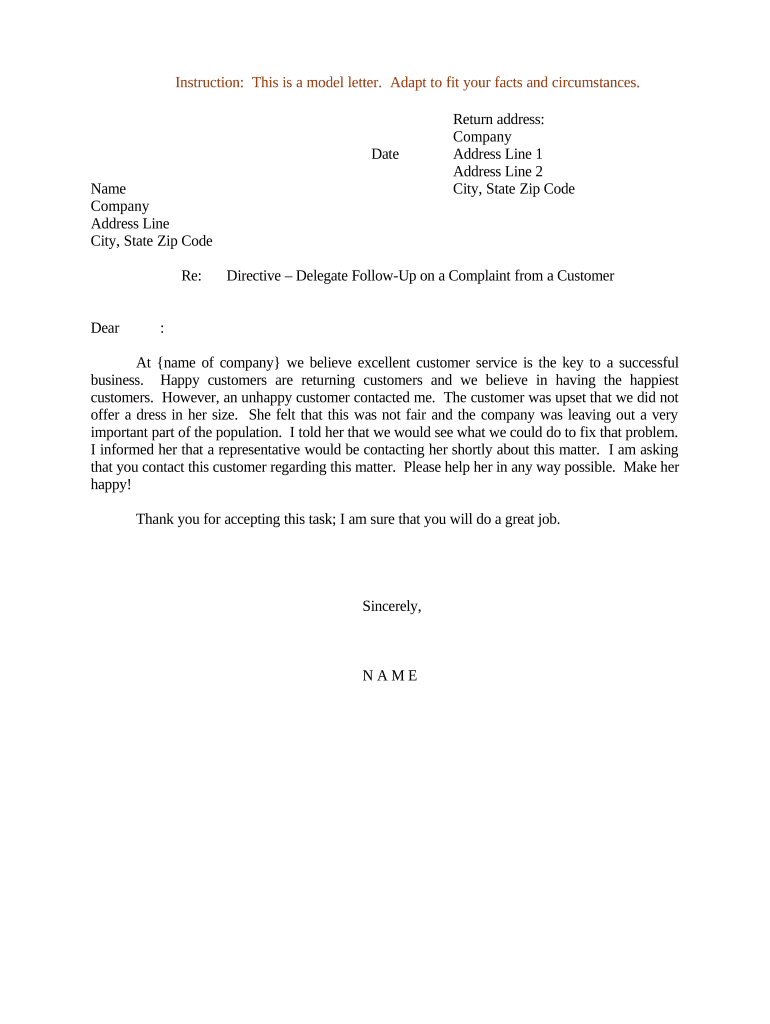
The Letter Regarding Customer Complaint Follow-Up is a concise, formal communication sent by a business to a customer after their complaint has been received and reviewed. It documents the complaint summary, steps taken to investigate, findings or corrective actions, and any proposed remedies or timelines. The letter creates a record for compliance, quality assurance, and dispute prevention, and may reference relevant policy or legal rights. It is suitable for written notice where an auditable trail and clear next steps are required, and it supports consistent customer service and regulatory obligations.

Why a Formal Follow-Up Letter Matters

Use this Letter Regarding Customer Complaint Follow-Up to acknowledge receipt, document your investigation, and communicate remedies or timelines. A clear follow-up letter reduces litigation risk, demonstrates regulatory care, and helps restore customer trust while creating an auditable compliance record.

Why a Formal Follow-Up Letter Matters

Who Prepares and Uses This Letter

Common users include customer service managers, quality assurance, compliance officers, and legal teams who handle post-complaint responses.

  • Customer service representatives handle acknowledgment, logging, and explaining next steps to the complainant.
  • Compliance officers ensure statutory obligations and retention requirements are met.
  • Legal teams review potential liability, settlement language, and escalation thresholds.

Core Elements to Include in the Follow-Up Letter

A complete follow-up letter combines clear identification, complaint summary, investigation findings, corrective actions, timelines, and contact information to support transparency and recordkeeping.

Header

Date, addressee, and reference number. Use full business name and customer name to ensure the record ties back to the original complaint and facilitates retrieval.
Complaint Summary

Concise description of the customer's issue, including dates, account numbers, product or service identifiers, and any supporting facts provided by the customer and the customer's requested outcome.

Investigation

Steps taken to investigate, records reviewed, staff interviews, and internal findings. State whether the complaint was substantiated, partially substantiated, or unsubstantiated. Include dates and responsible staff or departments.

Resolution

Any corrective action, refunds, credits, or procedural changes offered to the customer. Specify timelines, conditions, and how the remedy will be implemented and documented including follow-up date.

Contact Info

Name, title, department, phone number, and email for the responsible contact. Offer a direct line for further questions, state preferred hours for follow-up, and escalation path.

Records

Reference attached documents, internal notes, and evidence collected. Record retention instructions and who approved the final response, with signature block, date, and storage location.

Security and Compliance Essentials

Encryption in Transit: TLS 1.2/1.3 in transit
Encryption at Rest: AES-256 encryption for stored data
Certifications: SOC 2 Type II; ISO 27001; PCI DSS
HIPAA Support: BAA available for covered entities
21 CFR Part 11: Compliant controls for FDA-regulated records
Access Controls: Role-based access and audit trails

Risks and Consequences of Poor Follow-Up

Regulatory Fines: Potential fines from consumer protection agencies
Reputational Damage: Negative publicity and brand harm
Customer Loss: Increased churn and lost revenue
Escalation Costs: Higher legal or settlement expenses
Operational Disruption: Process changes and staff time
HIPAA Risk: Improper health data handling triggers penalties

Common Preparation Errors to Avoid

  • Missing documentation or vague timelines lead to disputes and weakened evidence during audits or legal reviews if not properly recorded.
  • Using informal language without clear remedies can create ambiguity about obligations, causing delays in resolution or repeated complaints from customers.
  • Failing to attach supporting evidence, such as order records or communication logs, undermines credibility and prolongs dispute resolution.
  • Delayed responses beyond stated timelines increase regulatory scrutiny and may trigger escalation to external dispute or arbitration processes.

Step-by-Step: Prepare and Send the Follow-Up Letter

Use this step-by-step guide to assemble facts, review policies, prepare the letter, obtain approvals, and send a documented customer complaint follow-up.

  • 01
    Gather Facts: Collect complaint details, dates, and supporting records
  • 02
    Assess: Determine investigation steps and assign responsibility
  • 03
    Draft: Write concise summary, findings, and proposed remedy
  • 04
    Approve & Send: Obtain sign-off, date the letter, and retain copy

How the Follow-Up Process Typically Flows

Typical routing shows complainer to investigator, manager review, legal approval, then formal letter dispatch and filing.

  • Receive: Record complaint in ticketing or CRM
  • Investigate: Review records and interview staff
  • Approve: Manager or legal reviews final text
  • Dispatch: Send via recorded method and archive

Configure an Online Workflow for Follow-Up Letters

Configure an online workflow to collect approvals, signatures, and archive the follow-up letter securely with audit trail.

Field Configuration
Template Standardized template with placeholders for date, name, complaint ID
Approval Chain Manager then legal sign-off required
Signature Electronic signature with audit trail
Storage Encrypted archive in document management

Delivery Options and Platform Considerations

Choose delivery channels that provide proof of receipt and support secure retention, authentication, and audit logs.

  • Email (Recorded): Delivery with read receipt and archive
  • Certified Mail: USPS proof of delivery option
  • eSignature Platform: Secure signing with audit trail

Timelines to Meet for Acknowledgment and Response

Key timelines ensure timely acknowledgement, investigation, resolution, and retention for compliance and customer satisfaction and record tracking.

Acknowledge:

Within 48 hours of receipt

Investigate:

Complete initial investigation within 10 business days

Respond:

Provide findings and remedy within 30 days

Escalate:

Escalate unresolved matters to legal or management

Retain:

Preserve letters and evidence per retention policy

Key Case Milestones from Receipt to Closure

Sequential milestones track the case from receipt to closure with clear responsibilities and deadlines and documentation.

01

Receipt Logged

Complaint entered in system and assigned investigator

02

Investigation Complete

Findings documented and recommendations prepared

03

Management Review

Manager reviews actions and approves proposed remedy

04

Closure

Final letter sent and case file archived

Frequently Asked Questions About the Follow-Up Letter

Answers to frequent questions about preparing, sending, and preserving a Letter Regarding Customer Complaint Follow-Up.


Need help? Contact support

eSignature Pricing and Feature Comparison for Complaint Letters

A concise pricing comparison for common e-signature plan criteria to consider when handling complaint letters and high-volume customer correspondence.

signNow DocuSign Adobe Sign PandaDoc HelloSign
Starting Price $8/user/mo $15/user/mo $14/user/mo $19/user/mo $15/user/mo
Free Trial 7-day trial Varies by plan Varies by plan Varies by plan Varies by plan
Bulk Send Yes Yes Yes Yes Varies by plan
Audit Trail Yes Yes Yes Yes Yes
HIPAA Compliant Yes Yes Yes No No
Envelope Cap No cap 100 envelopes/user/year Varies Varies Varies
be ready to get more
Join over 28 million airSlate SignNow users