Establishing secure connection…Loading editor…Preparing document…

Proposal for Sole Distributorship

This template is fully customizable. Edit the text, fill out the fields, and send it for signature. Give it a try!
Proposal for Sole Distributorship

What a Proposal for Sole Distributorship Is and When It Applies

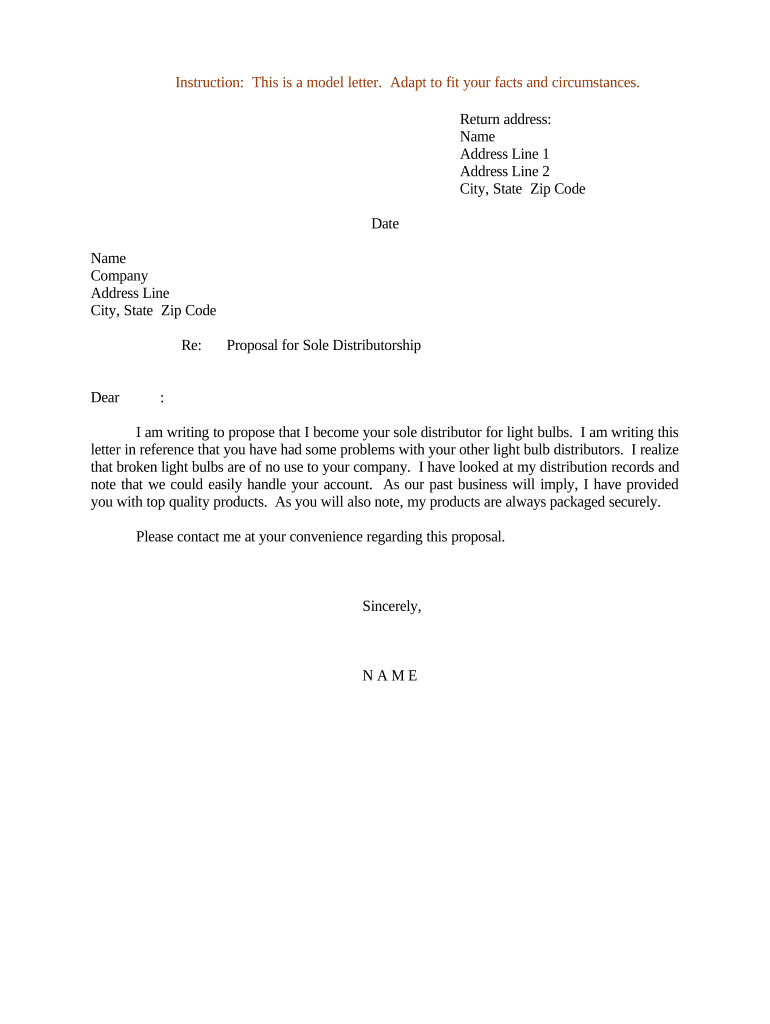
A Proposal for Sole Distributorship is a written offer from a prospective distributor to a manufacturer or supplier requesting exclusive rights to sell, market, or distribute specified products within a defined territory. The document establishes proposed commercial terms, the intended territory and channel limits, minimum purchase or performance obligations, the proposed exclusivity period, and conditions for termination or renewal. It is usually followed by negotiation and a formal distributorship agreement; the proposal itself can create preliminary obligations if parties sign or exchange binding acceptance language.

Why a Clear Proposal Matters

A well-prepared proposal clarifies expectations, reduces negotiation time, and documents key commercial commitments in writing. It protects both parties by specifying territory, minimum purchases, intellectual property licensing, and conditions that could otherwise be disputed later.

Why a Clear Proposal Matters

Who Prepares and Reviews These Proposals

Typical participants include the prospective distributor, manufacturer commercial teams, and legal counsel on both sides.

  • Prospective Distributor: Business owners and sales directors preparing exclusive sales offers and financial forecasts for the manufacturer.
  • Manufacturer Representative: Commercial managers or licensing teams assessing territorial risks and brand/profit impacts.
  • Legal Counsel: Contract attorneys who review exclusivity clauses, termination rights, and compliance with trade and antitrust laws.

Collaboration among these roles improves accuracy and reduces later contract revisions.

Core Elements to Include in a Professional Proposal

A concise proposal should include identity details, scope of exclusivity, performance expectations, commercial terms, duration and renewal mechanics, and any regulatory or IP conditions that affect distribution.

Parties

Identify the legal entity names, addresses, and contact persons for both distributor and manufacturer, including state of incorporation and tax identification where relevant.
Territory

Define the geographic area and channel restrictions precisely (for example: U.S. states A–C, online sales excluded) to avoid future boundary disputes.

Exclusivity

State whether the distributor requests sole, exclusive, or non-exclusive rights, and define any carve-outs such as government sales or existing customers.

Performance Terms

Specify minimum purchase commitments, sales targets, marketing obligations, lead time expectations, and remedies for missed targets.

Commercial Terms

List proposed pricing, discounts, payment terms, credit terms, and responsibility for tariffs, duties, or returns.

Duration & Termination

Propose initial term, renewal conditions, notice periods, termination for convenience or cause, and post-termination sell-off rights.

Essential Data Points to Provide

Legal Name: Full corporate or individual name
Contact Information: Street address, phone, email
Tax ID: EIN or SSN where required
Proposed Territory: Specific states or regions
Minimum Commitments: Units or dollar targets
Signature Date: MM/DD/YYYY format

Step-by-Step: Preparing and Submitting the Proposal

Follow these practical steps to prepare a complete, legally clear proposal that facilitates review and negotiation.

  • 01
    Draft Terms: Collect commercial and territorial terms in a single draft.
  • 02
    Attach Documents: Include product lists, price schedules, and certifications.
  • 03
    Legal Review: Have counsel check exclusivity and antitrust exposure.
  • 04
    Send Proposal: Transmit to the manufacturer via secure channel.

How to Configure an Online Proposal Workflow

Set up an online workflow to collect signatures, attachments, and approvals while preserving an audit trail.

Field Configuration
Signature Field Require signature and date; set signer role
Attachment Field Require product specs and ID documents
Conditional Fields Show exclusivity clauses only when 'exclusive' chosen
Approval Routing Route to legal then commercial reviewers

Where to Send and How the Review Process Typically Works

A standard routing reduces delays: initial commercial review, legal review, executive approval, and final signature.

  • Submit to Sales: Commercial team receives first draft
  • Legal Review: Lawyers check enforceability and risk
  • Executive Approval: Senior exec signs off on key terms
  • Final Signature: Authorized signatories execute the proposal

Digital Signing and eSubmission Considerations

Use a platform that preserves an audit trail, supports required authentication, and stores signed documents securely.

  • Authentication: Email or SMS OTP; stronger methods when needed
  • Audit Trail: Capture IP, timestamps, and signer actions
  • File Formats: PDF and DOCX support preferred

Ensure the chosen eSignature provider complies with ESIGN and UETA and can produce a reliable certificate of completion.

Key Deadlines and Timing Expectations

Set clear calendar milestones for proposal validity, performance measurement, and renewal deadlines to avoid misunderstandings.

Proposal Validity Period:

Specify an expiration date for the offer

Response Time:

Manufacturer response window (e.g., 14–30 days)

Performance Review:

Quarterly or annual metrics review dates

Renewal Notice:

Notice period required to renew exclusivity

Termination Notice:

Minimum notice period for termination

Common Risks and Consequences of Flawed Proposals

Misrepresentation: May lead to contract rescission
Ambiguous Territory: Causes enforcement disputes
Missing Signatures: May invalidate commitments
Antitrust Exposure: Exclusive arrangements can trigger review
Tax Consequences: Incorrect reporting or withholding
Data Security: Improper storage risks breach

eSignature Pricing and Feature Comparison for Document Execution

When selecting an eSignature provider to execute a Proposal for Sole Distributorship, compare pricing, compliance, bulk-send capabilities, and any envelope limits to match your volume and regulatory needs.

signNow DocuSign Adobe Sign PandaDoc HelloSign
Starting Price $8/user/mo $15/user/mo $14/user/mo $19/user/mo $15/user/mo
Free Trial 7-day free trial Varies by vendor Varies by vendor Varies by vendor Varies by vendor
Bulk Send Yes Yes Yes Yes Yes
Audit Trail Yes Yes Yes Yes Yes
HIPAA Compliant Yes Yes Yes No No
Envelope Cap No cap 100 envelopes/user/year Varies Varies Varies

Practical Tips to Minimize Disputes and Delay

Adopt these best practices when drafting a Proposal for Sole Distributorship to reduce negotiation cycles and legal exposure.

Be Specific About Territory
Define boundaries precisely (states, ZIP codes, online channels) and avoid vague terms such as 'area of operations' that invite differing interpretations.
Include Measurable Performance Terms
Use quantifiable sales targets and timeframes and specify calculation methods and reporting frequency to avoid later measurement disputes.
Address Intellectual Property
Clarify trademark use, branding guidelines, and IP ownership to prevent unauthorized use and to protect the manufacturer's brand integrity.
Plan for Dispute Resolution
Specify governing law, venue, and dispute resolution method (mediation/arbitration) to limit litigation costs and forum uncertainty.

How Similar Proposals Are Used in Practice

Real-world examples illustrate how proposals lead to executable agreements and the issues parties typically resolve during negotiation.

Optica Ventures — COO

Optica prepared a concise territory and minimum purchase schedule to speed review.

  • Negotiated payment and delivery windows.
  • The approach helped reduce back-and-forth with the manufacturer and produced a clear basis for the eventual distributorship agreement.

Martin Properties — Founder

Martin Properties used an electronic workflow to collect signatures from remote stakeholders.

  • Required audit trail evidence.
  • Using a structured online process ensured compliance and allowed timely execution without in-person meetings or courier delays.

Who Typically Signs the Proposal

Manufacturer Exec

An authorized executive or commercial director with power to commit the company on sales and territorial matters. Their signature binds manufacturing-side obligations and any grant of exclusive rights.

Distributor Owner

The distributor's owner or designated officer who can accept commercial terms, commit to minimum purchases, and authorize downstream sales channels or sub-distributors.

Frequently Asked Questions About Proposal Execution

Answers to common legal and practical questions about preparing, signing, and storing a Proposal for Sole Distributorship.


Need help? Contact support

be ready to get more
Join over 28 million airSlate SignNow users