Cover Summary
Concise opening statement that identifies the decedent, fiduciary, reporting period, and a high-level summary of net estate change; clarifies purpose and any pending actions or distributions.
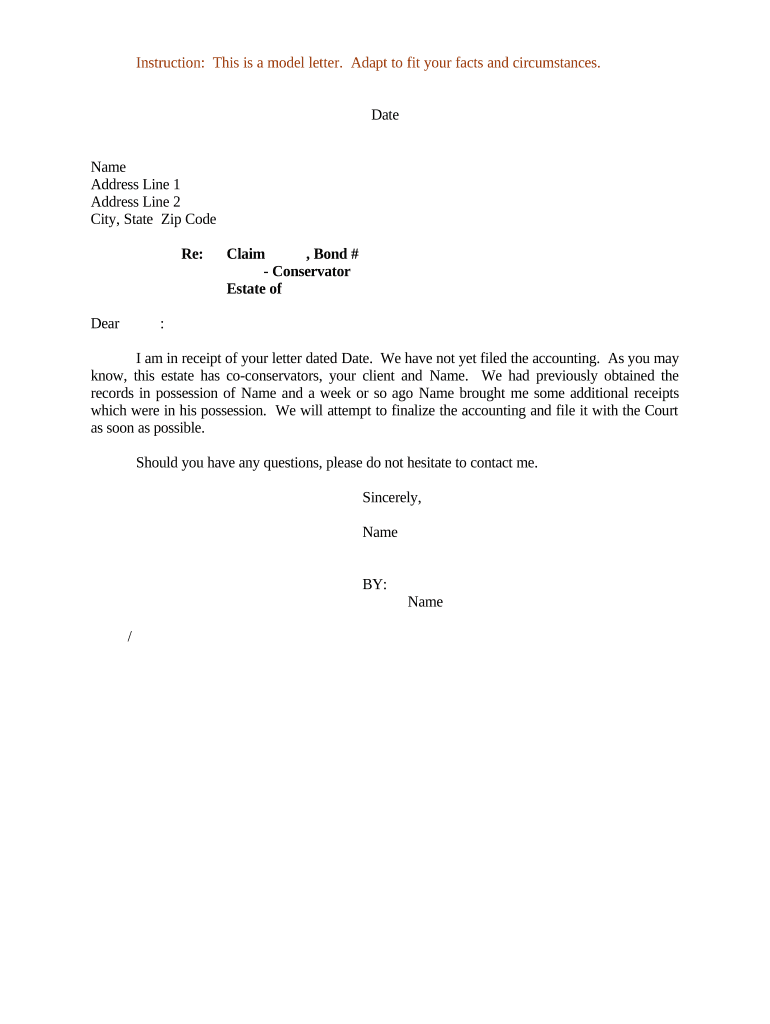
A Letter Regarding Estate Accounting documents fiduciary actions, clarifies distributions for beneficiaries, and creates a durable record for probate review. Clear accounting can reduce disputes, speed settlement, and establish a documented trail of transactions for fiduciary liability protection.

Executors, administrators, and personal representatives prepare this letter to inform beneficiaries, trustees, and probate courts about estate financial activity.
As executor, you must prepare an accurate accounting covering all estate transactions, including receipts, disbursements, asset valuations, and distributions. The letter should explain accounting methods, list supporting documentation, and state the period covered to help beneficiaries and courts evaluate fiduciary performance.
As a beneficiary, you receive this letter to review estate activity, verify distributions, and identify questions. Use the statement to request supporting vouchers, tax records, and clarification about valuations; timely objections may need to be filed in probate per local rules.
Concise opening statement that identifies the decedent, fiduciary, reporting period, and a high-level summary of net estate change; clarifies purpose and any pending actions or distributions.
Itemized schedules listing cash, bank accounts, investments, real property, personal property, and business assets with valuations, dates, and cross-referenced supporting exhibits.
Chronological list of receipts and disbursements with dates, payees, amounts, and reason codes to allow easy reconciliation and audit.
Breakdown of fiduciary commissions, attorney fees, accounting fees, and other expenses with calculation method and authorization references.
Clear table showing beneficiaries, distributions paid, unpaid distributions, and remaining balances; include tax withholding where applicable.
Attach bank statements, invoices, appraisals, tax returns, and receipts indexed to the schedules for verification.
| Field | Configuration |
|---|---|
| Template Name | Save as 'Estate Accounting Letter' template. |
| Conditional Sections | Show asset tables only when balances exist. |
| Signer Roles | Assign executor, reviewer, and beneficiary roles for signing. |
| Authentication | Enable email link or SMS code for signer verification. |
Digital delivery options vary; ensure your platform supports secure PDF, audit trails, and signer authentication appropriate for estate documents.
Deliver within 30–90 days of request or as ordered by court.
File per local probate schedule or when requested by court.
Prepare records sufficient for tax returns and potential 1099/1098 filings.
Provide supplemental exhibits within 14–30 days unless court orders otherwise.
Late filings may prompt beneficiary motions, court sanctions, or expanded discovery.
Gather all bank, investment, and property records covering the accounting period.
Prepare schedules, reconcile balances, and assemble supporting exhibits.
Provide recipients time to review and submit questions or objections.
File with probate court or finalize distributions after approval.
| signNow | DocuSign | Adobe Sign | PandaDoc | HelloSign | |
|---|---|---|---|---|---|
| Starting Price | $8/user/mo | $15/user/mo | $14/user/mo | $19/user/mo | $15/user/mo |
| Free Trial | 7-day trial | Varies by vendor | Varies by vendor | Varies by vendor | Varies by vendor |
| Bulk Send | Yes | Yes | Yes | Yes | Yes |
| Audit Trail | Yes | Yes | Yes | Yes | Yes |
| HIPAA Compliant | Yes | Yes | Yes | No | No |
A sole executor compiled a detailed accounting after distribution disagreements arose among siblings, documenting each transaction and the rationale for valuations.
A trust company prepared a periodic accounting for multiple beneficiaries, summarizing investment gains, management fees, and distributions for a three‑year reporting period.