Establishing secure connection…Loading editor…Preparing document…

Letter to Government Official

This template is fully customizable. Edit the text, fill out the fields, and send it for signature. Give it a try!
Letter to Government Official

What a Letter to Government Official Is and When it’s Used

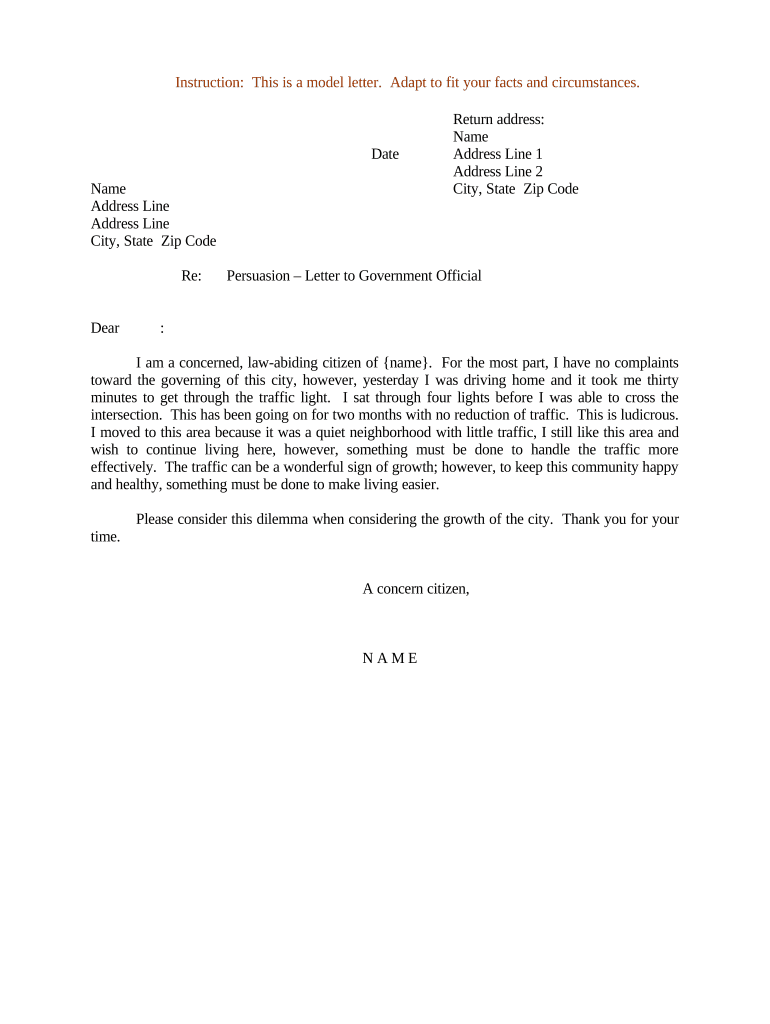
A Letter to Government Official is a formal written communication addressed to a public officer, agency, or elected representative to request action, provide information, appeal a decision, or register a complaint. Typical uses include permit requests, records or FOIA inquiries, license appeals, constituent concerns, and administrative comments. The letter should be concise, factual, and include supporting facts or documents. It may require specific routing, notarization, or signature authority depending on the subject matter and applicable statutes or agency rules.

Why a Well-Prepared Letter Matters

A clear, correctly formatted letter improves the likelihood of timely processing and accurate recordkeeping and helps ensure the official can identify and act on the request without follow-up. Proper identification and supporting materials reduce procedural delays and administrative rejections.

Why a Well-Prepared Letter Matters

Who Sends Letters to Government Officials and Why

Organizations and individuals send these letters when formal notice, documentation, or an official response is required by statute, agency policy, or administrative practice.

  • Residents and constituents seeking constituent services, clarifications, or benefits
  • Businesses requesting permits, regulatory guidance, or licensing determinations
  • Attorneys and advocates filing appeals, supporting briefs, or formal notices

Core Elements to Include in Every Letter

A consistent structure helps officials process your request. Use clear headings, concise factual statements, and supporting attachments labeled as exhibits.

Sender Identification

Provide full legal name, organization, mailing address, telephone, and email so the recipient can verify identity and respond to the correct party.
Recipient Details

Address the letter to the appropriate official or office by name and include agency, division, and mailing address or docket number if applicable.

Date and Reference

State the date and cite any relevant case, permit, or file reference numbers to link the correspondence to existing records.

Purpose Statement

Open with a one-sentence summary of the request or action you seek, e.g., 'Request for fee waiver under regulation...' or 'Appeal of licensing denial dated...'.

Factual Basis

Present facts in numbered points, attach supporting documents as exhibits, and identify which statutory or regulatory authorities support your position.

Signature and Authority

Include the printed name, title, and signature of the authorizing person, and state the signer's authority to act for the organization if relevant.

Essential Identifiers and Document Data

Full Legal Name: As shown on government ID
Organization Name: Registered business or entity name
Address: Street, city, state, ZIP
Contact Info: Phone number and email
Reference Number: Case, permit, or docket ID
Signature Date: MM/DD/YYYY format

Step-by-Step: Preparing Your Letter

Follow a short sequence from draft to delivery to minimize errors and ensure traceability.

  • 01
    Draft: Write a concise factual statement and request
  • 02
    Attach: Add labeled supporting documents as exhibits
  • 03
    Review: Check names, dates, and reference numbers
  • 04
    Submit: Send via required channel and retain a copy

Typical Processing Flow After Submission

Understanding the routing steps helps set expectations for response and follow-up.

  • Receipt Acknowledgment: Office logs submission and issues a tracking number
  • Intake Review: Clerks check completeness and jurisdiction
  • Substantive Review: Specialist evaluates facts and legal basis
  • Decision and Notice: Agency issues decision and instructions

Configuring an Online Submission Workflow

Set up a consistent digital workflow to capture all required fields and to record submission metadata.

Field Configuration
Requester Name Required, validated against ID
Reference Number Optional, autofill from previous records
Attachments Accept PDF, DOCX; label as Exhibit
Authentication Email verification or stronger method

Digital Submission and eSignature Considerations

Confirm the recipient accepts electronic submissions and whether an eSignature or notarization is required before sending.

  • File Formats: PDF or DOCX accepted by most agencies
  • Authentication: Email, SMS code, or higher assurance
  • Recordkeeping: Save audit trail and signed PDF

Typical Timing and Deadlines to Watch

Some letters are time-sensitive; observe statutory filing windows and agency-specific submission deadlines.

Statutory Deadlines:

Check the agency rule or statute for specific filing windows

Response Time Expectation:

Agency acknowledgement often within 30 days; substantive reply may take longer

Appeal Periods:

Appeals commonly require filing within 30 to 60 days of decision

Extension Requests:

Submit written extension requests per agency procedure

Record Retention:

Keep copies until statutory retention period expires

Common Mistakes to Avoid

  • Omitting a relevant reference number delays routing and often triggers an administrative return or request for clarification.
  • Using informal language or unsupported assertions can weaken your position and cause reviewers to request substantiation.
  • Failing to include required attachments listed in the body will frequently result in the letter being considered incomplete.
  • Entering names or dates incorrectly leads to identity verification failures and may prevent the agency from processing the matter.

Consequences of Inaccurate or Untimely Letters

Administrative Rejection: Submission returned for correction
Missed Appeal Window: Loss of right to appeal
Statutory Penalties: Fines or sanctions under applicable statute
Criminal Exposure: False statements may risk criminal penalties
Record Mismatch: Delays caused by identity or file mismatches
Tax or Benefit Impact: Incorrect filings may affect tax or benefit status

Two Practical Letter Scenarios

Real-world examples illustrate typical structure and supporting documentation for common requests.

Permit Request Example

A business submits a zoning permit request with site plan and application fee

  • The letter summarizes the project, cites local code sections, and lists exhibits
  • The agency assigns a docket number, requests two additional clarifications, and issues an expected decision timeline of 45 days.

FOIA Request Example

A private citizen files a records request for inspection reports using the agency’s FOIA template

  • The letter identifies the records sought by date range and subject matter
  • The agency acknowledges receipt, provides a tracking number, and estimates a production window subject to redactions and fee estimates.

Practical Tips for Clear, Effective Letters

Adopt clear formatting, evidence-based assertions, and consistent document control practices to reduce processing time.

Use a Clear Subject Line
Begin with a concise subject that includes the action requested and any file or docket number to facilitate quick routing and retrieval.
Be Concise and Numbered
Present facts in numbered paragraphs and cite exhibits to make it easier for reviewers to verify assertions and locate supporting material.
Maintain a Complete File
Retain all sent versions, delivery receipts, and any agency acknowledgements to support appeals or future inquiries.
Confirm Submission Method
Verify whether the agency accepts electronic delivery and which authentication or notarization steps are required before submission.

Frequently Asked Questions and Troubleshooting

Answers to common questions cover signature validity, submission channels, timing, and what to do if your letter is returned or ignored.


Need help? Contact support

be ready to get more
Join over 28 million airSlate SignNow users