Establishing secure connection…Loading editor…Preparing document…

Letter Regarding Lien Notice

This template is fully customizable. Edit the text, fill out the fields, and send it for signature. Give it a try!
Letter Regarding Lien Notice

What a Letter Regarding Lien Notice Is and When It’s Used

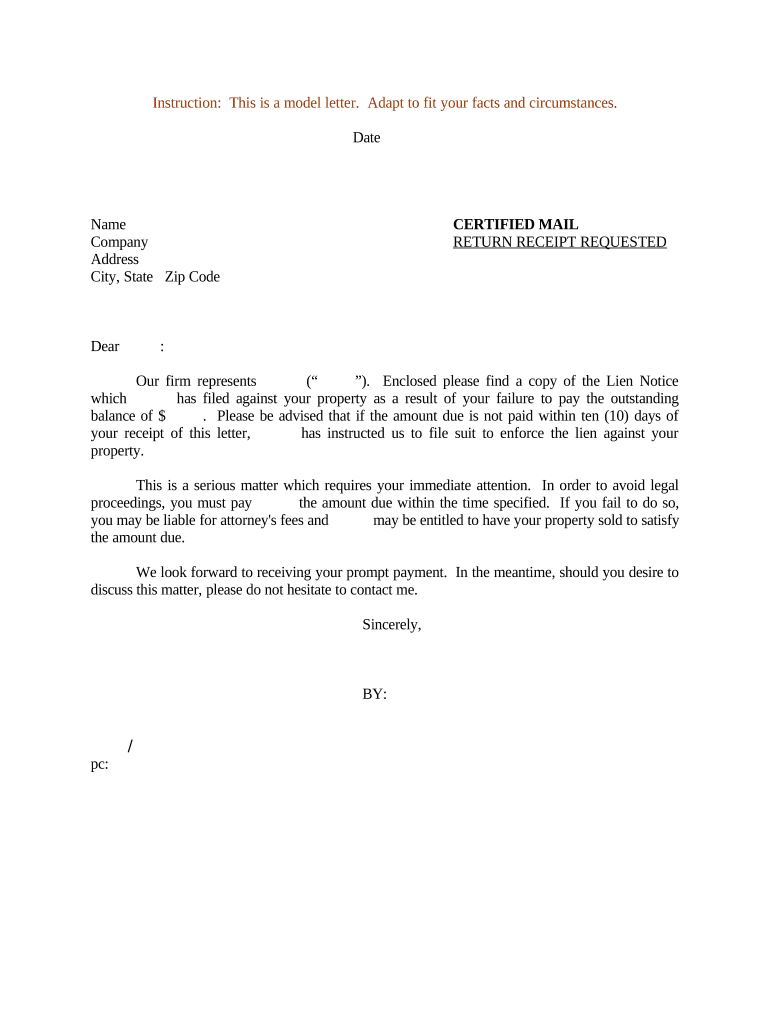
A Letter Regarding Lien Notice is a written communication sent to an owner, general contractor, or other responsible party to declare a claim for unpaid work, labor, materials, or services and to preserve or notify of potential lien rights. It typically summarizes the claimant, the contract or purchase order, dates of performance, the amount owed, and a request for payment or cure. Depending on jurisdiction, this letter can be a prerequisite for filing a mechanic’s lien, materialman’s lien, or similar claim and is used to demonstrate notice, intent, and a basis for later statutory filings.

Why Sending a Lien Notice Matters

A properly drafted Letter Regarding Lien Notice preserves legal rights, creates a record of demand, and may be required by state lien statutes before filing a lien. It clarifies the claim, reduces surprises, and often prompts resolution without litigation.

Why Sending a Lien Notice Matters

Who Typically Prepares and Receives These Letters

The letter also appears in commercial disputes outside construction where statutory lien or security interests may attach; adjust content to match the specific statute and project type.

  • General contractors and subcontractors seeking payment for labor and materials on private projects
  • Material suppliers documenting unpaid deliveries to preserve mechanics lien rights
  • Property owners, lenders, and title companies receiving notice to assess risk on a property

Primary Signatories and Their Roles

General Contractor

A company officer or authorized project manager signs on behalf of the business. The signatory must have authority to bind the company and should include title, contact details, and printed name for attribution.

Subcontractor / Supplier

An authorized representative of the claimant (owner, CEO, controller, or accounts receivable manager) signs and dates the letter to establish intent and attribution for later evidentiary purposes.

Essential Data to Include

Claimant Name: Full legal name
Recipient/Owner: Full legal name
Project Address: Street, city, state
Amount Claimed: Dollar figure
Service Dates: Start and end dates
Signature/Date: Signed and dated

Step-by-Step: Completing the Letter Regarding Lien Notice

Follow these steps to prepare a clear, legally useful lien notice; adapt wording to your state’s statutory requirements and retain a copy for records.

  • 01
    Identify Parties: List claimant and recipient legal names and contact details.
  • 02
    Describe Work: Summarize goods or services and reference contract or PO numbers.
  • 03
    State Amount: Provide precise unpaid balance and any interest calculation.
  • 04
    Demand and Signature: Request payment by a date and sign with title and date.

Where to Send or File a Lien Notice

Routing depends on statute, contract, and project type; choose delivery method that creates a verifiable record and complies with state requirements.

  • Direct Delivery: Send by certified mail or delivery service to owner or general contractor address.
  • County Filing: If statute requires, file claim of lien with county recorder or clerk’s office.
  • Send to Lender: Notify lenders or title companies where required by contract or to protect priority.
  • Maintain Proof: Retain delivery receipts, tracking numbers, and filed-stamp copies.

Digital Delivery and eFiling Considerations

Confirm electronic delivery and filing are accepted in your jurisdiction; when in doubt, supplement with certified physical delivery to preserve rights and evidentiary proof.

  • Authentication: Use email+SMS or ID verification when possible.
  • Audit Trail: Capture IP, timestamp, and signer information.
  • Document Format: Use PDF/A or standard PDF for retention.

Key Timing Rules and Deadlines to Watch

Lien rights and required notices are time sensitive; missing statutory windows can forfeit enforcement rights.

Preliminary Notice Windows:

Some states require notice within 20–90 days of first furnishing; verify your state law.

Filing Deadlines:

Lien filing deadlines often run from completion or last date of work; periods vary by state.

Demand-to-File Period:

Send a demand notice and allow the statutory cure period before filing a lien if required.

Service Timing:

Methods of service (mail vs. personal) can change the effective date of notice.

Statute of Limitations:

Enforcement timelines vary; some states shorten lien enforcement windows to a few months.

Typical Milestones from Notice to Enforcement

A sequential view of common milestones helps track when to serve, file, and enforce a lien claim.

01

Initial Service

Serve letter to owner/GC to establish notice and demand payment.

02

Preservation Step

File any required preliminary notice or statutory preservation document if mandated.

03

Lien Filing

File claim of lien with county clerk when cure period expires or statutory trigger occurs.

04

Enforcement

If unpaid, commence foreclosure or lawsuit within statutory enforcement window.

Common Preparation Mistakes to Avoid

  • Using an incorrect legal name for claimant, causing title and enforcement complications and requiring corrections.
  • Failing to reference contract or PO numbers, which weakens the connection between services rendered and the claimed amount.
  • Missing state-specific preliminary notice or filing deadlines that can permanently forfeit lien remedies.
  • Delivering notice without retaining verifiable proof of service such as certified mail return receipts or electronic audit logs.

Consequences of an Incorrect or Invalid Notice

Loss of Lien Rights: Missed deadlines can forfeit statutory lien remedies.
Monetary Damages: Wrongful liens can trigger damages and attorney fees.
Civil Liability: False statements may lead to lawsuits.
Criminal Exposure: Intentional misrepresentation can carry criminal penalties.
Title Issues: Filed liens affect property title and escrow outcomes.
Increased Costs: Corrections, counsel, and filing fees raise expenses.

How This Letter Differs from Related Documents

Compare the Letter Regarding Lien Notice to similar documents to choose the proper instrument for your situation.

Criteria Mechanic’s Lien Letter Regarding Lien Notice
Primary Purpose creates enforceable lien provides notice/demand
Filing Required yes (recorded) sometimes (pre-lien notice)
Typical Use recorded claim for property evidence of demand and intent
Preferred Timing after notice periods early to preserve rights

Digital Signing and eSubmission Options

Electronic signatures are generally acceptable under federal and state law; select eSignature methods that satisfy intent, consent, attribution, and retention tests.

  • ESIGN/UETA Validity: eSignatures are legally recognized for most commercial notices.
  • Authentication Strength: Use multi-factor or verified email/SMS for stronger attribution.
  • Audit Records: Preserve timestamps, IP addresses, and signer identity.
  • Supplement with Mail: When in doubt, send physical certified mail in addition to eDelivery.

Key Sections to Include in a Professional Lien Notice

A complete notice reduces dispute friction and supports later enforcement; include these core sections in every letter.

Header

Date the letter, list claimant contact information, recipient name, and project address to establish context and recipient identity.
Contract Reference

Cite contract or purchase order numbers, execution dates, scope references, and any change orders tied to the claim.

Work Description

Concise summary of work or materials furnished, including delivery and completion dates that tie the claim to performance.

Amount Owed

Show exact outstanding balance, method of calculation, and any agreed rates or retainage deductions.

Demand Language

Specify payment due date, consequences of nonpayment (filing lien, legal action), and cure instructions.

Signature Block

Include printed name, title, company, signature, and date to demonstrate intent and attribution.

Real-World Use Cases

These scenarios illustrate common situations where a Letter Regarding Lien Notice is used to preserve rights or prompt payment.

Construction Subcontractor Notice

A subcontractor documents $18,500 unpaid for finishing work on a private project and sends a written demand

  • Preliminary notice was previously sent
  • The letter creates a clear record used to support a later lien filing and encourages the general contractor to resolve the balance to avoid title issues at closing.

Supplier Delivery Claim

A materials supplier notes a $4,200 unpaid invoice after multiple calls and emails

  • Sends certified letter to owner and GC
  • The formal notice led the owner to prioritize payment and prevented escalation to lien recording, saving months of legal expense.

Practical Tips for Clear, Enforceable Notices

Follow consistent drafting and delivery practices to strengthen your position and streamline dispute resolution.

Confirm Legal Names
Verify claimant and recipient legal names using corporate records or title searches to prevent misidentification and ensure recording accuracy.
Use Precise Descriptions
Describe work and dates specifically; vague descriptions reduce credibility and complicate enforcement actions.
Keep Delivery Proof
Retain certified mail receipts, courier tracking, or electronic audit trails to prove notice and service dates if contested.
Coordinate with Counsel
If the amount is substantial or the statute is unclear, seek legal review to confirm local requirements and filing strategy.

Frequently Asked Questions About Letter Regarding Lien Notice

Answers to common questions about purpose, timing, electronic signing, and next steps when payment is not received.


Need help? Contact support

Comparing eSignature Costs and Features for Sending Notices

A concise vendor comparison to evaluate eSignature options for preparing, signing, and delivering lien notices; signNow appears first in the table as the baseline reference.

signNow DocuSign Adobe Sign PandaDoc HelloSign
Starting Price $8/user/mo $15/user/mo $14/user/mo $19/user/mo $15/user/mo
Free Trial 7-day free trial Varies by plan Varies by plan Varies by plan Varies by plan
Bulk Send Yes Yes Yes Yes Yes
Audit Trail Yes Yes Yes Yes Yes
Envelope Cap No cap 100 envelopes/user/year Varies Varies Varies
be ready to get more
Join over 28 million airSlate SignNow users