Establishing secure connection…Loading editor…Preparing document…

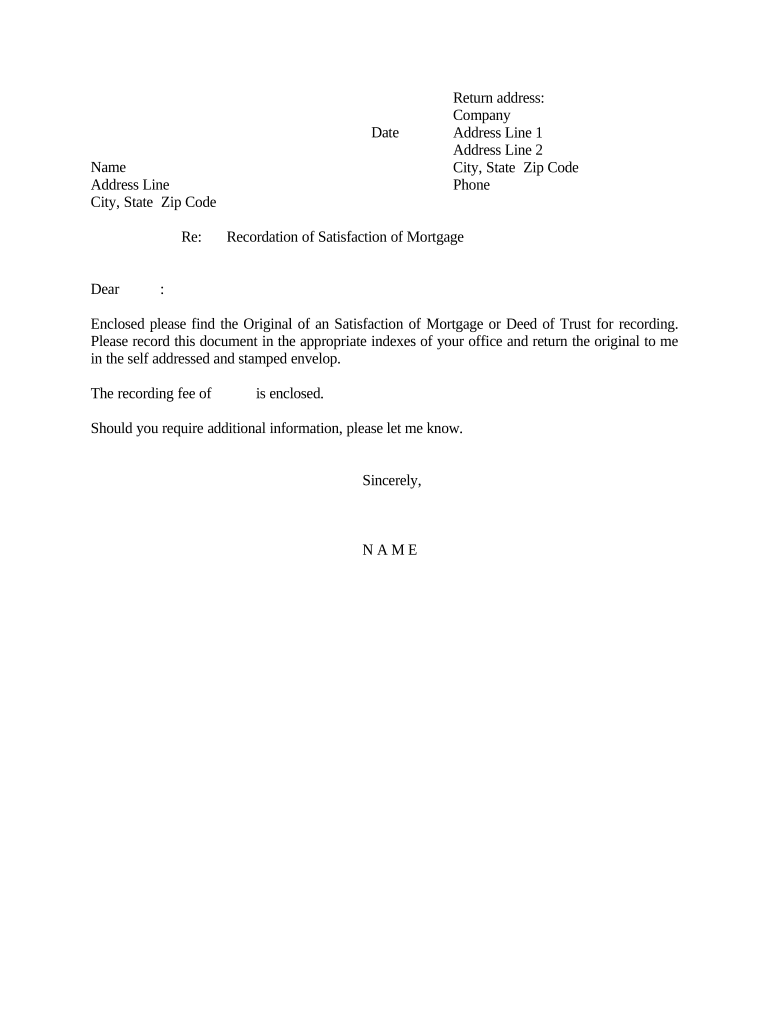
Recordation of Satisfaction of Mortgage

This template is fully customizable. Edit the text, fill out the fields, and send it for signature. Give it a try!
Recordation of Satisfaction of Mortgage

What the Recordation of Satisfaction of Mortgage Is

A Recordation of Satisfaction of Mortgage is a county-level document that memorializes the lender's release of its lien once a mortgage has been paid in full or otherwise satisfied. The recorded instrument updates the land records to show the borrower holds clear title free of that mortgage lien, and it typically includes reference to the original mortgage recording information, a satisfaction statement, borrower and lender names, and the date of satisfaction. Recording this instrument protects the borrower, enables clear title searches, and allows property transfers or refinances to proceed without the encumbrance.

Why Recording a Satisfaction Matters

Recording a satisfaction removes the public lien from title records, prevents future claims based on the paid mortgage, and formalizes the lender’s release. It creates a searchable, public record that title companies, buyers, and future lenders rely on.

Why Recording a Satisfaction Matters

Who Prepares and Uses a Satisfaction of Mortgage

Typical users include parties involved in real estate closings, lien releases, and title clearance processes.

  • Lenders and servicers prepare satisfactions and certify payoff amounts for release and recording.
  • Borrowers or their closing agents request filing to clear title before refinance or sale transactions.
  • Title companies and real estate attorneys verify recorded satisfactions when issuing title insurance commitments.

Step-by-Step: Completing the Satisfaction Form

Follow these four core steps to prepare and record a satisfaction of mortgage correctly.

  • 01
    Prepare Document: Populate lender, borrower, property, and original instrument details.
  • 02
    Notarize: Obtain a notary acknowledgement as required by the recorder.
  • 03
    Submit to Recorder: File with the county recorder’s office, online or in person, with applicable fee.
  • 04
    Obtain Recorded Copy: Confirm recording and keep the stamped copy for title records.

Core Elements of a Professional Satisfaction Document

A well-formed Recordation of Satisfaction of Mortgage contains specific, verifiable elements that link the release to the original lien and meet county recording standards.

Satisfaction Statement

A clear clause stating the mortgage is paid, released, or otherwise satisfied; includes the effective satisfaction date and any reservation language.
Instrument Reference

Exact recording identifiers from the original mortgage (book/page or instrument number) so the recorder can index the satisfaction correctly.

Parties Identified

Full legal names and addresses of lender and borrower to ensure public records reflect the correct parties.

Property Legal Description

Complete legal description copied from the mortgage or deed, not just the street address, to prevent misfiling.

Notary Acknowledgement

State-required notarial language and signature block ensuring the document meets authentication rules for recording.

Recorder Use Area

Space reserved for county recorder stamps, recording fees, and official indexing information after filing.

How Recording Works in Practice

Recording generally follows a sequence from document preparation to indexed public record; each step has standard tasks and expected outcomes.

  • Draft Satisfaction: Prepare instrument with accurate references and satisfaction statement.
  • Authenticate: Notarize the lender’s signature as required by state law.
  • File with County: Submit to the county recorder with required fee and cover sheet if needed.
  • Receive Stamped Copy: Recorder returns the stamped instrument and assigns a recording number.

Configuring an eSubmission Workflow

If you file electronically, configure these settings to match county requirements and internal audit needs.

Field Configuration
eSubmission Method Portal upload or vendor-assisted batch filing per county rules
Authentication Level Signer identity via ID verification, SMS code, or standard email confirmation
File Format PDF/A preferred; ensure searchable text and correct orientation
Retention Policy Retain certified copy and audit trail per legal and company requirements

Technical Considerations for Digital Completion and Filing

Choose a platform that supports required file formats, signer authentication, and secure transmission to county recorders.

  • Integrations: Salesforce, NetSuite, Microsoft 365, Box, Procore supported
  • File Formats: PDF and PDF/A compatibility required by many recorders
  • Authentication: Support for email, SMS, and advanced ID verification

Timing Expectations for Preparing and Recording a Satisfaction

While statutes rarely set strict deadlines for recording a satisfaction, practical timing affects title clearance, refinancing, and closing schedules.

After Payoff:

Record the satisfaction promptly after loan payoff to clear the title for sale or refinance

Notarization Time:

Obtain notary acknowledgement before submission; delays can push back recording

County Processing:

Recording turnaround typically ranges from same day to 10 business days depending on county volume

Requesting Certified Copy:

Allow extra days for certified or exemplified copies often needed by title insurers

Electronic Filing:

eRecording can reduce processing time and provides immediate confirmation in many jurisdictions

Common Preparation Pitfalls to Avoid

  • Mismatched party names between the satisfaction and the original mortgage lead to rejection or rescission requests from the recorder.
  • Using a street address instead of the legal property description can cause misindexing and title search failures.
  • Omitting original recording identifiers (book/page or instrument number) makes it difficult for recorders to attach the satisfaction correctly.
  • Incomplete notary acknowledgements or incorrect notary formatting are frequent reasons for recording rejection and re-submission.

Security and Compliance Considerations

Transport Encryption: TLS 1.2/1.3 for data in transit
At-Rest Encryption: AES-256 encryption for stored documents
Audit Trail: Comprehensive signing history and timestamps
HIPAA Support: Business Associate Agreement available for PHI
Regulatory Certs: SOC 2 Type II and ISO 27001 certified
21 CFR Part 11: Capabilities to support compliance for FDA-regulated records

Consequences of Incorrect or Late Recordation

Title Clouding: Unrecorded satisfactions leave the lien listed in title searches
Recording Rejection: Incomplete forms may be rejected and require re-filing
Legal Disputes: Incorrect satisfactions can lead to lien disputes or quiet-title actions
Delay in Closing: Failed recording can postpone sales or refinances
Potential Fines: County-specific penalties for improper filings may apply
Operational Cost: Rework increases attorney, notary, and filing expenses

eSignature Vendor Comparison for Processing Satisfactions

Comparison of common eSignature vendors by pricing and essential features relevant to preparing and delivering recorded satisfactions.

signNow DocuSign Adobe Sign PandaDoc HelloSign
Starting Price $8/user/mo $15/user/mo $14/user/mo $19/user/mo $15/user/mo
Free Trial 7-day free trial Varies Varies Varies Varies
Bulk Send Yes Yes Yes Yes No
Audit Trail Yes Yes Yes Yes Yes
HIPAA Compliant Yes Yes Yes No No

Frequently Asked Questions and Troubleshooting

Answers to common questions about preparing, notarizing, and recording a satisfaction of mortgage, and how to address common filing issues.


Need help? Contact support

be ready to get more
Join over 28 million airSlate SignNow users