Establishing secure connection…Loading editor…Preparing document…

Louisiana Expungement

This template is fully customizable. Edit the text, fill out the fields, and send it for signature. Give it a try!
Louisiana Expungement

What Louisiana Expungement Means and Who It Helps

A Louisiana expungement is a court process used to restrict public access to arrest records, misdemeanor or felony convictions, or certain juvenile adjudications under state law. Expungement does not always erase records entirely but can seal or limit dissemination, restoring opportunities for employment, housing, and licensing in many cases. Eligibility, required waiting periods, and procedural steps vary depending on the underlying offense, sentence, and any post-conviction relief. This guide explains the main components of a Louisiana expungement filing, what information you must provide, how electronic signatures and e-submissions interact with state court procedures, and common pitfalls to avoid.

Why Pursue a Louisiana Expungement

Expungement can reduce barriers to employment, professional licensing, housing, and education by limiting public access to certain criminal records. It supports rehabilitation and reintegration while preserving necessary law enforcement access where allowed.

Why Pursue a Louisiana Expungement

Who Typically Files or Signs Expungement Petitions

A range of people and professionals interact with expungement filings depending on case complexity.

  • Individuals seeking to clear or seal eligible arrests or convictions for employment or licensing purposes.
  • Criminal defense attorneys preparing and filing petitions on behalf of clients with qualifying records.
  • Court clerks and probation officers providing certification, record searches, or filing assistance.

When in doubt about eligibility or special-case exceptions, consult an attorney or the local clerk of court to confirm procedural requirements.

Common Roles Involved

Individual

A person seeking relief who must gather case numbers, conviction dates, and identification. They may represent themselves or authorize counsel, and must meet statutory eligibility windows and disclosure rules under Louisiana law.

Attorney

A lawyer files the petition, prepares supporting affidavits and certified disposition records, and represents the petitioner at any required hearing. Attorneys reduce procedural risk and can request sealing versus full expungement where statute allows.

Key Elements to Include in a Professional Expungement Petition

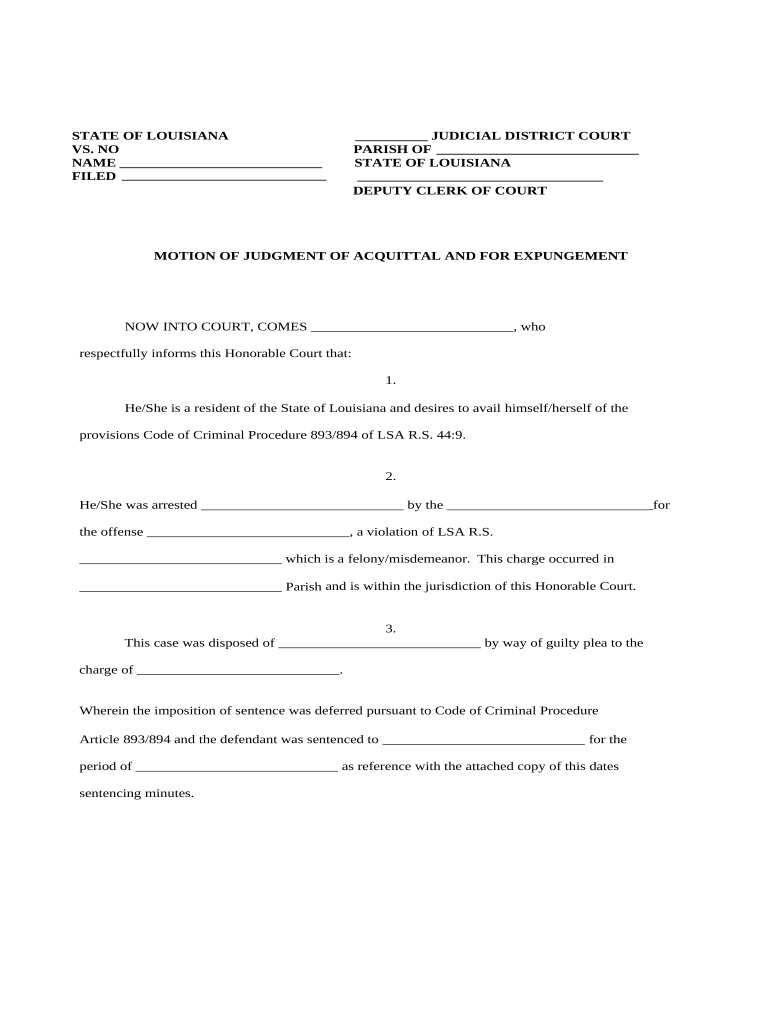
A complete Louisiana expungement petition combines identifying details, certified records, jurisdictional statements, and the statutory basis for relief.

Case Information

Court name, docket/case numbers, charge descriptions, and disposition dates to enable accurate record retrieval and judicial review.
Petitioner Details

Full legal name, aliases, date of birth, current address, and contact details to tie the petition to the correct record.

Statutory Basis

Citation to the Louisiana statute or code section relied on and a short statement explaining eligibility or statutory relief sought.

Supporting Records

Certified dispositions, arrest reports, or probation completion documents that courts typically require to verify the outcome.

Relief Requested

Clear request phrasing: sealing, expungement, or restriction of dissemination and any limits on law enforcement access.

Signatures

Signed petitioner declaration and counsel signature if represented; include date and any required verification language.

Step-by-Step: Completing the Louisiana Expungement Form

Follow these steps in order to assemble a complete petition and supporting packet for filing with the appropriate court.

  • 01
    Gather Records: Request certified dispositions and arrest records from court or law enforcement.
  • 02
    Confirm Eligibility: Verify statutory waiting periods and offense eligibility under state law.
  • 03
    Complete Petition: Fill fields accurately, attach supporting documents, and sign as required.
  • 04
    File With Court: Submit petition to the clerk of court in the jurisdiction where the case originated.

How Electronic Signing and eSubmission Fit the Process

Electronic signatures streamline execution and delivery where courts permit e-filings and ESIGN-compliant signatures; follow authentication rules and court e-filing guidelines.

  • Prepare Document: Upload PDF with fillable fields and attachments for signing.
  • Add Signers: Place signature, date, and verification fields for petitioner and attorney.
  • Authenticate: Use email link, SMS code, or stronger methods where required.
  • Send or e-File: Deliver signed packet to court clerk by accepted channel.

Typical eFiling and Signature Workflow Settings

Configure these settings when preparing your online petition to align with court and security expectations.

Document Format PDF/A preferred for stable rendering and archival.
Authentication Method Email plus SMS code for moderate assurance; KBA for higher assurance.
Signature Type Simple e-signature acceptable unless court requires PKI/digital signature.
Attachments Include certified dispositions as separate PDF attachments.
Retention Settings Enable audit trail and retain signed packet per regulatory timelines.

Technical and Platform Considerations for eSubmission

Ensure your eSignature platform meets legal and technical expectations before relying on e-submission to a court.

  • File Types: PDF, DOCX conversion support preferred.
  • Authentication: SMS, email, or advanced signer authentication support.
  • Audit Trail: Timestamp, IP, and action log capability.

Confirm the court clerk accepts electronic filings and whether a physical certified copy or in-person verification is required in addition to electronic submission.

Practical Tips for Faster, Cleaner Expungement Filings

Adopt a checklist and standardized file names to reduce clerk questions and rejections.

Verify Case Numbers and Names
Double-check docket numbers and exact legal names against certified dispositions. Mismatches are the most common cause of clerical rejection and can produce weeks of delay while records are corrected.
Include Certified Documents
Request and attach certified court dispositions or official law enforcement records. Uncertified copies are frequently rejected and force refiling or supplemental submissions.
Follow Local Court Rules
Check the parish clerk's e-filing policies and preferred submission channels. Some courts require in-person filings or paper originals even when electronic signatures are present.
Retain Audit Trails
Keep signed copies with the audit trail showing signer email, IP address, and timestamps. These records support authenticity if the court questions the signature.

Common Mistakes That Delay Expungement Processing

  • Providing uncertified copies of dispositions rather than court-certified records causes routine rejections.
  • Entering an incorrect case number or misspelling legal names prevents clerks from locating files.
  • Omitting the statutory citation or failing to state the relief requested creates ambiguity for the judge.
  • Attempting to e-file where the local court does not accept electronic petitions leads to returned filings.

Consequences of Incorrect or Incomplete Expungement Filings

Denied Petition: Case dismissed without relief
Filing Delays: Weeks or months added
Additional Fees: Refile fees and costs
Loss of Time: Court appearances required
Record Errors: Further correction needed
Legal Risk: Potential sanctions in bad faith

Security and Compliance for Electronic Filings and Signatures

In-Transit Encryption: TLS 1.2/1.3
At-Rest Encryption: AES-256
ESIGN / UETA: Compliance with ESIGN and UETA
HIPAA Support: BAA available when needed
Audit Trail: Detailed signer activity logs
21 CFR Part 11: Available on compliant plans

Comparison: eSignature Providers for Filing and Signing Expungement Documents

This table shows general pricing and core capabilities for common eSignature vendors; signNow is listed first per platform comparison conventions.

signNow DocuSign Adobe Sign PandaDoc HelloSign
Starting Price $8/user/mo $15/user/mo $14/user/mo $19/user/mo $15/user/mo
Free Trial 7-day free trial Varies by vendor Varies by vendor Varies by vendor Varies by vendor
Bulk Send Yes Yes Yes Yes Yes
Audit Trail Yes Yes Yes Yes Yes
HIPAA Compliant Yes Yes Yes No No
Envelope Cap No cap 100 envelopes/user/year Varies Varies Varies

Example Use Cases: How Expungement Filings Are Handled

These case-style summaries show common scenarios for petitioners and legal teams using signed electronic packets.

Self-Represented Petitioner

A petitioner compiles certified dispositions and fills the online form.

  • Uses email-based e-signing to execute the petition.
  • The clerk accepted the electronically signed packet where local rules permitted; the petitioner retained the audit trail for proof of execution and delivery.

Attorney-Filed Petition

A lawyer prepares multiple petitions for clients at a fixed fee.

  • Uses bulk-send templates to collect signatures.
  • Bulk routing and standardized attachments reduced per-file processing time and allowed simultaneous e-filing where courts supported electronic submissions.

FAQs and Troubleshooting for Louisiana Expungement Filings

Answers to commonly asked operational and legal questions about eligibility, signatures, and filing to reduce delays and rejections.


Need help? Contact support

be ready to get more
Join over 28 million airSlate SignNow users