Establishing secure connection…Loading editor…Preparing document…

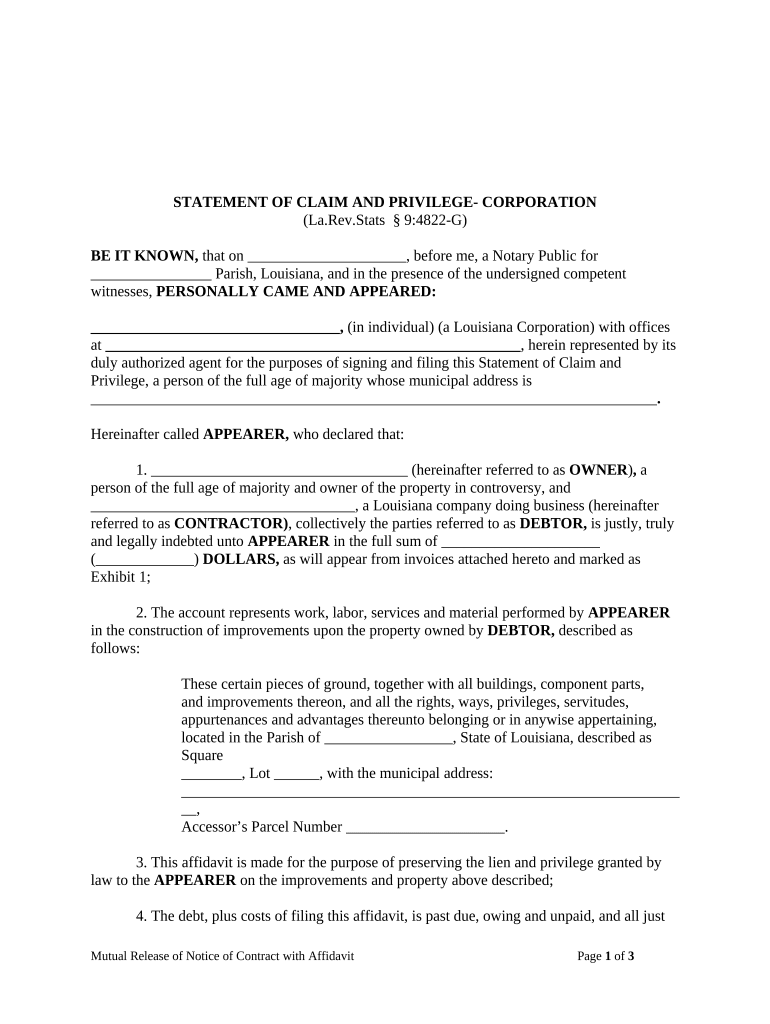
Louisiana Statement of Claim

This template is fully customizable. Edit the text, fill out the fields, and send it for signature. Give it a try!
Louisiana Statement of Claim

What the Louisiana Statement of Claim Is and When It Starts a Case

The Louisiana Statement of Claim is the written pleading used to commence a civil action in Louisiana courts by setting out the parties, the factual basis for relief, the legal grounds claimed, and the remedies sought. It establishes the plaintiff's allegations, the amount demanded when applicable, and the jurisdiction being invoked. The form and required content vary by court level and parish rules; some municipal and justice of the peace courts use simplified versions while district courts require a full petition. Proper preparation determines service, answer periods, and initial case management.

Why a Clear Louisiana Statement of Claim Matters

A properly prepared Statement of Claim clarifies the relief requested, notifies the defendant of allegations, and starts court procedures that set deadlines for service and responses. Clear drafting reduces the risk of dismissal, default, or procedural delays and preserves statutory rights.

Why a Clear Louisiana Statement of Claim Matters

Who Typically Prepares and Files This Document

Plaintiffs, their attorneys, paralegals, and court clerks most commonly prepare Statements of Claim; self-represented litigants also file them in many Louisiana courts.

  • Plaintiff or Claimant — Files the claim and supplies factual details and supporting documents.
  • Attorney or Paralegal — Prepares pleadings, checks jurisdictional requirements, and handles court filing.
  • Court Clerk — Accepts filings, assigns case numbers, and issues notices and service instructions.

Representative Signatories and Filing Contacts

Self-Represented Plaintiff

An individual filing without counsel who must provide full contact details, clear factual statements, and a mailing address for service. Courts often require a sworn signature or verification and may provide simplified forms or assistance at the clerk's office.

Filing Attorney

Licensed counsel who prepares the pleading, signs the document under professional rules, certifies service, and manages procedural deadlines. Attorneys ensure jurisdictional statements are correct and attach necessary exhibits and verifications.

Step-by-Step: Completing a Louisiana Statement of Claim

Follow these core steps to prepare a coherent, court-ready Statement of Claim suitable for filing in Louisiana courts.

  • 01
    Identify Parties: Enter full legal names and contact information for plaintiff and defendant.
  • 02
    State Facts: Summarize events and dates that give rise to the claim with concise detail.
  • 03
    Specify Relief: List the monetary amount or other remedies sought, itemizing damages when possible.
  • 04
    Sign and Verify: Sign, date, and include any required verification or affidavit before filing.

How Filing and Service Typically Proceed

A Statement of Claim moves from filing to service, response, and case scheduling. Processes differ by court and service method.

  • File: Submit the claim to the clerk and pay required fees.
  • Serve: Arrange service by sheriff, process server, or certified mail as allowed.
  • Respond: Defendant files an answer or exception within the court's deadline.
  • Calendar: Court schedules hearings, conferences, or trial dates thereafter.

Typical Digital Workflow Settings for eFiling and eSubmission

Configure your electronic workflow to match court requirements and to preserve audit evidence for each filing.

Field Configuration
Document Format PDF/A recommended for long-term preservation
Signature Type Use ESIGN-compliant electronic signatures
Authentication Email or SMS code for signer verification
Retention Keep audit trail and reproduction for court proof

Tools and Integrations for Online Completion and Submission

Use platforms that support PDF, Word to PDF conversion, and maintain an audit trail to document signing events.

  • File Types: PDF, DOCX supported
  • Integrations: Salesforce, NetSuite, Google Workspace
  • Authentication: Email, SMS code, KBA optional

Typical Timelines and Expected Response Windows

Timelines vary by parish and court level; check local rules. Below are common timing expectations and response windows to plan around.

Filing Acknowledgement:

Clerk usually assigns a case number the same day of filing.

Service Window:

Service is commonly required within 90 days after filing in many jurisdictions.

Answer Deadline:

Defendant often has 15 to 30 days to file an answer after proper service.

Default Judgment:

Default may be entered if no timely answer is filed, subject to local rules.

Trial Scheduling:

Trials or hearings are typically set weeks to months after answer is filed.

Key Milestones from Filing to Final Disposition

A statement of claim follows a sequence of court events; below are the principal milestones and what to expect as the case moves forward.

01

Filing Completed

Clerk assigns case number and docket entry.

02

Service of Process

Defendant receives complaint and summons per local rules.

03

Responsive Pleadings

Answer, exceptions, or motions may be filed by defendant.

04

Hearing or Trial

Court decides on merits or sets settlement conference.

Common Preparation Mistakes to Avoid

  • Incomplete party names or wrong addresses that delay service and increase the chance of dismissal or misdirected notices.
  • Vague or unsupported factual allegations that fail to provide sufficient notice to the defendant about the claim being asserted.
  • Omitting required attachments or exhibits such as contracts, invoices, or sworn statements relied upon in the claim.
  • Using incorrect court form versions or failing to follow local rules for formatting, margins, or signature blocks.

Consequences of Errors or Missed Deadlines

Dismissal Risk: Court may dismiss improperly pled claims
Default Judgment: Failure to serve or respond can lead to default
Sanctions: Court may impose monetary or procedural sanctions
Enforcement Delay: Defects can postpone judgment enforcement
Increased Costs: Correction or refiling raises attorney and filing fees
Evidence Loss: Delay can result in lost or degraded supporting records

Key Components to Include in a Professional Statement of Claim

A professional pleading is complete, well-organized, and supported by exhibits. Include these elements to improve clarity and enforceability.

Caption

Court name, case number, and party names properly formatted under local rules to ensure correct docketing and identification.
Jurisdictional Basis

A concise statement explaining why the chosen court has jurisdiction and venue is appropriate for the dispute.

Factual Narrative

Chronological facts with dates, places, and actions that gave rise to the claim, tying facts to legal elements when possible.

Cause of Action

Clear legal theories or statutory grounds supporting the relief sought, stated in plain terms for judicial review.

Demand for Relief

Specific remedies sought, including exact dollar amounts, interest, costs, and any injunctive relief if applicable.

Verification

Signature, date, and any required sworn verification or affidavit asserting truthfulness of the facts stated under penalty of perjury.

Security and Legal Compliance Considerations

Encryption: TLS 1.2/1.3 in transit; AES-256 at rest
Audit Trail: Time stamps, IP addresses, action logs
Legal Framework: ESIGN and UETA acceptance for e-signatures
Regulatory Certs: SOC 2 Type II, ISO 27001 available
HIPAA Support: HIPAA-compliant with BAA available
21 CFR Support: 21 CFR Part 11 compliance options

eSignature Pricing and Feature Comparison Relevant to Document Preparation

Compare common pricing and capability items for eSignature vendors used to prepare and sign legal pleadings; signNow is listed first per comparison conventions.

signNow DocuSign Adobe Sign PandaDoc HelloSign
Starting Price $8/user/mo $15/user/mo $14/user/mo $19/user/mo $15/user/mo
Free Trial 7-day free trial Varies by plan Varies by plan Varies by plan Varies by plan
Bulk Send Yes Yes Yes Yes No
Audit Trail Yes Yes Yes Yes Yes
HIPAA Compliant Yes Yes Yes No No

Real-World Examples of Electronic Document Use in Litigation Workflows

These brief cases illustrate how organizations used electronic workflows and signatures to streamline legal document handling and case management.

Martin Properties

Tim Martin, Founder, used online signing for property and claim documents to reduce turnaround.

  • Faster execution enabled remote signings for tenants and vendors.
  • The firm processed and executed documents online with compliance and security, allowing staff to file and serve pleadings without in-person meetings while preserving audit trails for court.

Fertility Centers of Illinois

John Butler, Founder, adopted digital workflows for consent and claim-related records.

  • Integration with case management improved tracking of signed documents.
  • The organization cited responsive support and reliable audit logs that helped consolidate document storage and ensured signed records were reproduction-capable for regulatory and court reviews.

Practical Tips for Accurate and Efficient Completion

Apply these best practices to reduce rejection risk and speed processing when preparing a Louisiana Statement of Claim.

Use Precise Names
Confirm and enter the exact legal names of parties, including DBA or corporate suffixes, to avoid service and jurisdiction complications.
Attach Key Exhibits
Include contracts, invoices, or sworn statements referenced in the claim so the court and defendant can verify assertions easily.
Follow Local Formats
Check parish or court rules for required forms, margins, and cover sheets; nonconforming submissions may be rejected.
Preserve Audit Evidence
Retain signed copies, timestamps, and access logs to prove execution and help enforce judgments if needed.

Frequently Asked Questions About the Louisiana Statement of Claim

Answers to common questions about drafting, signing, filing, and correcting a Statement of Claim in Louisiana courts.


Need help? Contact support

be ready to get more
Join over 28 million airSlate SignNow users