Establishing secure connection…Loading editor…Preparing document…

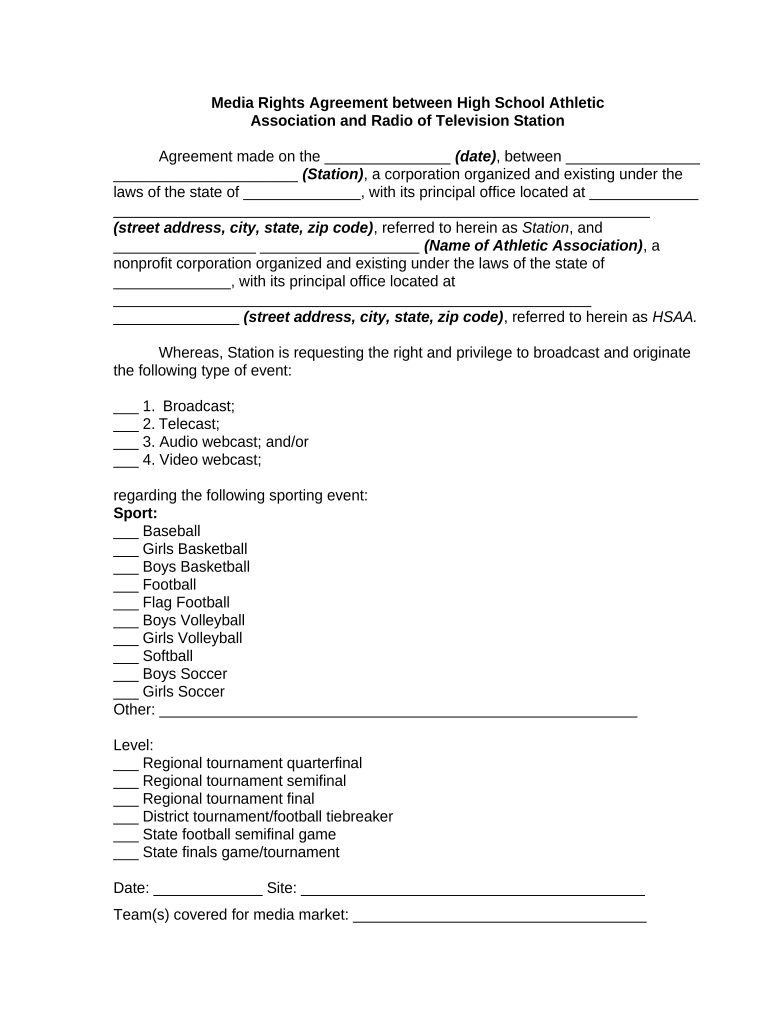
Media Agreement

This template is fully customizable. Edit the text, fill out the fields, and send it for signature. Give it a try!
Media Agreement

What a Media Agreement Covers and why it matters

A Media Agreement is a legally binding contract that sets out rights and obligations for using audiovisual, photographic, or other media assets between a licensor and a licensee. Typical provisions define the grant of rights, permitted uses, territory, term, compensation, delivery specifications, approvals, warranties and clearances, and termination mechanics. For many projects the agreement also addresses attribution, moral rights, sublicensing, and insurance requirements. Media Agreements can be executed in writing or electronically, subject to federal and state e-signature laws such as the ESIGN Act (15 U.S.C. ch. 96) and applicable UETA provisions.

Why use a tailored Media Agreement

A clear Media Agreement reduces disputes by defining who may use content, where, and for how long. It preserves copyright chain of title, sets financial terms, and allocates risk through warranties, indemnities, and insurance clauses. Proper drafting also identifies required clearances and rights releases, which lowers exposure to infringement and enforcement actions under U.S. law.

Why use a tailored Media Agreement

Who typically prepares and signs a Media Agreement

Media Agreements are used across production, publishing, and corporate communications workflows; several distinct roles commonly engage with the document.

  • Producers and Production Companies responsible for obtaining rights and managing deliverables during production and distribution.
  • Creators and Talent (photographers, videographers, performers) who grant licenses and must confirm clearances and moral-rights waivers.
  • Licensors and Licensees in marketing, publishing, streaming, and ad agencies who track territories, usage, and payments.

Each signer should confirm authority to license or accept rights; organizations often require legal or business review before execution.

Core clauses to include in a professional Media Agreement

A complete Media Agreement separates commercial, technical, and legal terms so rights are unambiguous and enforceable. The following six elements form the contract backbone.

Grant of Rights

Specify exact rights granted (reproduction, distribution, modification), exclusivity, sublicensing ability, and any reserved rights by the licensor.
Term and Territory

Define the start and end dates, renewal mechanics, and the geographic scope where the license applies, including online and multiplatform uses.

Compensation

Set fees, payment schedule, royalties, invoicing procedures, and remedies for late payment or withheld payments.

Deliverables and Specs

List formats, technical specifications, delivery milestones, acceptance testing, and correction windows for nonconforming media.

Warranties and Clearances

Require representations that the licensor owns or controls rights and that necessary releases, third-party licenses, and rights-of-publicity clearances are secured.

Indemnity and Insurance

Allocate responsibility for third-party claims, specify insurance coverage types and limits, and state notice and defense clauses.

Essential administrative and security items to track

Signature Evidence: Audit trail, timestamp, signer identity
Version Control: Keep executed PDF and change log
Encryption: TLS in transit, AES-256 at rest
Access Controls: Role-based permissions and SSO
HIPAA Note: BAA required for PHI use
Retention: Preserve per recordpolicy

How to complete a Media Agreement step by step

Follow a consistent sequence to reduce errors, confirm rights, and ensure enforceability of the signed agreement.

  • 01
    Prepare Draft: Assemble parties, asset list, and proposed terms
  • 02
    Confirm Clearances: Verify third-party licenses and releases before signature
  • 03
    Set Financials: Agree fees, invoicing, and payment milestones
  • 04
    Execute: Sign, capture audit trail, and distribute executed copies

Configuring an online workflow for Media Agreements

Design a simple digital workflow that enforces field completion, records consent, and archives the signed agreement consistently.

Field Configuration
Signer Roles Define Licensor, Licensee, Witness roles and signing order
Authentication Choose email link, SMS code, or stronger ID verification
Template Fields Add conditional fields for fees, deliverable lists, and dates
Storage Select secure archive with retention rules

Typical routing for execution and distribution

A predictable routing flow keeps signers aligned and ensures each party receives the final executed document.

  • Create Agreement: Upload final PDF and attach exhibits
  • Place Fields: Add signature, initial, and date fields where required
  • Send to Signers: Use defined signing order or simultaneous routing
  • Archive & Distribute: Store executed copy and send copies to all parties

Technical considerations for e-signing Media Agreements

Ensure the chosen platform supports required authentication, file formats, and integration with existing repositories.

  • File Formats: PDF, DOCX supported for templates
  • Integrations: Salesforce, NetSuite, Google Workspace
  • Audit Trail: Complete IP, timestamp, and action log

Confirm platform compliance with ESIGN (15 U.S.C. ch. 96), applicable UETA rules, and any industry-specific requirements before relying on electronic execution.

Key timing elements to define in the agreement

Set clear dates and windows to avoid ambiguity about when rights begin, when deliverables are due, and how notices operate.

Effective Date:

Date the license takes effect (MM/DD/YYYY format)

Delivery Deadline:

Final deliverable due date and accepted formats

Approval Window:

Number of days for licensee review and rejection

Payment Terms:

Net payment days and late fee mechanics

Renewal Notice:

Days prior to expiration for renewal or termination

Common drafting and execution pitfalls to avoid

  • Vague license language that fails to specify media types, distribution channels, or sublicensing rights and leads to disputes.
  • Missing third-party releases or music clearances, which can expose the licensee and licensor to infringement claims.
  • Inconsistent party names or incorrect legal entity details, causing enforceability problems and payment delays.
  • Failure to set payment milestones and remedies, resulting in collection difficulties and contract defaults.

Legal and commercial risks of an incomplete or incorrect Media Agreement

Copyright Infringement: Exposure to statutory damages and takedowns
Lost Revenue: Unauthorized use can devalue licensing income
Contract Void Risk: Defective signature or authority may void agreement
Tax Consequences: Incorrect reporting could trigger IRS penalties
HIPAA Liability: Unauthorized PHI use can trigger 45 CFR penalties
Litigation Costs: Defense and settlement expenses can be substantial

eSignature vendor snapshot for executing Media Agreements

Comparison focuses on starting price, trial availability, bulk-send capability, audit trail, and HIPAA support — signNow listed first per product data.

signNow DocuSign Adobe Sign PandaDoc HelloSign
Starting Price $8/user/mo $15/user/mo $14/user/mo $19/user/mo $15/user/mo
Free Trial 7-day free trial Varies by plan Varies by plan Varies by plan Varies by plan
Bulk Send Yes Yes Yes Yes Yes
Audit Trail Yes Yes Yes Yes Yes
HIPAA Compliant Yes Yes Yes No No

Illustrative use cases for a Media Agreement

Real examples show how clause choices and workflows affect execution and post-signature use.

Production Release

A regional film producer licensed archival footage for online distribution

  • The license specified territory and sublicensing limits
  • After electronic execution the team tracked deliverables and royalties centrally, avoiding conflicting uses and enabling timely payouts to contributors.

Promotional Photos

A small retailer engaged a photographer for campaign imagery

  • The contract required model releases and usage windows
  • Clear compensation terms and an audit-trail signature prevented later disputes when images were repurposed for additional marketing channels.

Drafting and execution best practices for Media Agreements

Follow these practices to reduce ambiguity and protect both creative and commercial interests.

Be specific about permitted uses
List each permitted channel and duration clearly. Specify territorial limits and whether online, social, streaming, or broadcast uses are included to avoid broadened interpretations.
Confirm all third-party rights
Require the licensor to provide written evidence of releases for talent, music, locations, and trademarks; make delivery conditional on verified clearances.
Maintain a single executed record
Archive one authoritative signed PDF with an auditable trail; distribute certified copies only to authorized parties to avoid multiple conflicting versions.
Use precise payment mechanics
Tie payments to milestones with dates and invoice instructions. State currency, late fees, and remedies for nonpayment to reduce collection risk.

Frequently asked questions about Media Agreements and e-execution

Answers to common points of confusion when preparing, signing, or storing a Media Agreement.


Need help? Contact support

be ready to get more
Join over 28 million airSlate SignNow users