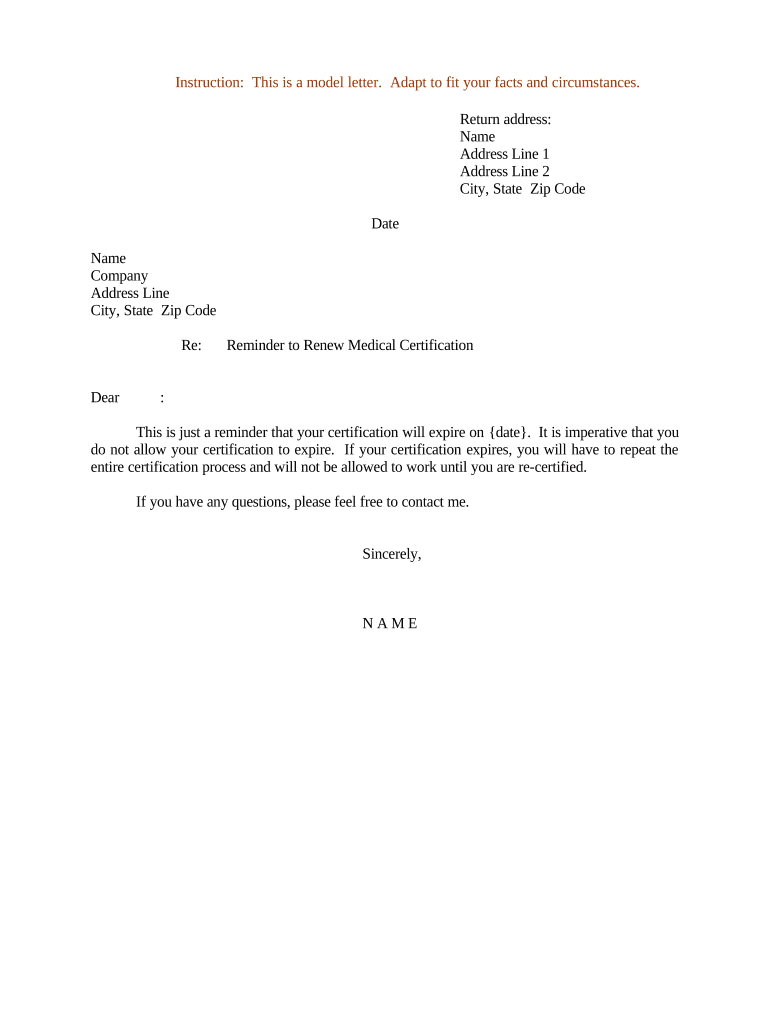
Medical Certification
What a Medical Certification Is and When it’s Used
Why a Clear Medical Certification Matters
A complete, precise Medical Certification provides the factual basis decision‑makers need to approve leave, accommodations, or benefits while protecting patient privacy and legal compliance.
Who Typically Prepares and Reviews These Certifications
Medical Certifications involve healthcare providers, patients, employers, insurers, and sometimes educational or government administrators.
- Physicians and licensed clinicians who evaluate and document clinical findings and limitations for the patient.
- Human resources and benefits administrators who review documentation to approve leave or accommodations.
- Insurance case managers and claims examiners who verify medical necessity and benefit eligibility.
Each party has distinct responsibilities: clinicians supply clinical facts, patients consent to release, and recipients use the certification to make lawful administrative decisions.
Who Signs and What Their Roles Are
Treating Provider
Typically a licensed physician, nurse practitioner, or physician assistant who examined the patient and can describe diagnosis, symptoms, treatment plan, and expected duration of impairment; the provider’s signature and professional credential validate the clinical assertions and support benefit determinations.
Authorized Official
A payer, employer, or school official may sign an acknowledgement or administrative certification confirming receipt and review of the medical documentation; this signature does not substitute for the treating provider’s clinical attestation but documents the administrative action taken on the certification.
Key Risks and Potential Penalties
Common Preparation Mistakes to Avoid
- Leaving effective dates vague or blank, which delays eligibility determinations and can lead to benefit denial or requests for clarification.
- Providing only generic diagnoses without functional limitations or duration; reviewers need concrete activity restrictions and expected timelines.
- Using inconsistent patient identifiers (different name spellings or mismatched DOB) that trigger verification issues and administrative rejections.
- Sharing protected health information without a signed authorization or business‑associate agreement, risking HIPAA noncompliance.
How to Complete a Medical Certification, Step by Step
-
01Collect Identifiers: Enter patient full name, DOB, and record number
-
02State Diagnosis: List diagnosis using clinical terms and codes
-
03Describe Function: Explain limitations, activities affected, duration
-
04Sign & Date: Provider signs with license number and date
Configuring an Online Medical Certification Workflow
| Field | Configuration |
|---|---|
| Patient Identifier | Required text field; validate format |
| Clinical Section | Multi‑line required field for diagnosis and limitations |
| Provider Signature | eSignature field with date stamp |
| Routing Rule | Send to verifier after provider signs |
Typical Digital Submission Flow
-
Upload: Clinician uploads completed form to the system
-
Place Fields: Add required text, date, and signature fields
-
Authorize Release: Patient signs consent if PHI is shared
-
Send to Reviewer: Automated routing delivers form to employer or insurer
Technical and Integration Considerations for eSubmission
Use a platform that supports secure file formats, audit trails, and integrations with your HR, benefits, or claims systems.
- File Types: PDF and DOCX accepted
- Integrations: Connects with HR and cloud storage
- Authentication: Support for MFA and secure links
Confirm the vendor provides HIPAA protections if PHI is involved, supports audit logs for each signature, and integrates with your existing systems such as EHR, HRIS, or claims platforms.
eSignature Vendor Pricing and Key Feature Comparison
| signNow | DocuSign | Adobe Sign | PandaDoc | HelloSign | |
|---|---|---|---|---|---|
| Starting Price | $8/user/mo | $15/user/mo | $14/user/mo | $19/user/mo | $15/user/mo |
| Free Trial | 7‑day free trial | Varies by plan | Varies by plan | Varies by plan | Varies by plan |
| Bulk Send | Yes (Business Premium) | Yes | Yes | Yes | No |
| Audit Trail | Yes | Yes | Yes | Yes | Yes |
| HIPAA Compliant | Yes | Yes | Yes | No | No |
| Envelope Cap | No envelope cap | 100 envelopes/user/year | Varies by plan | Varies by plan | Varies by plan |
Frequently Asked Questions About Medical Certifications
-
Can a certification be e-signed?
Yes. Electronic signatures are legally enforceable under the ESIGN Act (15 U.S.C. ch. 96) and UETA when the four legal validity factors are met: intent, consent, attribution, and record retention, provided the transaction is not an exception.
-
Is HIPAA protection required for submissions?
If the certification contains protected health information, HIPAA safeguards apply and a Business Associate Agreement is required with any service provider handling PHI; follow 45 CFR §164.502 and related provisions.
-
When is notarization needed?
Most plain medical certifications do not require notarization, but related documents (powers of attorney, affidavits) may; check state rules and the recipient’s requirements before notarizing.
-
What if the signature name differs?
Mismatched names or missing license numbers often trigger rejection. Ensure the provider’s printed name, license number, and signature match credential records to avoid delays.
-
How should durations be stated?
Provide start and end dates in MM/DD/YYYY format or a specific duration (for example: '4 weeks from 07/01/2026') and indicate whether the timeframe is an estimate subject to reassessment.
-
Can a patient withdraw a consent?
Yes. A patient may revoke authorization for disclosure of PHI; revocation affects future disclosures but not information already lawfully shared under the original consent.