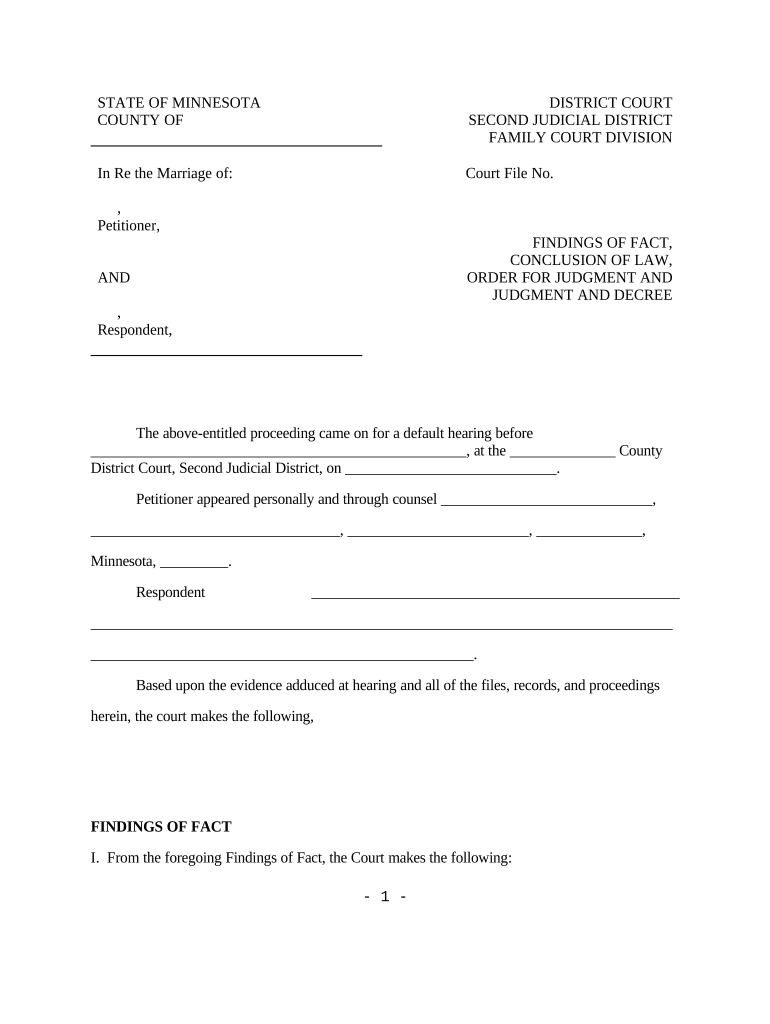
Minnesota Court Order
What a Minnesota Court Order Is and When It Applies
Why a Clear Minnesota Court Order Matters
A precise Minnesota Court Order creates binding duties, clarifies parties’ rights, and provides an enforceable record for appeals or enforcement. Well-drafted orders reduce dispute over obligations, shorten enforcement timelines, and limit procedural risks under applicable court rules and statutes.
Who Drafts, Signs, and Relies on Court Orders
Common users who prepare or rely on a Minnesota Court Order include judges, clerks, attorneys, and parties involved in the case.
- Judges and court clerks who issue, sign, and docket the order.
- Attorneys for plaintiffs or defendants who prepare proposed orders and submit them to the court.
- Litigants and other parties who receive, comply with, or appeal the order.
Knowing each role helps ensure correct drafting, service, and enforcement under Minnesota procedures and reduces the risk of procedural defects.
Step-by-Step: Drafting and Filing a Minnesota Court Order
-
01Prepare Draft: Assemble caption, case number, findings, and proposed order language.
-
02Review Authority: Cite statutes, rules, or prior orders supporting relief sought.
-
03Submit to Court: Follow local e-filing or paper filing procedures per court rules.
-
04Serve Parties: Effect proper service and file proof of service with the clerk.
Frequently Asked Questions About Minnesota Court Orders
-
Can a court order be e-signed?
Court orders and official filings are governed by court rules; many courts require judge or clerk signature via authorized e-filing systems. ESIGN and UETA do not override specific court filing rules, so verify the court’s electronic filing and signature policies before relying on an electronic signature.
-
How is service performed?
Service methods vary by order type and court rules and may include personal service, certified mail, or e-service via the court’s e-filing system. The order itself usually specifies acceptable service methods; file proof of service promptly with the clerk.
-
What happens if a party disobeys?
Noncompliance can lead to contempt proceedings, monetary sanctions, or enforcement motions. Remedies include contempt, fines, or injunctive relief; review procedural rules for emergency enforcement options if immediate compliance is required.
-
Can orders be changed or amended?
An issuing court may modify or reconsider an order through a motion to amend, reconsideration, or a new hearing. Time limits, standards, and procedures vary by case type and local rules; submit supporting affidavits and proposed language as required.
-
What are typical appeal deadlines?
Appeal and post-judgment timeframes depend on case type and statute; many civil appeals require filing within 30 days after entry, but deadlines vary. Confirm the precise deadline with the court clerk or Minnesota Rules of Appellate Procedure.
-
What proof of entry should I retain?
Keep stamped copies, docket entries, and proof of service. These records are essential for appeals and enforcement and should be retained according to applicable retention rules and any court-specified requirements.
Consequences of Errors in a Court Order
Common Preparation Mistakes to Avoid
- Incorrect caption or docket number leads to misfiling and may result in clerk rejection or delayed entry.
- Vague or ambiguous order language creates enforcement disputes and allows opposing parties to challenge compliance.
- Failure to include clear deadlines, consequences, or compliance steps causes confusion and weakens enforcement options.
- Missing or late proof of service undermines notice and can void default judgments or enforcement actions.
Typical Workflow for Electronic Preparation and Filing
-
Draft: Create proposed order using court caption and findings.
-
Review: Judge or clerk reviews proposed language and authority.
-
Clerk Entry: Clerk enters order and issues docket entry.
-
Serve: Serve parties and file proof of service with clerk.
Configuring an Electronic Workflow for Court Orders
| Field | Configuration |
|---|---|
| E-filing System | Court-approved portal or vendor |
| Document Format | PDF/A or court-specified template |
| Signature Type | Judge/clerk signature via court system |
| Authentication | Clerk verification or SSO per portal |
| Service Method | E-service, mail, or personal delivery |
Platform Features to Support Court Orders
Choose a platform that produces secure, tamper-evident PDFs, retains audit trails, and can integrate with court or case management systems.
- Integrations: Salesforce, NetSuite, Microsoft 365
- File Types: PDF, Word DOCX, and HTML
- Security: AES-256, TLS, SOC 2
Timing to Expect After an Order Is Entered
Entry Date:
Date the clerk enters the order on the docket.
Service Deadline:
Serve parties as ordered or per applicable rules.
Proof of Service Filed:
File proof of service immediately after service to document notice.
Appeal Period:
Check rules; many civil appeals require 30 days to file.
Enforcement Motion:
File promptly if a party fails to comply with the order.
Milestones from Draft to Enforcement
Draft and File
Prepare proposed order and file according to local rules.
Clerk Entry
Court reviews and enters the order into the docket.
Service to Parties
Serve parties and file proof of service as required.
Enforcement Stage
Seek contempt or enforcement remedies if noncompliance continues.
eSignature Vendor Comparison for Minnesota Court Order Workflows
| signNow | DocuSign | Adobe Sign | PandaDoc | HelloSign | |
|---|---|---|---|---|---|
| Starting Price | $8/user/mo | $15/user/mo | $14/user/mo | $19/user/mo | $15/user/mo |
| Free Trial | 7-day free trial | Varies | Varies | Varies | Varies |
| Bulk Send | Yes | Yes | Yes | Yes | No |
| Audit Trail | Yes | Yes | Yes | Yes | Yes |
| HIPAA Compliant | Yes | Yes | Yes | No | No |
| Envelope Cap | No cap | 100 envelopes/user/year | Varies | Varies | Varies |