Establishing secure connection…Loading editor…Preparing document…

Motion for Withdrawal

This template is fully customizable. Edit the text, fill out the fields, and send it for signature. Give it a try!
Motion for Withdrawal

What a Motion for Withdrawal Is and When it Applies

A Motion for Withdrawal is a court filing by an attorney seeking permission to end representation of a client in an active matter. It explains the reasons for withdrawal, confirms any required client notice or consent, and proposes steps to avoid prejudice to the client. Courts require motions to comply with local rules and may require a proposed order, certificate of service, and supporting exhibits. The judge reviews the motion and may hold a hearing before granting, denying, or conditioning withdrawal on specified actions.

Why a Well‑Prepared Motion for Withdrawal Matters

A clear, complete motion protects the client’s interests, reduces delay, and increases the chance the court will grant withdrawal without sanctions or additional hearings.

Why a Well‑Prepared Motion for Withdrawal Matters

Who Typically Prepares and Files a Motion for Withdrawal

Opposing counsel and the client are usually served with the motion; courts often require a certificate of service and may require additional disclosures to avoid prejudice.

  • Solo or firm attorneys seeking to leave representation under ethical rules and local procedure
  • Corporate or in‑house counsel when outside counsel should be relieved on a specific matter
  • Public defenders or appointed counsel when conflicts or client conduct require withdrawal

Representative Signers and Preparers

Defense Attorney

An individual practitioner or firm counsel who files the motion when ethical rules, client conflicts, nonpayment, or breakdowns in communication make continued representation untenable. The attorney explains efforts to avoid prejudice and proposes deadlines for substitution.

Corporate Counsel

In-house counsel who seeks to withdraw retained outside counsel or who must terminate internal representation due to conflict or change in corporate strategy. Filing often coordinates with corporate records and substitution documents.

Essential Parts of a Professional Motion for Withdrawal

A complete motion for withdrawal follows court formatting rules and includes facts, legal authority, and proof of service to help the judge evaluate whether withdrawal will harm the client or the court calendar.

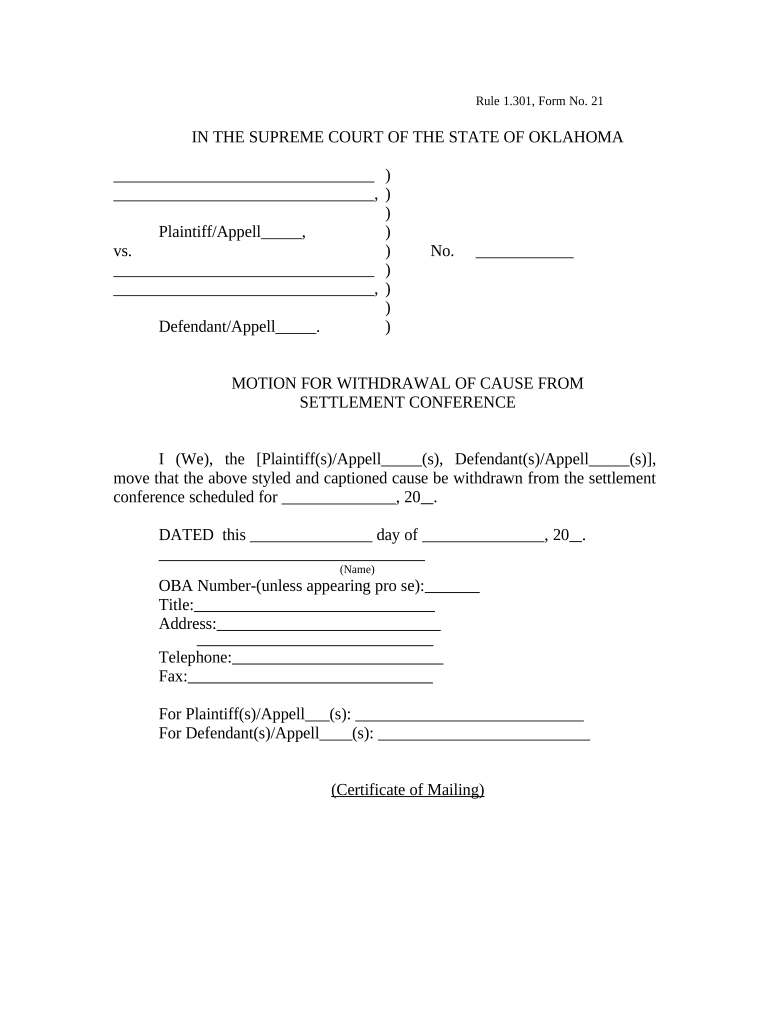
Case Caption

Full court caption and docket number placed exactly as required by the court, ensuring the clerk routes the filing to the correct matter and judge.
Statement of Grounds

Concise factual explanation of why withdrawal is necessary (e.g., conflict, nonpayment, client misconduct) without disclosing privileged details unless required by court rules.

Proposed Order

A clean proposed order granting withdrawal, with any conditions (e.g., contact information, deadlines for substitution) for the judge to sign and enter.

Certificate of Service

A statement showing how and when opposing counsel and the client were served, meeting local rule requirements for proof of notice.

Client Contact Info

Current client mailing address and telephone included so the court can direct messages and avoid prejudice if the client is unrepresented.

Supporting Exhibits

Attachments such as correspondence, fee statements, or authority if necessary to justify the motion while protecting confidential material.

Stepwise Process to Prepare and File the Motion for Withdrawal

Follow these sequential steps to prepare, serve, and file a motion that meets court expectations and reduces the chance of delay or sanctions.

  • 01
    Draft Motion: Assemble caption, grounds, proposed order, and certificate of service.
  • 02
    Check Local Rules: Confirm formatting, hearing notice, and service requirements for that court.
  • 03
    Serve Parties: Provide notice to client and opposing counsel per applicable rule.
  • 04
    File and Confirm: E‑file or deliver to clerk and verify docket entry and judge assignment.

How to Customize and Complete the Motion Online

When using an e-filing or document platform, ensure signature fields, service details, and proposed order templates are configured before sending.

Field Configuration
Document Upload PDF/A or court‑accepted format; include exhibits as separate attachments
Signature Block Place attorney signature and date fields; include bar number field
Service Notice Configure certificate of service fields and automatic email recipients
Template Save Save completed motion as reusable template for similar future filings

Where to File and Who to Serve with the Motion

Filing method depends on the court; always serve the client and opposing counsel according to local procedural rules.

  • Clerk’s Office Filing: File the motion through the court’s e‑filing portal or deliver to the clerk in person
  • Judge’s Chambers: Provide proposed order to the judge as required; some courts prefer email or e‑portal uploads
  • Opposing Counsel: Serve opposing counsel by the method required in local rules (electronic service or traditional service)
  • Client: Serve the client at the last known address and confirm notice to avoid prejudice

Digital Signing, eSubmission, and Platform Essentials

Ensure the platform preserves an audit trail and saves a timestamped copy of the signed motion for filing and retention purposes.

  • File Formats: PDF, PDF/A, DOCX accepted by many courts
  • Authentication: Email or SMS codes; advanced options available
  • Integrations: Works with e‑filing portals and document management systems

Typical Timing and Deadlines to Expect

Timing rules for motions vary by jurisdiction; follow local court rules and check the calendar for upcoming hearings to ensure timely filing and service.

Pre‑hearing Filing:

File the motion well before any scheduled hearing to allow for opposition and judicial review

Service Timing:

Serve opposing counsel per local rule — courts commonly require notice prior to action

Response Period:

Opposing parties may file responses; local rules set response windows, so confirm timing locally

Hearing Scheduling:

Court may set a hearing if facts or prejudice require live review

Entry of Order:

Final withdrawal occurs when the judge signs and the clerk enters an order

Key Milestones from Draft to Court Order

Track these milestones to ensure the motion is effective and the client’s rights are protected throughout the process.

01

Prepare Motion

Draft motion, proposed order, and certificate of service

02

Serve Parties

Provide required notice to client and opposing counsel

03

File with Clerk

Submit via e‑file or in person and confirm docket entry

04

Court Decision

Judge signs order granting or denying withdrawal

Common Mistakes to Avoid When Preparing the Motion

  • Failing to check and follow local court formatting or service rules causes clerks to reject or delay the motion.
  • Overly detailed disclosure of privileged client communications can waive privilege or violate ethical obligations.
  • Not providing current client contact information may result in the court denying withdrawal to prevent prejudice.
  • Skipping a proposed order or certificate of service often forces additional filings and may inconvenience the court.

Consequences of an Inadequate or Incorrect Motion for Withdrawal

Denial of Motion: Court may deny withdrawal
Sanctions: Monetary or case management sanctions possible
Case Delay: Further hearings or continuances required
Fee Forfeiture: Court may limit fee recovery
Ethics Inquiry: Bar referral for misconduct risk
Client Prejudice: Adverse impact on client remedies

Supporting Documents and How to Save the Final Motion

Attach or preserve key supporting materials and save the signed motion in formats that courts and parties accept.

Supporting Documents

Include correspondence, fee statements, and redacted exhibits as separate attachments to the motion to support factual assertions without oversharing privileged content.

File Formats

Save the filed motion as PDF or PDF/A when possible; courts and e‑filing systems most commonly accept PDF documents.

Exporting Signed Copy

After e‑signature, export a timestamped PDF with audit trail to preserve evidence of signature and submission for the court record.

Archival Copies

Maintain an original signed and dated copy in the client file and an electronic copy in secure document management for retention purposes.

How a Motion for Withdrawal Differs from Similar Filings

Compare withdrawal motions to substitution of counsel, notice of appearance, and motion to withdraw as counsel of record to choose the correct procedure.

Criteria Motion for Withdrawal Substitution of Counsel
Purpose end representation replace counsel
Client Consent often relevant usually required
Court Approval usually required often procedural
Proposed Order

Representative eSignature Pricing and Feature Comparison

Basic pricing and feature availability for common eSignature providers; confirm vendor pages for full feature sets and plan limits.

signNow DocuSign Adobe Sign PandaDoc HelloSign
Starting Price $8/user/mo $15/user/mo $14/user/mo $19/user/mo $15/user/mo
Free Trial Yes, 7-day trial No No Yes, limited Yes, limited
Bulk Send Yes Yes Yes Yes No
Audit Trail Yes Yes Yes Yes Yes
HIPAA Compliant Yes Yes Yes No No

Practical Examples of Motion for Withdrawal Use Cases

These scenarios illustrate common factual patterns and procedural considerations for withdrawal motions.

Private Counsel Withdrawal

An attorney seeks withdrawal after client fails to pay agreed fees, creating a conflict of interest.

  • The motion states nonpayment and efforts to notify the client.
  • The filing includes a proposed order and certificate of service; the court schedules a brief hearing to evaluate prejudice and sets a deadline for client substitution or continued representation.

Conflict‑Driven Withdrawal

Counsel identifies a conflict that arose mid‑case requiring immediate attention.

  • The motion cites the conflict and limited disclosure permitted.
  • The court reviews under ethical rules, grants leave conditioned on appointment of new counsel or temporary accommodations to protect the client’s rights.

FAQs: Common Questions About Motions for Withdrawal

Answers to frequently asked questions about timing, notice, signatures, and digital submissions for motions to withdraw.


Need help? Contact support

be ready to get more
Join over 28 million airSlate SignNow users