Establishing secure connection…Loading editor…Preparing document…

Movie Agreement

This template is fully customizable. Edit the text, fill out the fields, and send it for signature. Give it a try!
Movie Agreement

Defining the Movie Agreement and its role in production

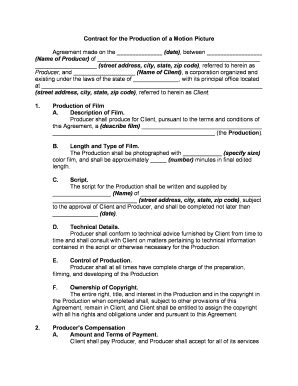
A Movie Agreement is a written contract that sets the legal terms between parties involved in a motion picture project, including producers, talent, crew, financiers, and distributors. It typically covers rights granted, compensation and payment schedule, credit and publicity, delivery milestones, warranties and representations, insurance and indemnity, and termination events. The agreement establishes who owns or licenses intellectual property, how revenue is shared, and what obligations each party must meet during development, production, and distribution, helping reduce later disputes and clarify commercial expectations.

Why a clear Movie Agreement matters for every production

A well-drafted Movie Agreement protects creative and financial interests, clarifies rights and deliverables, and limits liability. It creates enforceable expectations for payments, credit, insurance, and distribution, and supports downstream licensing, financing, and festival or broadcast clearance.

Why a clear Movie Agreement matters for every production

Who commonly prepares and signs Movie Agreements

Multiple professional roles interact with Movie Agreements at different stages of production and distribution.

  • Producers and production companies responsible for financing, hiring, and delivery terms.
  • Talent and their representatives negotiating compensation, credit, and exclusivity terms.
  • Entertainment attorneys drafting, reviewing, and ensuring chain of title and rights clearance.

The agreement’s exact signers depend on the role and authority—producers, lead talent, financiers, and authorized legal representatives are typical signatories.

Core sections that a professional Movie Agreement should include

A complete Movie Agreement organizes commercial, creative, and legal terms so each party’s obligations and remedies are explicit and enforceable.

Parties

Identify each legal entity by full legal name and organizational type; include contact and registered agent details for corporate parties to ensure enforceability and service.
Rights Grant

Specify the exact rights transferred or licensed (e.g., theatrical, streaming, worldwide, duration), including whether rights are exclusive or nonexclusive and any reserved rights.

Compensation

Describe payment amounts, timing, deductions, residuals, deferments, and escrow arrangements; spell out deliverable milestones tied to payments and remedies for late payment.

Delivery & Milestones

Define materials to be delivered (masters, rushes, cuts), delivery formats, delivery dates, acceptance criteria, and consequences for missed milestones or failed acceptance.

Warranties

Include warranties of ownership, chain of title, and absence of third-party claims, plus seller obligations to cure defects and indemnify for breaches of these warranties.

Insurance & Indemnity

Detail required insurance types and limits, producer completion bond obligations if any, indemnity scope, and procedures for claims and defense of third-party claims.

Essential fields to capture in the Movie Agreement

Full Party Names: Legal entity name
Effective Date: MM/DD/YYYY
Payment Terms: Currency and timing
Rights Scope: Territory and media
Deliverables: Format and due dates
Signatures: Name, title, date

Step-by-step: completing and executing a Movie Agreement

Follow these sequential steps to reduce errors and ensure the agreement is binding and usable for distribution and financing.

  • 01
    Drafting: Assemble terms and exhibits; draft core clauses.
  • 02
    Review: Legal and financial review for compliance and chain of title.
  • 03
    Signatures: All parties sign, with authorized representatives.
  • 04
    Recordkeeping: Store executed copies and audit trail.

Configuring an online workflow for the Movie Agreement

Set a repeatable online workflow that routes drafts for review, signatures, and distribution with clear field validation and version control.

Field Configuration
Signer Order Sequential or parallel routing
Authentication Email, SMS code, or ID verification
Required Fields Enforce name, date, and payment fields
Retention Save executed PDF and audit trail

Digital signing basics and platform considerations

Choose an eSignature platform that supports secure audit trails, acceptable authentication, and export to standard formats for distribution.

  • Integration Needs: Support for NetSuite, Google Workspace, or Salesforce
  • Security Standards: TLS 1.2/1.3 and AES-256 encryption
  • Compliance: ESIGN and UETA compatibility

Verify the platform preserves the signed PDF, provides an auditable certificate, and meets any industry-specific compliance needs before routine use.

Where to send or file the executed Movie Agreement

After execution, distribute copies to each party, retain an archival copy, and register or file with stakeholders as required by financing or licensing agreements.

  • To Parties: Email executed PDF to each signer
  • To Financiers: Deliver to lenders or escrow per contract
  • To Distributors: Provide contract and delivery materials
  • For Records: Store master in secure archive

Key dates typically tracked in a Movie Agreement

Identify contractual due dates clearly to link payments, rights transfers, and remedies to specific calendar dates and production stages.

Effective Date:

When the agreement becomes operative

Delivery Date:

Deadline for final deliverables and asset transfer

Payment Dates:

Schedule for deposits, progress, and final payments

Credit Approval Deadline:

Date for approving cast and crew credit language

Termination Notice:

Contractual notice period for termination

Common mistakes when preparing a Movie Agreement

  • Vague rights descriptions that fail to specify territory or media, leading to later licensing disputes and revenue misallocation.
  • Omitting chain-of-title covenants or failing to secure underlying releases for music, locations, or underlying works, which can block distribution.
  • Unclear payment triggers where delivery and acceptance criteria are not defined, causing delays and litigation over withheld funds.
  • Insufficient insurance or bond requirements that expose producers and financiers to completion risk and third-party claims.

Consequences and legal risks of an incorrect or incomplete Movie Agreement

Breach Damages: Monetary liability and award of consequential damages
IP Disputes: Injunctions or distribution blocks
Loss of Financing: Lender draw stoppage or recall
Insurance Denial: Claims denied for missing coverage
Union Penalties: Fines or work stoppage for noncompliance
Tax Withholding: Withholding obligations and penalties

Practical examples: how Movie Agreements function in real projects

Two concise scenarios illustrate common contract outcomes and how clear terms prevent disputes during production and release.

Independent Feature Production

A producer ties payments to delivery milestones and obtains music clearances before principal photography begins

  • a late music clearance delayed post-production payments by six weeks
  • clear milestone triggers and escrow reduced lender exposure and preserved distribution timelines.

Studio Distribution Deal

A distribution agreement specified worldwide streaming rights with revenue split and audit rights

  • distributor requested final masters in a specific format
  • providing exact delivery specs avoided rejection and delayed release by two weeks.

Practical tips to prepare accurate and enforceable Movie Agreements

Adopt consistent drafting conventions and verify details to minimize downstream disputes and to streamline financing and distribution processes.

Use precise rights language
Define media, territory, term, and exclusivity clearly; ambiguous phrases like 'all platforms' lead to costly litigation over interpretation and licensing scope.
Attach exhibits and schedules
Include detailed delivery specs, payment schedule, and credit templates as exhibits to prevent later disagreements and simplify technical acceptance testing.
Confirm chain of title
Collect underlying releases and assignments for source material, music, and location; obtain written representations and indemnities from rightsholders.
Maintain a signed audit trail
Keep timestamped, tamper-evident executed copies and an access log; a clear audit trail supports enforcement and facilitates audits or transfers.

Authorized signers on a Movie Agreement

Producer

An authorized producer signs on behalf of the production entity and must have corporate authority to bind the company; a signed resolution or power of attorney may be required when authority is delegated.

Entertainment Attorney

Legal counsel often signs only when given express power to execute or if acting as escrow agent; counsel reviews warranties, indemnities, and clears chain of title for enforceability.

Supporting documents commonly attached to a Movie Agreement

Include exhibits and attachments that operationalize the contract and provide the technical, financial, and legal details referenced in the main text.

Payment Schedule

Detailed schedule showing deposits, progress payments, final balances, escrow and release conditions tied to delivery milestones.

Delivery Specifications

Technical delivery requirements for masters, captions, closed captions, and file formats required by distributors and broadcasters.

Releases & Clearances

Signed talent, location, and music releases and licenses proving the right to exploit materials in the agreed territories and media.

Insurance Certificates

Certificates of insurance showing policy types, limits, and additional insured endorsements as required by the agreement.

Key production milestones to track in the Movie Agreement

Track milestone dates to align payments, delivery obligations, and rights transfers for clear accountability throughout the production lifecycle.

01

Contract Signing

Effective date triggers initial obligations and payment schedules.

02

Pre-Production Complete

All key hires and permits secured before principal photography.

03

Principal Photography

Start and end dates that affect availability and budgets.

04

Final Delivery

Delivery of final masters and materials for distribution acceptance.

Comparison: eSignature vendor pricing and features relevant to Movie Agreements

Vendor pricing and compliance features matter when choosing a platform for executing Movie Agreements, especially for notarization, audit trails, and HIPAA needs.

signNow DocuSign Adobe Sign PandaDoc HelloSign
Starting Price $8/user/mo $15/user/mo $14/user/mo $19/user/mo $15/user/mo
Free Trial 7-day free trial, no credit card Varies by plan Varies by plan Varies by plan Varies by plan
Bulk Send Yes (Premium+) Yes Yes Yes Yes
Audit Trail Yes Yes Yes Yes Yes
HIPAA Compliant Yes Yes Yes No No
Envelope Cap No cap 100 envelopes/user/year Varies by plan Varies by plan Varies by plan

FAQs: common questions about executing and managing a Movie Agreement

Answers to frequent questions about enforceability, signatures, notarization, revisions, cancellation, and secure storage for Movie Agreements.


Need help? Contact support

be ready to get more
Join over 28 million airSlate SignNow users