Establishing secure connection…Loading editor…Preparing document…

North Carolina Application for Letters of Guardianship

This template is fully customizable. Edit the text, fill out the fields, and send it for signature. Give it a try!
North Carolina Application for Letters of Guardianship

What the North Carolina Application for Letters of Guardianship Is

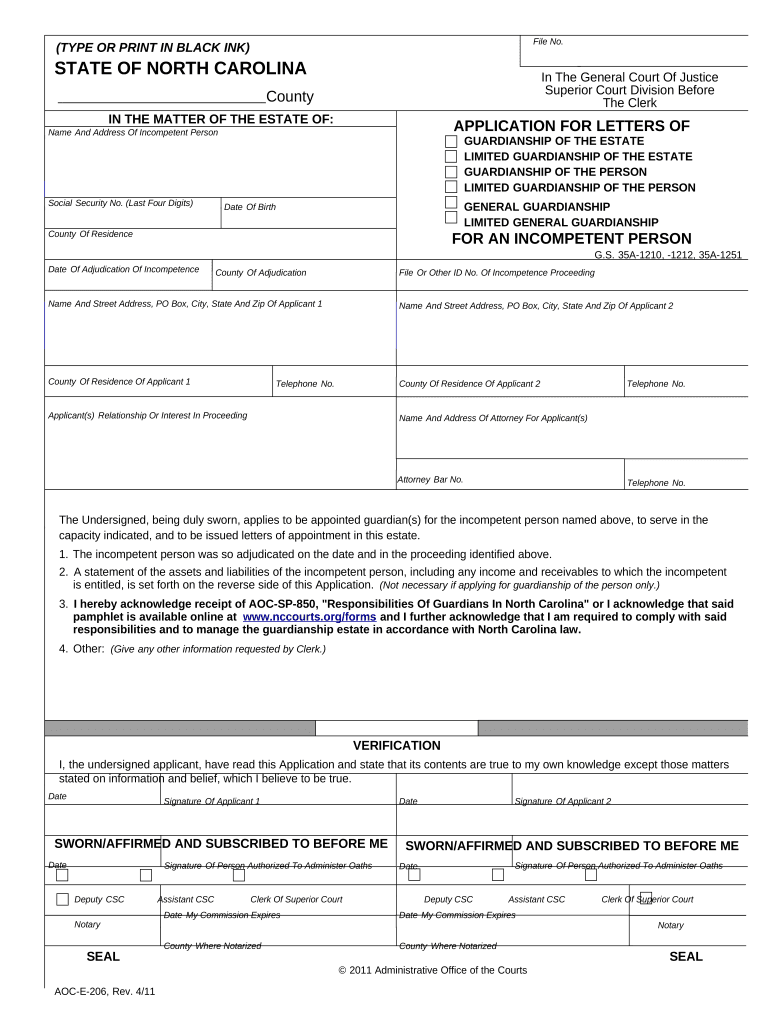
The North Carolina Application for Letters of Guardianship is the court filing used to request formal appointment of a guardian for an incapacitated adult or minor who needs a guardian for personal care or estate management. The application initiates a probate or clerk-of-court guardianship proceeding in the county where the alleged incapacitated person resides or is domiciled and triggers notice, evaluation, and hearing requirements under North Carolina guardianship statutes. The filing must include factual declarations about incapacity, proposed guardian information, and supporting documents such as medical reports and a proposed order for the judge to consider.

Why This Application Matters for Protecting Vulnerable People

A completed Application for Letters of Guardianship creates a legal record asking the court to assign authority and oversight for an individual's personal and financial needs; it protects the person and clarifies decision-making authority for caregivers and institutions. Under the North Carolina statutes, the petition launches assessments, hearings, and required notices so the court can make a limited or plenary guardianship determination balancing safety and autonomy.

Why This Application Matters for Protecting Vulnerable People

Who Typically Prepares and Files This Application

Several parties commonly prepare or file the petition depending on urgency and relationship to the proposed ward.

  • Family members and close relatives who seek guardianship and can document incapacity and need.
  • Adult care facilities, social workers, or court-appointed guardians when no family steps forward.
  • Attorneys or guardianship professionals retained to handle petitions, medical reports, and hearings.

Typical Roles and Who Signs

Petitioner — Relative or Guardian

A petitioner is the person who files the application and provides factual declarations; they must provide contact information and may be required to testify at the hearing about the ward's condition and needs.

Proposed Guardian — Fiduciary

The proposed guardian is the individual or agency nominated to serve; the application should include the proposed guardian's qualifications, criminal history disclosures, and consent to serve if available.

Step-by-Step: Filing the Guardianship Application

Follow these sequential steps to prepare, file, and proceed through the guardianship process in North Carolina.

  • 01
    Gather Records: Collect medical reports and contact history for the proposed ward.
  • 02
    Complete Petition: Fill each form field accurately, attach supporting documents.
  • 03
    File with Clerk: File the application in the county clerk or clerk of superior court.
  • 04
    Attend Hearing: Serve required notice and appear for the guardianship hearing.

Overview of the Court Process After Filing

After filing, the court will schedule events and may appoint evaluators or a guardian ad litem; expect multiple administrative steps before final letters of guardianship issue.

  • Initial Filing: Clerk assigns case number and sets a scheduling timeline.
  • Service of Notice: Required parties receive notice of the petition and hearing.
  • Medical Evaluation: Court may require physician reports or competency evaluations.
  • Hearing and Order: Judge decides and signs letters if guardianship criteria met.

Digital Workflow Settings for Preparing the Application

Set up a simple, auditable workflow to collect signatures, upload medical reports, and track service of process electronically.

Field Configuration
Document Format PDF/A preferred for long-term retention
Signer Authentication Email + SMS code for petitioners; stronger if required
Evidence Upload Allow multiple file types: PDF, DOCX, scanned images
Audit Trail Record IP, timestamp, and signer consent for each action

Technical Considerations for eFiling and eSignatures

Confirm the court and local clerk accept electronic filings and whether they require in-person notarization or RON for certain affidavits.

  • File Formats: PDF is universally accepted by courts.
  • Authentication: Use multi-factor where identities must be proven.
  • Record Keeping: Retention with tamper-evident storage recommended.

Timing and Key Deadlines to Track

Certain dates are time-critical: filing affects service deadlines and hearing scheduling; medical reports and notices must be recent to remain admissible.

Filing to Scheduling:

Clerk typically schedules initial hearing within weeks to months depending on docket.

Service Deadlines:

Provide statutory notice as required by the local rules prior to the hearing.

Medical Report Currency:

Use evaluations dated close to the filing—older reports may be questioned.

Objections and Responses:

Opposing parties must file objections in time set by the court.

Issuance of Letters:

If granted, letters of guardianship issue after entry of the order.

Key Milestones from Filing to Letters of Guardianship

This sequential timeline outlines major milestones you should expect after submitting the application.

01

File Petition

Clerk accepts application and assigns case number.

02

Serve Notice

Required parties receive notice and timeframes begin.

03

Evaluate Capacity

Court reviews medical evidence and expert evaluations.

04

Hearing and Order

Judge issues decision and, if granted, signs letters.

Common Pitfalls to Avoid

  • Incomplete medical documentation: vague or outdated evaluations often prompt continuances and may require follow-up examinations.
  • Incorrect service: failing to properly serve required relatives or interested persons can result in dismissal or delay of the matter.
  • Name or identity mismatches: inconsistent names or missing identifiers (DOB, SSN) slow verification and may affect the order.
  • Missing consent or disclosures: proposed guardian disclosures and criminal history are required; omission can cause objection or denial.

Security, Privacy, and Compliance Considerations

HIPAA: Protects medical records; BAA often required.
ESIGN / UETA: Electronic signatures recognized under federal/state law
Encryption: Use TLS in transit and AES-256 at rest
Audit Trail: Record IP, timestamp, and signer actions
Access Controls: Role-based access limits sensitive document views
Retention Policy: Preserve signed copies per statutory timelines

Consequences of Errors or Noncompliance

Delay: Hearing continuances or case dismissal
Objections: Interested parties may contest the petition
Legal Liability: Improper guardianship actions can lead to litigation
Record Rejection: Unsigned or misdated documents may be rejected
Privacy Violations: Improper PHI handling may trigger HIPAA issues
Financial Risk: Unauthorized transactions by a guardian can incur restitution

Comparing eSignature Options for Filing and Signing Documents

When choosing an eSignature vendor for guardianship documents, compare price, trial availability, bulk send, audit trail, and HIPAA support; signNow is shown first for straightforward reference.

signNow DocuSign Adobe Sign PandaDoc HelloSign
Starting Price $8/user/mo $15/user/mo $14/user/mo $19/user/mo $15/user/mo
Free Trial Yes, 7-day trial No No Yes, limited Yes, limited
Bulk Send Yes Yes Yes Yes No
Audit Trail Yes Yes Yes Yes Yes
HIPAA Compliant Yes Yes Yes No No

Real-World Examples of Guardianship Filings

Two anonymized examples show typical use: family-initiated petition and court-initiated guardianship when no family steps forward.

Family Petition

A daughter files on behalf of an incapacitated parent with dementia providing physician notes dated within 30 days

  • court appointed a guardian ad litem
  • the judge granted limited guardianship for health care decisions and required quarterly reports for the first year.

Court-initiated Case

County social services filed when an adult with cognitive impairment lacked a support network and was subject to financial exploitation

  • evaluator documented incapacity and lack of alternatives
  • the court appointed a professional guardian and ordered accounting oversight.

Practical Tips to Ensure a Smooth Filing

Follow these practical steps to reduce objections, speed processing, and protect the proposed ward's rights.

Assemble Complete Evidence
Obtain recent, detailed medical evaluations and clear examples of functional limitations to support the petition and reduce the need for additional court-ordered examinations.
Confirm Service and Notice
Follow local rules for notifying relatives and interested parties; keep proof of service ready to avoid continuances or default.
Disclose Conflicts and History
Include criminal history disclosures, conflicts of interest, and financial statements for the proposed guardian to promote transparency and reduce contested hearings.
Use Clear Orders
Propose narrowly tailored orders that specify authority limits, reporting schedules, and review provisions to align with least-restrictive alternatives.

Frequently Asked Questions About the North Carolina Application for Letters of Guardianship

Answers to common questions about eligibility, documentation, filing steps, and what to expect at hearing will help petitioners avoid procedural delays.


Need help? Contact support

be ready to get more
Join over 28 million airSlate SignNow users