Establishing secure connection…Loading editor…Preparing document…

Negotiable Instrument

This template is fully customizable. Edit the text, fill out the fields, and send it for signature. Give it a try!
Negotiable Instrument

What a Negotiable Instrument Is and why it matters

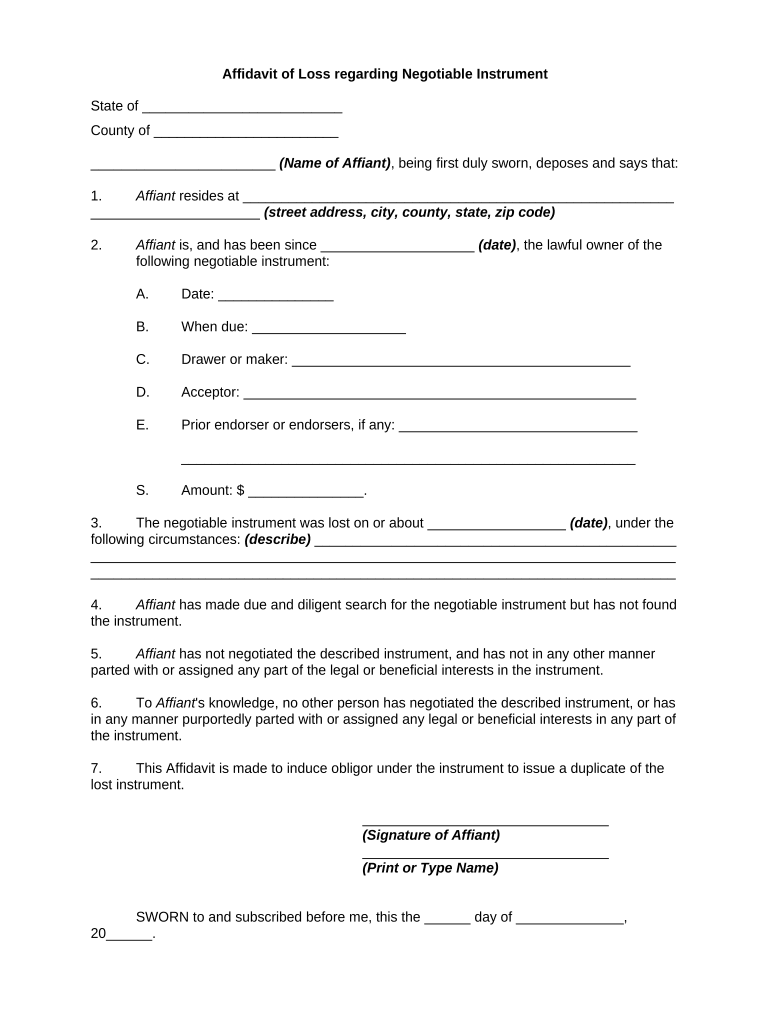
A negotiable instrument is a written, signed document that promises or orders the payment of a specific sum of money to a named person or to bearer. Common examples include checks, promissory notes, and bills of exchange. Negotiable instruments circulate as substitute money, permit endorsement and transfer, and are governed by the Uniform Commercial Code (UCC) in the United States. Because negotiable instruments create payment rights, attention to wording, signature placement, and numeric versus written amounts is essential to preserve enforceability and prevent fraud.

Why clear negotiable instruments reduce risk

Using a properly completed negotiable instrument speeds payment, supports transferability, and creates clear legal rights for holders. Accurate instruments reduce processing delays, lower the chance of dishonor, and make downstream enforcement simpler under commercial law.

Why clear negotiable instruments reduce risk

Who typically prepares or receives negotiable instruments

Negotiable instruments are used across finance, real estate, healthcare billing, and legal settlements; preparation varies by role and industry.

  • Businesses and accounting teams prepare promissory notes, corporate checks, and settlement drafts for commercial transactions and collections.
  • Banks and treasury departments issue and process checks, manage endorsement chains, and verify holder status for payment.
  • Individuals use personal checks and promissory notes for loans and private agreements where a written payment obligation is required.

Ensure the person completing or endorsing the instrument has authority and that all required fields match supporting records to avoid payment rejection.

Primary signers and parties

Drawer / Maker

The drawer or maker is the person or entity that creates the instrument and promises or orders payment. For checks the drawer is the account holder; for a promissory note the maker is the borrower who must sign and be legally competent.

Payee / Holder

The payee or holder is the named recipient entitled to payment or the person in possession with proper endorsement. Correct identification of the payee is required to establish holder rights and enable negotiation.

Key components that make a negotiable instrument effective

A valid negotiable instrument contains specific elements that determine transferability and enforceability; each element reduces ambiguity and supports commercial negotiability.

Unconditional Promise

A clear, unconditional promise or order to pay a fixed sum distinguishes negotiable instruments from conditional agreements and supports enforceability under the UCC.
Fixed Amount

State the numeric amount and the amount in words. Discrepancies generally result in the words controlling the numeric figure for enforcement.

Payee Identification

Name the payee explicitly (or indicate 'bearer/order') to define who may enforce payment. Ambiguous payee fields can block negotiation.

Signature

The instrument must be signed by the maker or drawer; signatures authenticate intent and create the party’s payment obligation.

Date and Place

Include the issuance date and place of payment. These details affect presentment, stale-dating, and limitations for legal actions.

Endorsement Terms

Endorsement language (restrictive, blank, special) determines transferability and limits subsequent negotiation or deposit options.

Required information to include on the instrument

Payee name: Full legal name
Payment amount: Figures and words
Date of issue: MM/DD/YYYY is acceptable
Signature: Authorized signatory
Endorsement field: For transfer instructions
Place of payment: City and state

Penalties and risks from errors or fraud

Dishonor: Payment refusal
Counterclaim: Legal disputes
Fraud liability: Criminal exposure
Tax consequences: Reporting errors
Lost endorsement: Transfer failure
Statute lapses: Limitation risks

Step-by-step: completing a negotiable instrument

Follow these steps to complete a check or promissory note so it remains negotiable and enforceable.

  • 01
    1. Write date: Enter issuance date clearly.
  • 02
    2. Name payee: Use full legal name.
  • 03
    3. Enter amount: Write words and numerals.
  • 04
    4. Sign: Authorized signer must sign.

How transfer and payment workflows typically operate

Negotiation and settlement follow clear steps from issuance to final payment; documenting each step helps preserve holder rights.

  • Issue: Maker creates and signs the instrument.
  • Endorse: Payee signs or transfers to another.
  • Present: Holder presents to drawee bank for payment.
  • Settle: Funds are paid and item archived.

Configuring an online workflow for negotiable instruments

When digitizing instruments, configure fields, authentication, and retention to mirror legal requirements and auditability.

Field Configuration
Signature Field Require signer acceptance and date
Amount Fields Lock numeric and text fields
Authentication Email or SMS code options
Audit Trail Enable timestamp and IP logging

How negotiable instruments compare to electronic transfers

Compare core attributes so you can pick the correct payment form for risk, transferability, and recordkeeping needs.

Criteria Negotiable Instrument Electronic Transfer
Transferability high — endorsable limited or account-based
Speed slower settlement faster settlement
Formality written instrument required electronic messaging
Dispute process ucc-based remedies banking/ach rules

eSignature vendor comparison for filling and delivering negotiable instruments

Basic pricing and feature differences across common eSignature vendors help budgeting and technical planning for digital negotiable instruments.

signNow DocuSign Adobe Sign PandaDoc HelloSign
Starting Price $8/user/mo $15/user/mo $14/user/mo $19/user/mo $15/user/mo
Free Trial 7-day free trial Varies Varies Varies Varies
Bulk Send Yes Yes Yes Yes No
Audit Trail Yes Yes Yes Yes Yes
Envelope Cap No cap 100 envelopes/user/year Varies Varies Varies

Real-world examples of negotiable instrument usage

These brief case examples show common business contexts where negotiable instruments remain useful.

Optica Ventures

A small investment firm used promissory notes to document bridge loans for portfolio companies

  • Note included fixed repayment and interest terms
  • The clearly drafted instrument simplified collections and securitized the receivable for secondary transfer, reducing ambiguity in investor reporting and audits.

Fertility Centers

A healthcare provider accepted cashier’s checks for large out-of-pocket deposits

  • Checks were completed with full legal names and identifiers
  • Proper filling and retention provided a clear payment trail and avoided billing disputes with insurers and patients.

Practical tips for accurate, enforceable instruments

Follow these practical measures to reduce rejection and preserve negotiability.

Use consistent legal names
Always use full legal entity or individual names to match bank and government records; initials or nicknames can cause processing delays or rejection.
Write amounts in words and numbers
Enter both written and numeric amounts; in disputes the written amount typically controls and prevents misreading of figures.
Limit conditional language
Avoid conditional terms or ambiguous clauses on the face of the instrument; conditions may disqualify the item from negotiability under the UCC.
Retain signed copies
Keep original signed instruments and verified electronic copies with audit trails to support enforcement or bank inquiries.

Timing considerations and common presentment rules

Timing affects acceptance, stale-dating, and limitation periods; follow presentment and bank rules promptly.

Presentment Timing:

Present for payment without unreasonable delay

Stale-date Guidance:

Banks commonly treat items older than six months as stale-dated

Stop Payment Window:

Request stop payments immediately to maximize bank remedies

Statute of Limitations:

State limitations vary; act promptly to preserve claims

Record Retention:

Keep payment records to satisfy tax and audit requirements

Key processing milestones from issue to closure

Track these sequential milestones to ensure smooth negotiation, presentment, and settlement.

01

Issuance

Instrument is completed and signed by maker or drawer

02

Delivery

Payee receives the instrument for negotiation

03

Presentment

Holder presents to drawee bank or payer for payment

04

Settlement

Payment clears and item is archived

How to amend or correct a negotiable instrument

Amendments generally require clear notation and consenting signatures; follow formal correction steps to preserve enforceability.

01

Minor clerical error:

Strike and initial corrections with all parties
02

Amount change:

Void and reissue to avoid disputes
03

Payee update:

Endorse and reassign rather than alter the face
04

Signature mismatch:

Obtain confirming affidavit or re-sign
05

Electronic correction:

Use versioned templates with audit trail
06

Dispute resolution:

Document consent and store supporting records

Sharing and integration options for digital instruments

Choose distribution channels that preserve security and the audit trail when sending negotiable instruments electronically.

  • Email delivery: Secure link with access controls
  • API integration: Automate with ERP or banking systems
  • Cloud storage: Archive signed copies with retention rules

Integrate with finance systems and apply authentication steps to reduce fraud; use platforms that support export to PDF and searchable archives.

Common mistakes when preparing negotiable instruments

  • Mismatched names between instrument and supporting accounts leading to bank rejection and delays in payment processing.
  • Omitting the amount in words or entering conflicting numeric and written amounts that create enforceability disputes.
  • Improper or blank endorsements that fail to transfer holder status and block deposit or negotiation.
  • Using conditional or unclear payment language that disqualifies the instrument from being negotiable under UCC rules.

Export and storage formats for signed instruments

Preserve signed instruments in reliable, tamper-evident formats and ensure long-term accessibility for audits and disputes.

PDF/A export

Generate a PDF/A copy that embeds the signature audit trail and preserves the signed image for long-term archival and regulator access.

DOCX source

Store the editable source with change history for internal review, but keep signed PDF for legal proof.

Image scans

High-resolution TIFF or PDF scans of original signed paper items provide a verifiable image for reconciliation.

Ledger CSV

Export structured metadata (dates, amounts, payees) to CSV for accounting, reconciliation, and bulk reporting.

Frequently asked questions about negotiable instruments

Answers to common questions about validity, signatures, endorsements, and digital handling of negotiable instruments.


Need help? Contact support

be ready to get more
Join over 28 million airSlate SignNow users