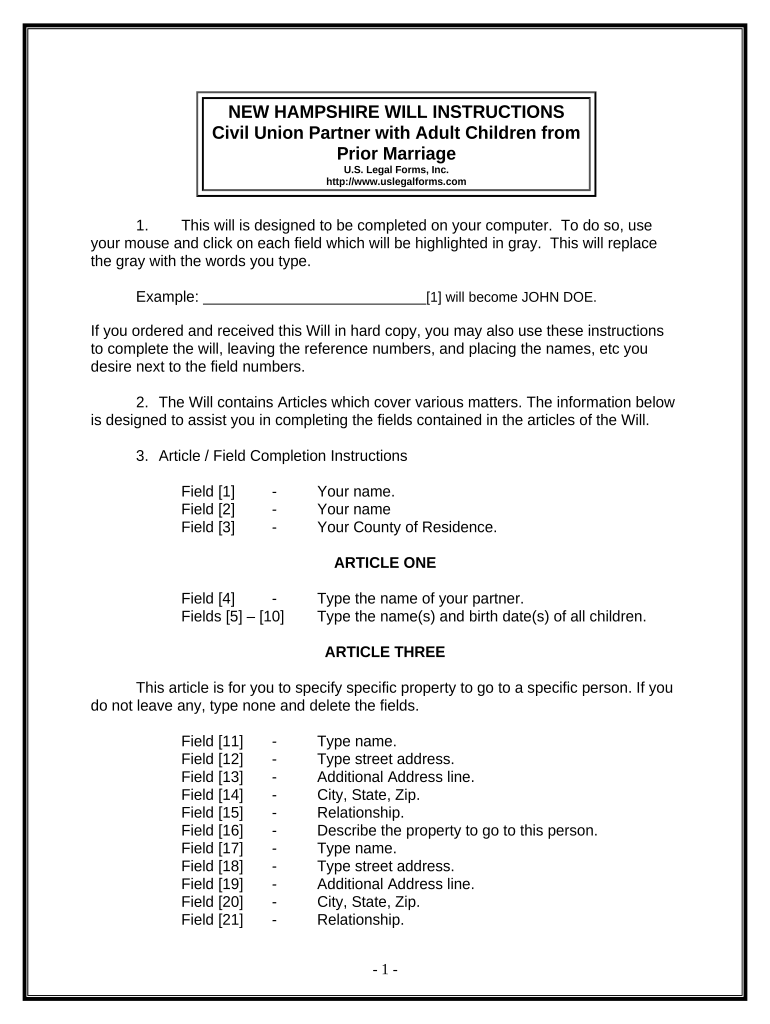
New Hampshire Will
What a New Hampshire Will Is and what it covers
Why a clear New Hampshire Will matters
A properly executed New Hampshire Will reduces ambiguity, speeds probate, and helps avoid intestacy rules that distribute assets by statute. Clear instructions protect beneficiaries and reduce litigation risk while documenting your wishes for fiduciaries and courts.
Who commonly prepares or relies on a New Hampshire Will
Use cases range from simple single-beneficiary wills to complex testamentary trusts; attorney review is recommended for substantial estates or unusual family situations.
- Adults with assets and beneficiaries who want defined postmortem distribution and executor appointment.
- Parents naming guardians for minor children and specifying trust protections for minors or special-needs descendants.
- Estate attorneys and paralegals preparing, reviewing, and submitting wills for probate in New Hampshire courts.
Roles involved in a New Hampshire Will
Testator
The person who creates the Will. The testator must be at least 18 and of sound mind; clear capacity at signing reduces contests and supports probate admission.
Executor
The individual or institution appointed to carry out the Will's terms, manage estate assets, pay debts, file tax returns, and distribute property according to the Will and applicable law.
Step-by-step execution checklist for a New Hampshire Will
-
01Draft: Prepare clear provisions or use attorney-drafted language to reflect your intent.
-
02Review: Confirm names, property lists, and contingent beneficiaries for accuracy.
-
03Sign with witnesses: Sign in the testator's presence with required witnesses present and attesting.
-
04Store securely: Keep the original in a secure, known location and provide copies to trusted parties.
From execution to probate: the practical route
-
Prepare: Draft and verify will content for clarity and legal sufficiency.
-
Execute: Sign with required witnesses following New Hampshire formalities.
-
Locate at death: Executor locates original will and notifies probate court to begin administration.
-
Probate: Court admits will, appoints executor, and supervises estate administration.
Digital completion and e-signature considerations
Confirm New Hampshire probate practice accepts electronically prepared wills and follow state witness/notarization rules; maintain original wet-signed document when required by state law.
- Editor Compatibility: PDF and DOCX formats supported for drafting and archival.
- Authentication: Strong signer identity reduces later disputes over intent and attribution.
- Audit Trail: Detailed signing logs support evidentiary needs in court.
eSignature vendor comparison for signing and storing wills
| signNow | DocuSign | Adobe Sign | PandaDoc | HelloSign | |
|---|---|---|---|---|---|
| Starting Price | $8/user/mo | $15/user/mo | $14/user/mo | $19/user/mo | $15/user/mo |
| Free Trial | 7-day trial | Varies | Varies | Varies | Varies |
| Bulk Send | Yes | Yes | Yes | Yes | Yes |
| Audit Trail | Yes | Yes | Yes | Yes | Yes |
| HIPAA Compliant | Yes | Yes | Yes | No | No |
| Envelope Cap | No cap | 100 envelopes/user/year | Varies | Varies | Varies |
Common legal risks from a defective or incorrect Will
Practical tips to reduce probate issues
Key timing items to plan around for New Hampshire estates
Execution Date:
Date on will controls revocation and superseded wills
Probate Initiation:
Begin probate promptly after death; no single statutory filing deadline exists
Income Tax Return:
Individual return due April 15 following calendar year (federal)
Estate Tax Filings:
Federal estate tax returns follow IRS filing rules when threshold met
Creditor Notices:
Follow probate court guidance on creditor notice windows
Real-world scenarios: how New Hampshire Wills are used
Estate with minor children
Parent drafts a Will naming a guardian and creating a testamentary trust for minors
- Guardian appointed promptly to manage child welfare
- The trust provides periodic distributions and reduces the risk of assets passing to unintended relatives, easing administration for the guardian and protecting funds until children reach maturity.
Simple single-beneficiary estate
An individual leaves entire estate to a surviving partner and names an alternate executor
- Executor prepares inventory and files for probate
- Clear beneficiary language and named alternates shortened probate steps, reduced attorney hours, and provided straightforward distribution to the surviving partner.
FAQs and common troubleshooting for New Hampshire Wills
-
Is notarization required?
Notarization of a will is not typically required in New Hampshire for validity, but a self-proving affidavit signed before a notary speeds admission to probate and avoids witness testimony.
-
How many witnesses are needed?
Most states, including New Hampshire practice, require two competent witnesses to attest to the testator's signature; ensure witnesses are disinterested to reduce contest risk.
-
Can I sign electronically?
Electronic preparation and signatures may be useful for drafting and sharing, but New Hampshire probate courts prefer an original wet-signed document; check local court practice before relying solely on e-signatures for execution.
-
How do I update or revoke?
Create a codicil following the same execution formalities or execute a new Will that expressly revokes prior Wills. Clear wording and dates reduce disputes.
-
What if a beneficiary predeceases me?
Include contingent beneficiaries or residuary clauses to address predeceased beneficiaries; otherwise, distribution may pass by intestacy rules for that share.
-
When should I consult an attorney?
Consult counsel for blended families, substantial assets, tax planning, business interests, or complex trusts to ensure estate plan goals are achieved and contested minimized.