Establishing secure connection…Loading editor…Preparing document…

New York Petition

This template is fully customizable. Edit the text, fill out the fields, and send it for signature. Give it a try!
New York Petition

What a New York Petition Is and when it’s used

A New York Petition is a formal written filing that initiates a civil proceeding in a New York court or administrative tribunal. It identifies the petitioner and respondent, states jurisdictional facts, sets out factual allegations and legal claims, and specifies the relief sought. Petitions appear in family, probate, civil, and administrative matters and must meet local court formatting and filing requirements. Electronic execution and filing are generally permitted under the federal ESIGN Act (15 U.S.C. ch. 96, 2000) and New York’s Electronic Signatures and Records Act (NY Tech Law §301–309).

Why preparing a correct New York Petition matters

A properly drafted petition establishes your formal claim, triggers procedural timelines, and preserves rights. Clear allegations and correct service reduce the risk of dismissal or delay. Using compliant e-signatures and accurate forms streamlines filing and helps meet court rules under ESIGN and New York law.

Why preparing a correct New York Petition matters

Who typically prepares or files a New York Petition

Choose the preparer who understands applicable court rules, service requirements, and any mandatory forms for the specific New York tribunal.

  • Civil attorneys and law firms who represent plaintiffs in tort, contract, landlord-tenant, and civil rights cases.
  • Individuals who are self-represented filing family, name-change, or small-claims petitions.
  • Government agencies and administrative bodies initiating enforcement, license, or administrative actions.

Step-by-step: preparing and filing a New York Petition

Follow a consistent sequence to reduce errors and meet court rules for filing and service.

  • 01
    Draft petition: Assemble caption, facts, claims, and relief in required format.
  • 02
    Collect attachments: Add exhibits, affidavits, and supporting documents as separate, labeled files.
  • 03
    File with court: Submit via court e-filing system or clerk’s office and pay applicable fees.
  • 04
    Serve parties: Serve respondents per CPLR/local rules and retain proof of service.

How electronic signing and e-filing typically proceed

Electronic workflows follow predictable steps from upload to final record retention; prepare files in accepted formats before starting.

  • Upload document: Upload petition PDF or DOCX to the signing or e-filing platform.
  • Place fields: Add signature, date, and text fields in the document where required.
  • Authenticate signer: Use email, SMS, or stronger authentication as required by court or document sensitivity.
  • Record audit trail: Capture timestamps, IP, and completion certificate for court record retention.

Technical considerations for signing and submitting a petition

Verify local court e-filing specifications and preserve the platform audit trail and signed copies for your records.

  • Supported formats: PDF, DOCX, and PDF/A are commonly accepted by courts and signing platforms.
  • Authentication: Email link, SMS OTP, or stronger KBA may be required depending on court or document sensitivity.
  • Integrations: Platforms often integrate with Google Workspace, Microsoft 365, or CM/ECF systems for smoother filing.

Common eSignature vendors and plan comparators for petition workflows

Compare typical vendor pricing and enterprise features relevant to secure, compliant petition signing and recordkeeping. signNow is listed first per platform comparison conventions.

signNow DocuSign Adobe Sign PandaDoc HelloSign
Starting Price $8/user/mo $15/user/mo $14/user/mo $19/user/mo $15/user/mo
Free Trial 7-day free trial Varies by vendor Varies by vendor Varies by vendor Varies by vendor
Bulk Send Yes (Premium) Yes Yes Yes No
Audit Trail Yes Yes Yes Yes Yes
HIPAA Compliant Yes Yes Yes No No

Essential components of a professional New York Petition

A complete petition is structured, factual, and legally grounded; include needed exhibits, verifications, and correct filing metadata.

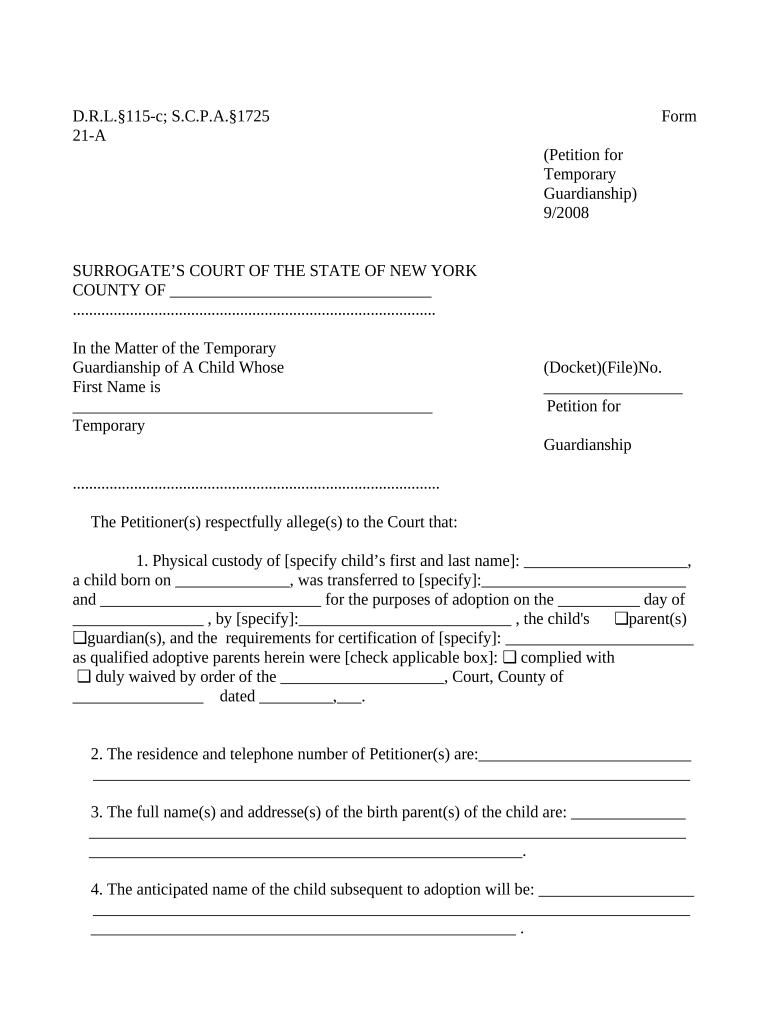
Caption

Court name, county, index number, and case caption aligned with local filing rules to ensure correct docketing and clerical processing.
Jurisdictional Basis

Clear statement of the court’s jurisdiction, venue, and statutory authority supporting why the New York tribunal may hear the matter.

Statement of Facts

Concise chronological factual narrative describing material events with dates and references to attached exhibits or documents.

Causes of Action

Legal claims or counts articulated with elements and authorities; tie facts directly to each legal theory asserted.

Relief Requested

Precise remedies sought, including monetary amounts, injunctive language, or declaratory relief phrased for enforceability.

Verification / Oath

Signed verification or affidavit under penalty of perjury when required, dated and notarized as appropriate for court acceptance.

Practical tips to avoid common errors when filing in New York

Use disciplined document preparation and verification steps to reduce rejections, delays, and service defects.

Confirm party names and addresses
Verify full legal names, corporate entity identifiers, and mailing addresses against government records. Errors trigger service failures, require amended filings, and can extend timelines by weeks.
Use court formatting and cover sheets
Follow local rules for margins, font sizes, and required cover sheets. Nonconforming filings may be returned or require correction before docketing, causing processing delays.
Preserve audit trails and signed copies
Keep signed originals, notarizations, or platform audit trails with timestamps and IP addresses to support admissibility and rebut authenticity challenges.
Check service and response deadlines
Confirm applicable service methods and defendant response periods under CPLR or local rules to avoid default or dismissal; when in doubt, consult counsel promptly.

Security and compliance features relevant to petitions and supporting records

Encryption: TLS 1.2/1.3 in transit, AES-256 at rest
Certifications: SOC 2 Type II and ISO 27001 available
HIPAA Support: HIPAA-compliant with BAA available
eSignature Law: Compliant with ESIGN and NY ESRA
Audit Trail: Detailed timestamps, IPs, and action logs
21 CFR Support: 21 CFR Part 11 controls available

Risks and penalties from incorrect petition preparation

Filing Rejection: Court may decline to accept noncompliant filings
Statute Loss: Missed deadlines can forfeit rights
Service Defect: Improper service can void proceedings
Perjury Risk: False statements may carry criminal penalties
Monetary Costs: Amendments and re-filings increase fees
Evidence Problems: Missing audit trail may impede enforcement

Frequently asked questions about New York Petitions and e-signatures

Answers to common procedural and technical questions about preparing, signing, and filing petitions in New York courts.


Need help? Contact support

be ready to get more
Join over 28 million airSlate SignNow users