Establishing secure connection…Loading editor…Preparing document…

Offer to Purchase

This template is fully customizable. Edit the text, fill out the fields, and send it for signature. Give it a try!
Offer to Purchase

What an Offer to Purchase Is and When it Applies

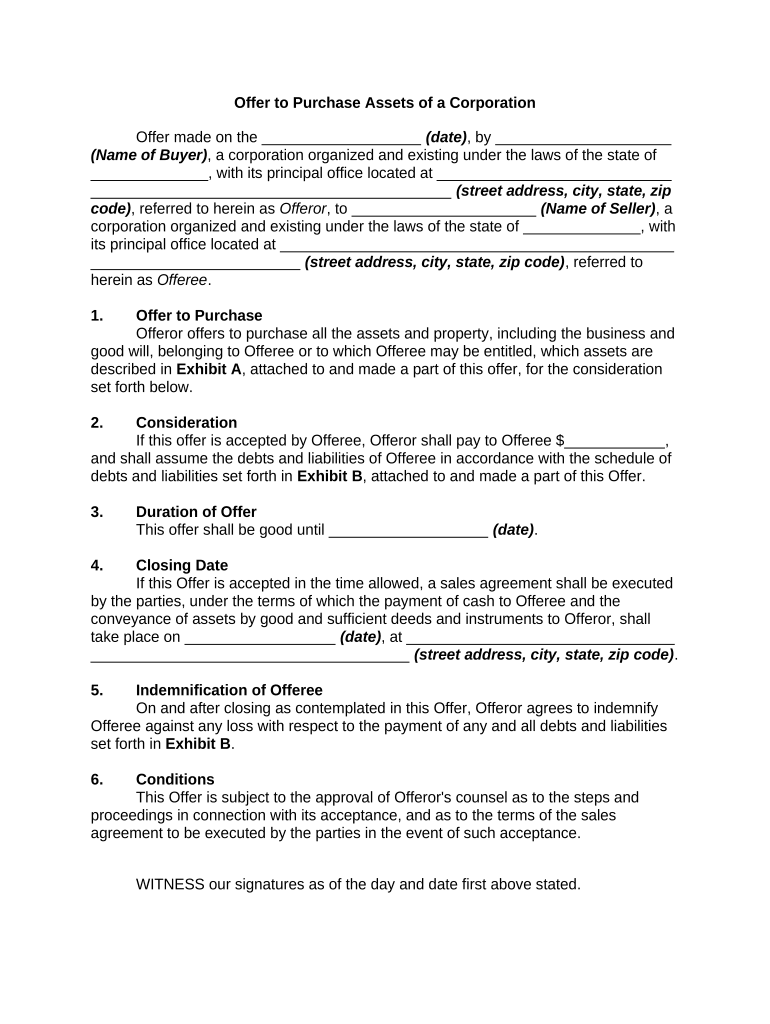
An Offer to Purchase is a written proposal from a buyer to a seller that sets out the material terms for acquiring real property or other significant assets. It usually includes buyer and seller names, a clear description of the property, the purchase price, earnest money or deposit, proposed closing date, and any contingencies such as financing, inspection, or title review. When accepted and signed by both parties, the offer typically becomes a binding contract subject to the stated contingencies and applicable state contract and real estate laws.

Why a Clear Offer to Purchase Matters

A clear Offer to Purchase documents the buyer’s intent, fixes key economic terms, and sets deadlines for contingencies and closing. It reduces misunderstandings, establishes the basis for deposit handling, and creates an evidentiary record that supports enforceability under ESIGN and applicable state law.

Why a Clear Offer to Purchase Matters

Who Commonly Prepares and Signs Offers

The Offer to Purchase is used by multiple stakeholders in a transaction including buyers, sellers, and their agents.

  • Buyers and investors who specify price, deposit, and contingencies before contract formation.
  • Listing and buyer agents who prepare, present, and negotiate offers on behalf of clients.
  • Title companies, lenders, and closing agents who review terms and coordinate closing logistics.

Representative Signers and Roles

Buyer — Individual

A private buyer signs to accept price and terms; the buyer is responsible for deposit, financing contingencies, and timely performance of inspection and closing obligations.

Seller — Entity

A seller (individual or corporate) responds with acceptance or counteroffer; an entity signer must ensure authorized signatory authority and that the offer references correct legal entity details.

Essential Parts of a Professional Offer to Purchase

A professional offer organizes all transaction points clearly: parties, property, price, deposit, contingencies, and signature blocks so parties and advisors can evaluate obligations quickly.

Parties

Full legal names and legal entity types for buyer and seller, including any d/b/a entries and contact information for agents or attorneys.
Property Description

Complete street address plus legal description or parcel number; avoid informal descriptions to prevent ambiguity at closing or title search.

Purchase Price

Exact dollar amount and allocation of funds, including who pays prorations, closing costs, and whether personal property is included.

Earnest Money

Amount, who holds the deposit (escrow/title company), deadlines for deposit, and conditions for forfeiture or return.

Contingencies

Financing, inspection, appraisal, and title conditions with explicit cure periods and termination windows for each contingency.

Signatures and Dates

Signature lines, printed names, dates, and authority statements for corporate or trustee signers; include signature dates to trigger deadlines.

Required Information You Must Include

Buyer Name: Full legal name
Seller Name: Full legal name
Property ID: Address and parcel
Price: Exact dollar figure
Deposit: Amount and holder
Closing Date: MM/DD/YYYY format

Step-by-Step: Filling Out an Offer to Purchase

Complete the form in order to avoid omissions; use typed entries where possible and verify names and amounts before saving or sending.

  • 01
    Identify Parties: Enter full legal names for buyer and seller.
  • 02
    Describe Property: Provide street address plus legal description or parcel ID.
  • 03
    Specify Terms: Enter purchase price, deposit amount, and closing date.
  • 04
    Add Contingencies: List financing, inspection, and title conditions with deadlines.

How to Configure an Online Offer Workflow

Set up fields, authentication, and routing before sending to ensure a smooth electronic signing process for all parties.

Field Configuration
Signature Type Allow typed, drawn, or PKI-based signatures
Authentication Email link plus optional SMS or KBA
Conditional Fields Show financing clauses only when applicable
Notifications Automatic emails on signature and completion

Where to Send the Offer and Typical Routing

After drafting, route the offer to signers and stakeholders in a clear sequence so everyone receives the document at the right time.

  • To Seller: Send to seller or listing agent for review and counteroffer.
  • To Buyer Agent: Buyer’s agent reviews and approves edits before final signature.
  • To Title Company: Provide accepted offer to title for commitment and escrow instructions.
  • To Lender: Lender reviews financing contingency and conditions.

Digital Signing Considerations and Integrations

Use an eSignature platform that supports required formats, audit trails, and integrations with your title or CRM systems.

  • File Formats: PDF, DOCX, HTML, Excel supported
  • Integrations: Salesforce, Microsoft 365, NetSuite, Google Workspace
  • Security Standards: TLS 1.2/1.3 and AES-256 encryption

Typical Deadlines and Timing Expectations

Offers and contingencies set firm timelines; meet each deadline to preserve rights and avoid unintended contract formation or termination.

Offer Expiration:

24–72 hours unless a different time is stated

Inspection Period:

Commonly 3–10 days to complete inspections

Financing Contingency:

Typically 10–30 days to secure loan commitment

Earnest Money Deposit:

Due within 1–5 business days after acceptance

Closing Date:

Specified MM/DD/YYYY in the offer

Key Milestones from Offer to Closing

Track milestone stages carefully; each stage can trigger obligations, deposits, or right to terminate if unmet.

01

Offer Submitted

Buyer delivers written offer and deposit instructions.

02

Negotiation & Counteroffers

Seller responds with acceptance, rejection, or counteroffer.

03

Acceptance & Deposit

Signed acceptance and earnest money placed in escrow.

04

Closing & Recording

Title transfer, funding, and deed recording at county office.

Common Mistakes to Avoid When Preparing an Offer

  • Using informal or incomplete property descriptions that create title search delays and ambiguity at closing.
  • Failing to specify who pays which closing costs and prorations, causing disputes during settlement.
  • Missing or incorrect signature names for entities, which can invalidate acceptance and delay closing.
  • Overlooking contingency deadlines and forfeiting the right to terminate if conditions remain unmet.

Penalties and Risks from Incorrect or Incomplete Offers

Deposit Loss: Forfeiture risk
Breach Liability: Damages exposure
Financing Failure: Contract termination
Title Issues: Delayed or failed closing
Unauthorized Signature: Voidable acceptance
Missed Deadlines: Loss of contingency rights

How Others Use Signed Offers in Practice

Real-world examples show how electronic offers speed transactions and integrate with title and closing workflows.

Martin Properties

Local broker used online offers for remote closings to reduce in-person steps

  • Processed offers with integrated escrow instructions
  • The approach allowed closing without in-person meetings while maintaining full compliance and audit trails for buyers and sellers.

Optica Ventures

Investor group standardized offers for portfolio purchases across states

  • Reduced drafting variance with templates
  • Standardization improved review speed, simplified title coordination, and provided consistent records for future audits.

eSignature Vendor Pricing and Feature Snapshot

Compare typical starting prices and essential capabilities for eSignature vendors relevant to completing Offers to Purchase and related closing documents.

signNow DocuSign Adobe Sign PandaDoc HelloSign
Starting Price $8/user/mo $15/user/mo $14/user/mo $19/user/mo $15/user/mo
Free Trial 7-day free trial Varies by offer Varies by offer Varies by offer Varies by offer
Bulk Send Yes Yes Yes Yes No
Audit Trail Yes Yes Yes Yes Yes
HIPAA Compliant Yes Yes Yes No No
Envelope Cap No cap 100 envelopes/user/year Varies by plan Varies by plan Varies by plan

Frequently Asked Questions About Offers to Purchase

Answers to common questions about validity, signatures, and next steps when preparing or signing an Offer to Purchase.


Need help? Contact support

be ready to get more
Join over 28 million airSlate SignNow users