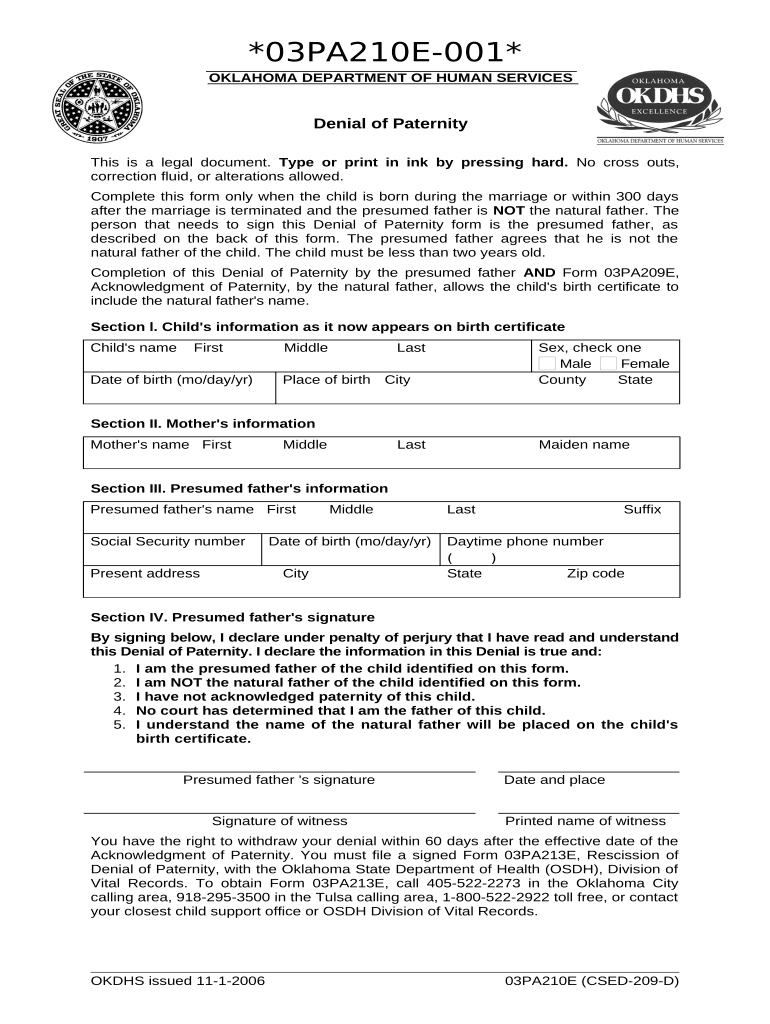
Oklahoma Denial of Paternity
What the Oklahoma Denial of Paternity Is
Why a Denial of Paternity Matters in Oklahoma
A clear written denial helps define legal parentage early, avoid mistaken support obligations, and create a formal record that can be used in administrative or judicial proceedings.
Who Typically Prepares or Signs This Form
The Oklahoma Denial of Paternity is used by individuals involved in family law matters, by agency staff, and by attorneys handling parentage or support cases.
- Putative fathers disputing legal presumption of paternity.
- Mothers or custodial parties responding to an assertion of paternity.
- Child support agency or court staff processing parentage disputes.
In many cases legal counsel or agency guidance is advisable because a denial may trigger case opening, DNA testing, or temporary support actions.
Step-by-Step: How to Complete the Form
-
011. Gather records: Collect birth record, IDs, and case numbers before you start.
-
022. Complete fields: Fill each required field using the formats in the fillable guide.
-
033. Sign and notarize: Sign in presence of notary if required or follow RON rules for remote notarization.
-
044. Submit copies: Send originals to the designated agency and retain certified copies for your records.
How to Configure a Digital Denial Form Workflow
| Field | Configuration |
|---|---|
| Signer Order | Single signer then witness/notary if required |
| Authentication | Email link + SMS code or knowledge-based checks |
| Notarization | Support RON session or in-person stamping |
| Audit Trail | Capture timestamps, IP, and certificate of completion |
Delivery and Signing Options for Electronic Submission
Electronic completion can reduce turnaround but must meet Oklahoma and federal rules for validity.
- Email & Link: Send a secure signing link to the signer’s email; use access codes for added verification.
- Remote Notarization: Use RON where permitted, with identity proofing and recorded audio-video session retained per state rules.
- In-Person: Sign at a public notary or court clerk if the agency requires physical acknowledgement.
Choose the channel that matches the filing destination’s acceptance rules and preserves a complete audit trail for future disputes.
Typical eSubmission Flow for an Oklahoma Denial of Paternity
-
Upload document: Attach the completed denial PDF to the signing platform.
-
Place fields: Add signature, date, and identity verification fields.
-
Authenticate signer: Use email, SMS, or knowledge-based methods.
-
Record completion: Generate audit trail and send copies to all parties.
Timing Considerations and Typical Deadlines
Immediate effect:
Denial creates a record but may not halt administrative actions pending review.
Paternity testing:
DNA requests are typically scheduled within weeks of filing.
Support notices:
Agencies may issue temporary support orders while verifying parentage.
Court deadlines:
Respond to subpoenas or hearing notices by the date shown to avoid default rulings.
Statute of limitations:
Statutory windows for contesting paternity vary; consult counsel for case-specific deadlines.
Key Processing Stages After Filing a Denial
Intake and verification
Agency confirms identity and matches the denial to existing case records.
Notice to parties
Other parties receive formal notice and may respond or request testing.
DNA testing stage
Laboratory testing is ordered and scheduled as needed to resolve biological claims.
Final determination
Agency or court issues a final administrative or judicial finding on parentage.
Common Pitfalls to Avoid
- Using inconsistent names between the denial and birth record triggers delays and identity verification requests.
- Failing to notarize when the receiving agency requires an acknowledgement can result in rejection.
- Submitting unsigned or undated denials will be treated as incomplete and may be returned without action.
- Relying on informal email statements instead of a formal sworn denial undermines legal effectiveness.
Risks and Legal Consequences of Errors
How the Denial Differs from Related Oklahoma Documents
| Document Type | Purpose | Effect |
|---|---|---|
| Denial of Paternity | record denial | triggers review or testing |
| Voluntary Acknowledgement | admit parentage | establishes legal parent immediately |
| Court Paternity Petition | request adjudication | court determination |
| Administrative Support Notice | enforce support | creates payment obligations |
eSignature Vendor Comparison for Filing and Signing
| signNow | DocuSign | Adobe Sign | PandaDoc | HelloSign | |
|---|---|---|---|---|---|
| Starting Price | $8/user/mo | $15/user/mo | $14/user/mo | $19/user/mo | $15/user/mo |
| Free Trial | 7-day free trial | Varies | Varies | Varies | Varies |
| Bulk Send | Yes | Yes | Yes | Yes | Varies |
| Audit Trail | Yes | Yes | Yes | Yes | Yes |
| HIPAA Compliant | Yes | Yes | Yes | No | No |
Frequently Asked Questions About Oklahoma Denials of Paternity
-
Can I eSign this document?
Yes if the recipient agency accepts electronic signatures and ESIGN/UETA standards are met. Confirm acceptance and include an audit trail showing intent, attribution, and retention.
-
Is notarization required?
Oklahoma often requires a notarized signature for sworn denials; check the exact filing instructions. If a notary is needed, in-person or RON (if accepted) must meet state notary rules.
-
What happens after I file a denial?
The agency may notify other parties, request DNA testing, or place the matter on a docket. Temporary support orders can remain in place until final resolution.
-
Can denial prevent child support?
A denial creates a record but does not automatically stop support enforcement; paternity must be resolved administratively or by court before permanent adjustments occur.
-
How should I store signed copies?
Keep a signed original plus secure digital copies with audit metadata. Maintain access for at least the retention period relevant to your situation and applicable regulations.
-
When should I consult an attorney?
Seek legal advice before filing if the case involves active enforcement, contested custody, or complex jurisdictional issues to avoid unintended legal consequences.